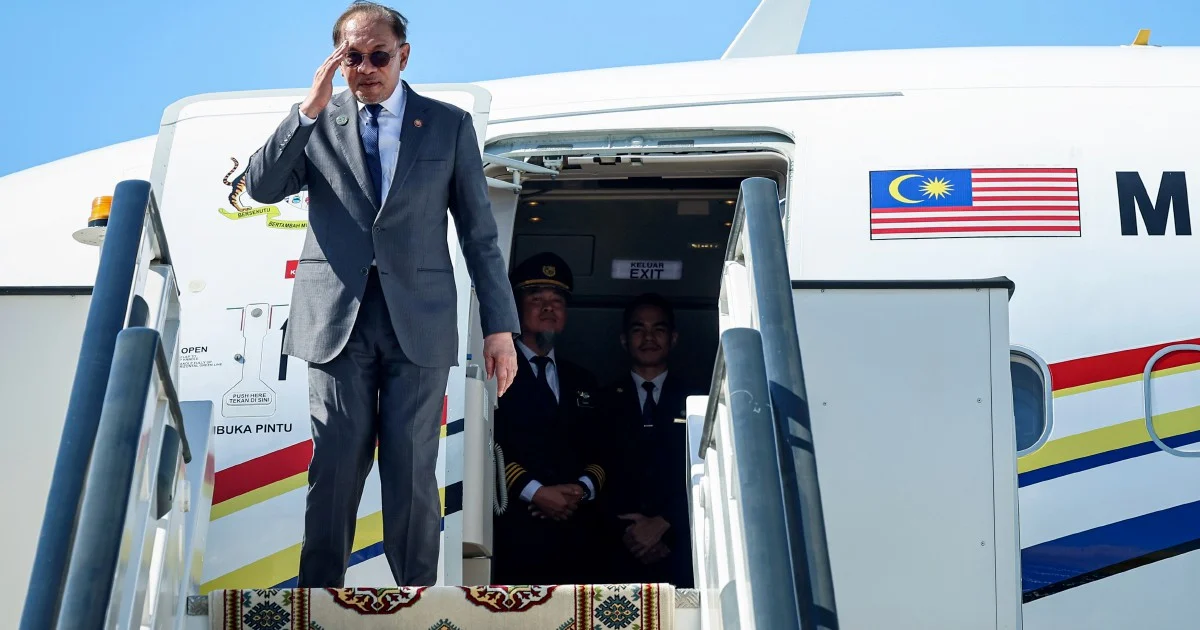
Prime Minister Datuk Seri Anwar Ibrahim touched down in Penang today, wrapping up an intensive diplomatic swing through Turkmenistan and immediately plunging into a series of high-profile domestic engagements. The arrival at Butterworth marks the conclusion of his Central Asian mission and signals the government's simultaneous focus on media relations and regional investment promotion. The compressed timeline reflects the government's effort to maintain momentum across multiple policy fronts, from foreign relations to domestic institutional celebrations and economic development initiatives.
The National Journalists' Day, or Hawana, serves as a crucial annual platform for recognising the media industry's contributions to Malaysian democracy and public discourse. The 2026 edition's grand finale in Penang, timed to coincide with the Prime Minister's visit, carries particular symbolic weight. Anwar's presence underscores the administration's commitment to upholding press freedom and the media's watchdog function—principles frequently emphasised in his public statements since assuming office. The event also provides an opportunity to engage directly with journalists and news organisations across the country, reinforcing channels of communication between government and the fourth estate during a period of significant national debate.
Penang's selection as the venue reflects the state's strategic importance to Malaysia's economic trajectory and governance landscape. The island state has established itself as a technology and manufacturing hub, making it an appropriate setting for announcements and discussions concerning investment and economic development. The convergence of media celebrations and investment forums suggests an integrated approach to national communication—ensuring that policy initiatives and economic opportunities receive appropriate media coverage and public awareness.
Anwar's Turkmenistan visit represents an extension of Malaysia's bilateral engagement with Central Asian nations, an area where diplomatic ties have historically been less prominent than those with traditional Southeast Asian and Middle Eastern partners. The trip likely focused on expanding trade relationships, exploring energy cooperation opportunities, and strengthening people-to-people connections. Turkmenistan, as a significant energy exporter with considerable hydrocarbon reserves, presents potential avenues for Malaysian investment and resource-sharing arrangements. The government's continued outreach to lesser-known regional partners demonstrates its commitment to diversifying Malaysia's international economic footprint beyond established partnerships.
The Penang events surrounding Hawana 2026 are expected to encompass broader discussions on media development, press freedom, and the role of journalism in a digital age. As misinformation and disinformation proliferate across online platforms, the government's symbolic investment in celebrating and supporting journalists signals recognition of the profession's increasingly challenging operating environment. The backdrop of Penang's vibrant business community and established media presence makes the location particularly fitting for exploring how journalism intersects with economic communication and public trust in institutions.
Investment-focused events scheduled during this visit are likely to target both domestic Malaysian enterprises seeking to expand operations and foreign investors considering entries into the Malaysian market. Penang's track record in attracting high-technology manufacturing and digital enterprises makes it a natural showcase for the government's economic policies and development priorities. These forums provide venues for government officials to articulate the investment climate improvements and infrastructure developments supporting business growth, while simultaneously addressing investor concerns regarding regulatory frameworks and market access.
The Prime Minister's direct participation in both Hawana celebrations and investment discussions illustrates the interconnected nature of modern governance, where media engagement and economic promotion are inseparable. Strong relations with the media establish the communicative foundation necessary for effectively marketing Malaysia's economic opportunities abroad while maintaining domestic support for reform initiatives. Anwar's personal attendance at these events, rather than delegating responsibilities to subordinates, emphasises their importance within the current administration's priorities.
From a regional perspective, Malaysia's parallel engagement with Central Asian nations and continued investment promotion reflects a balancing act between honouring strategic relationships while maximising economic opportunities. The Southeast Asian region, while Malaysia's immediate neighbourhood, increasingly competes for the same international capital and talent that Central Asian governments are also pursuing. Anwar's diplomatic mobility—moving swiftly from Turkmenistan to Penang—demonstrates how contemporary Malaysian foreign policy aims to maintain presence across multiple regional theatres without sacrificing attention to domestic institutional development and economic growth.
The timing of these events also occurs within Malaysia's broader economic recovery trajectory, as the nation works to rebuild growth momentum following pandemic-related disruptions. Investment forums have become essential tools for government communication with private sector stakeholders, allowing policymakers to present development strategies directly and respond to business community concerns. The Penang gathering will likely offer insights into sectoral priorities, infrastructure development timelines, and regulatory reforms aimed at enhancing competitiveness and attracting sustained foreign direct investment flows.
%22%2F%3E%3C%2Fpattern%3E%3C%2Fdefs%3E%3Crect%20width%3D%22100%25%22%20height%3D%22100%25%22%20fill%3D%22url(%23ph2hy9vg)%22%2F%3E%3Crect%20width%3D%22100%25%22%20height%3D%22100%25%22%20fill%3D%22url(%23ph2hy9vp)%22%2F%3E%3Ctext%20x%3D%2250%25%22%20y%3D%2250%25%22%20text-anchor%3D%22middle%22%20dominant-baseline%3D%22central%22%20fill%3D%22rgba(255%2C255%2C255%2C0.95)%22%20font-family%3D%22Georgia%2C%20'Times%20New%20Roman'%2C%20serif%22%20font-weight%3D%22700%22%20font-size%3D%22272%22%20letter-spacing%3D%22-0.02em%22%3EAnwar%3C%2Ftext%3E%3C%2Fsvg%3E)