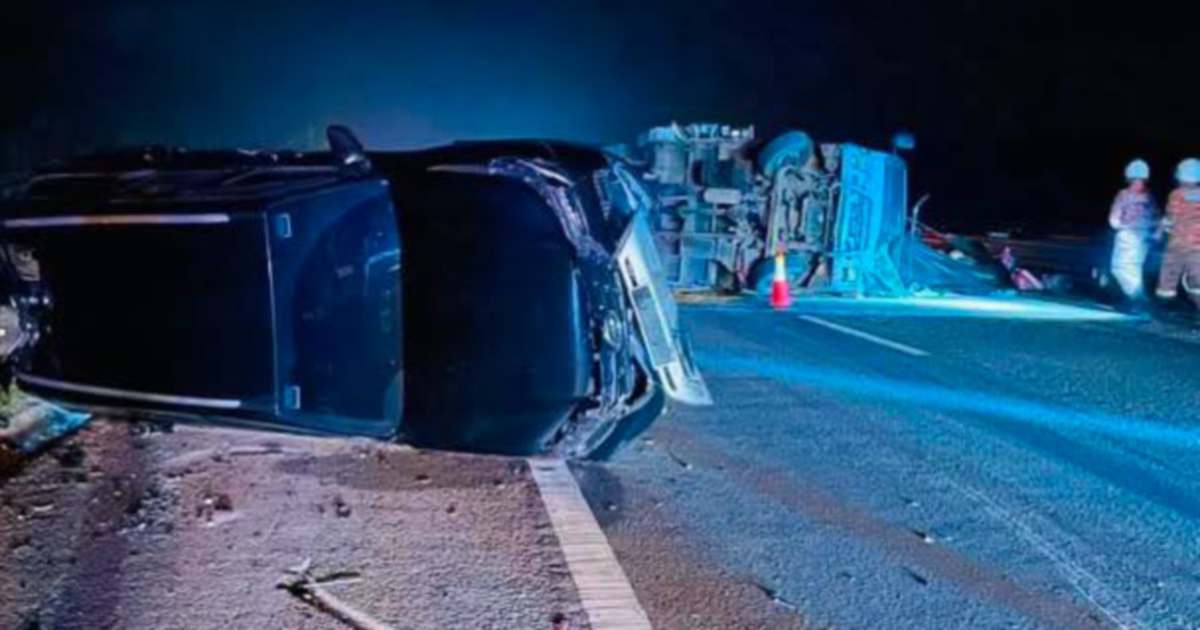
Three members of the media contingent attached to Deputy Prime Minister Datuk Seri Dr Ahmad Zahid Hamidi were among seven people treated for injuries following a collision involving three vehicles on the East Coast Expressway near Maran in the early hours of today. The incident occurred at the 144-kilometre marker along the major federal expressway that connects the central and eastern regions of Peninsular Malaysia.
The accident, which left multiple vehicles damaged, highlighted once again the traffic hazards that travellers face on Malaysia's expressway network, particularly during dawn hours when visibility can be compromised and driver fatigue increases the risk of collisions. The exact circumstances surrounding how the three-vehicle pile-up developed have not yet been fully detailed, though authorities would have commenced investigations at the scene to determine liability and contributing factors.
The three media officers involved were on duty in their capacity as part of the Deputy Prime Minister's official entourage. While all seven injured persons were evacuated to medical facilities for assessment and treatment, the fact that serious injuries were avoided in a multi-vehicle collision suggests either that speeds were relatively moderate at the point of impact or that the vehicles involved absorbed much of the kinetic force. Emergency response teams appear to have reached the location promptly, enabling rapid casualty evacuation and scene management.
For those in government service, such incidents underline the occupational hazards that accompany high-profile assignments. Media officers attached to senior political figures frequently travel at irregular hours and across considerable distances to cover ministerial activities, policy launches, and constituency visits. The East Coast Expressway, while generally well-maintained, carries substantial traffic volumes, and accidents remain a persistent risk despite modern safety features built into contemporary vehicles.
The location near Maran, situated in Pahang state, falls within the corridor between Kuala Lumpur and the east coast states of Terengganu and Kelantan. This stretch of expressway is frequently travelled by government officials, journalists, and business people moving between the capital and regional centres. The incident serves as a reminder that even brief journeys on major roads carry potential risks that should not be underestimated.
From a broader public safety perspective, such accidents occurring during early morning hours align with traffic statistics showing that this period witnesses proportionally higher incident rates. Driver alertness diminishes as night-shift travel extends, and fewer vehicles on the road sometimes encourages unsafe speed increases. Road safety authorities have long emphasised the importance of adequate rest before undertaking long journeys and the necessity of taking breaks during extended driving periods.
The involvement of media personnel in official government travel means that such incidents can generate wider attention than ordinary road accidents. However, the incident itself illustrates that no category of road user enjoys immunity from the risks inherent in vehicular travel. Professional drivers, whether carrying passengers of note or ordinary commuters, remain subject to the same physical laws governing vehicle dynamics and collision physics.
For the Deputy Prime Minister's office, the incident would have prompted immediate follow-up regarding the welfare of the injured staff members and liaison with hospital authorities managing their treatment. Such incidents typically trigger internal reviews of travel protocols and vehicle routing procedures, particularly if similar routes are regularly used by official convoys. Security and logistics teams may assess whether alternative routes offer better safety profiles or whether travel timing should be adjusted.
The expressway system remains vital infrastructure for Malaysia's economic connectivity and personal mobility. Millions of journey segments are completed safely each month along these corridors, yet the continued occurrence of multi-vehicle accidents demonstrates that vigilance regarding driver behaviour, vehicle maintenance, and speed management cannot be relaxed. The injured parties in today's collision were fortunate that outcomes did not prove more severe.
Official statements regarding the injured media officers' conditions and expected recovery timelines would normally be issued through the Deputy Prime Minister's media unit once medical assessments are finalised. For the media professionals themselves, such incidents introduce unexpected disruption to their scheduled assignments and raise questions about occupational safety standards for those working in high-pressure government communications roles.
The investigation into the accident's root causes will likely examine whether mechanical failure, driver error, weather conditions, or road infrastructure contributed to the collision. Once findings are established, relevant authorities may implement preventative measures if systemic issues are identified. In the interim, the incident serves as a sobering reminder that Malaysia's expressways, for all their efficiency in linking the nation's regions, demand constant respect from all road users.

%22%2F%3E%3C%2Fpattern%3E%3C%2Fdefs%3E%3Crect%20width%3D%22100%25%22%20height%3D%22100%25%22%20fill%3D%22url(%23ph2hy9vg)%22%2F%3E%3Crect%20width%3D%22100%25%22%20height%3D%22100%25%22%20fill%3D%22url(%23ph2hy9vp)%22%2F%3E%3Ctext%20x%3D%2250%25%22%20y%3D%2250%25%22%20text-anchor%3D%22middle%22%20dominant-baseline%3D%22central%22%20fill%3D%22rgba(255%2C255%2C255%2C0.95)%22%20font-family%3D%22Georgia%2C%20'Times%20New%20Roman'%2C%20serif%22%20font-weight%3D%22700%22%20font-size%3D%22272%22%20letter-spacing%3D%22-0.02em%22%3EAnwar%3C%2Ftext%3E%3C%2Fsvg%3E)