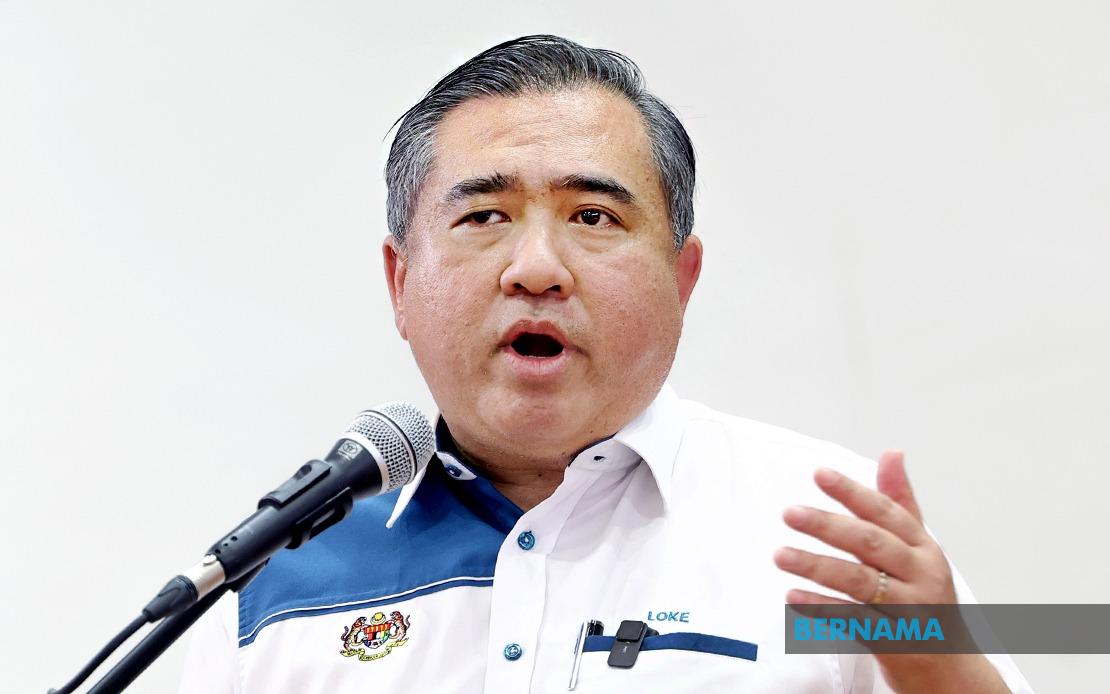
The Malaysian government has defended its decision to operate diesel-powered trains on the newly launched Southern Shuttle service in Johor, framing the arrangement as a pragmatic interim solution rather than a permanent fixture. Transport Minister Anthony Loke explained that introducing diesel trains now allows residents to access rail transport immediately, avoiding a multi-year wait for the arrival of new Electric Multiple Unit (EMU) trains scheduled for completion over the next two to three years. The ministry's approach reflects a deliberate trade-off between accepting older technology in the short term and ensuring public access to improved connectivity without protracted delays.
The Southern Shuttle represents a significant expansion of rail services in Johor, connecting three key transport hubs: Kulai, JB Sentral, and Pasir Gudang. Journey times are competitive, with the Kulai-JB Sentral leg taking approximately 40 minutes and the Kempas Baru-Pasir Gudang route requiring 40 to 45 minutes. Notably, the Kempas Baru-Pasir Gudang corridor was historically reserved exclusively for freight operations, making its opening to passenger traffic a meaningful diversification of the region's transport infrastructure. This expansion potentially offers commuters faster alternatives to congested road networks, which is crucial for a corridor increasingly burdened by commercial and industrial traffic.
The Ministry of Transport has committed substantial financial support to make the service economically accessible. An annual subsidy ranging from RM11 million to RM15 million has been allocated, enabling the operator to maintain affordable fares and broaden public participation in rail-based transport. This investment underscores the government's intention to reduce car dependency and build modal diversity in Johor's transport ecosystem.
However, the service has attracted criticism regarding its operational decisions. Observers have pointed out that the diesel trains represent outdated technology compared to the modern electric systems prevalent in established networks like those serving Kuala Lumpur and Seremban. More pointedly, some commentators have questioned the fare structure, suggesting that ticket prices are approximately three times higher than equivalent services operating in other Malaysian regions. This pricing disparity raises questions about equity in access to subsidised transport and whether residents in the southern corridor are bearing a disproportionate cost.
Loke's defence hinges on the logic of forward momentum. Waiting for new EMU train sets to be manufactured and delivered would postpone service launch indefinitely, potentially extending the timeframe by two to three years. Given that passengers can already benefit from improved connectivity now through diesel operations, the minister argues there is limited justification for such a prolonged wait. The diesel arrangement is explicitly temporary, contingent on the completion of new rolling stock rather than a structural feature of the service.
The long-term vision involves the completion of the Gemas-Johor Bahru electrified double-tracking project, upon which the diesel trains will be decommissioned entirely. Once this infrastructure upgrade concludes, electric train services operating on modern EMU platforms will replace the interim diesel fleet. This progression aligns the Southern Shuttle with Malaysia's broader ambition to expand electrified rail networks and reduce transportation emissions. The project represents a significant capital investment in southern transport infrastructure, signalling the government's commitment to regional development beyond the Klang Valley.
For Malaysian commuters and business stakeholders, the immediate implications are tangible. The Southern Shuttle offers a congestion-busting alternative for the Johor corridor, potentially reducing travel times and improving logistics efficiency for freight-dependent industries in the region. The service's introduction also reflects evolving patterns of urbanisation and employment dispersal in southern Peninsular Malaysia, as manufacturing and commercial hubs have increasingly decentralised from Kuala Lumpur.
The controversy surrounding diesel operations and fare levels, however, warrants ongoing scrutiny. The government's investment in subsidies should translate into genuinely competitive pricing relative to road transport and other regional services. If fares remain uncompetitive despite subsidies, ridership may plateau, undermining the economic case for future expansion. Transparency regarding cost structures and subsidy allocation would strengthen public confidence in the service's sustainability and equity.
Moreover, the transition timeline from diesel to EMU operations requires clear communication and contingency planning. Delays in manufacturing or delivery of new train sets could extend the interim diesel period, deepening public frustration. The ministry should establish binding schedules and communicate regularly on progress toward electrification and modernisation milestones.
Regionally, the Southern Shuttle's development carries implications for cross-border and inter-regional transport cooperation. Johor's enhanced rail capacity could facilitate better connectivity with Singapore and influence transport planning across the southern corridor, potentially supporting the Iskandar Malaysia development initiative and broader economic integration in the region.
The decision to launch the service with interim diesel technology, while defending the use of subsidies and older rolling stock, reflects pragmatic governance balancing immediate public needs against long-term modernisation objectives. Success will ultimately depend on whether the service gains sufficient ridership traction to justify the subsidy commitment and whether the transition to EMU operations occurs on schedule, validating the temporary diesel phase as a genuine bridging solution rather than a permanent compromise.