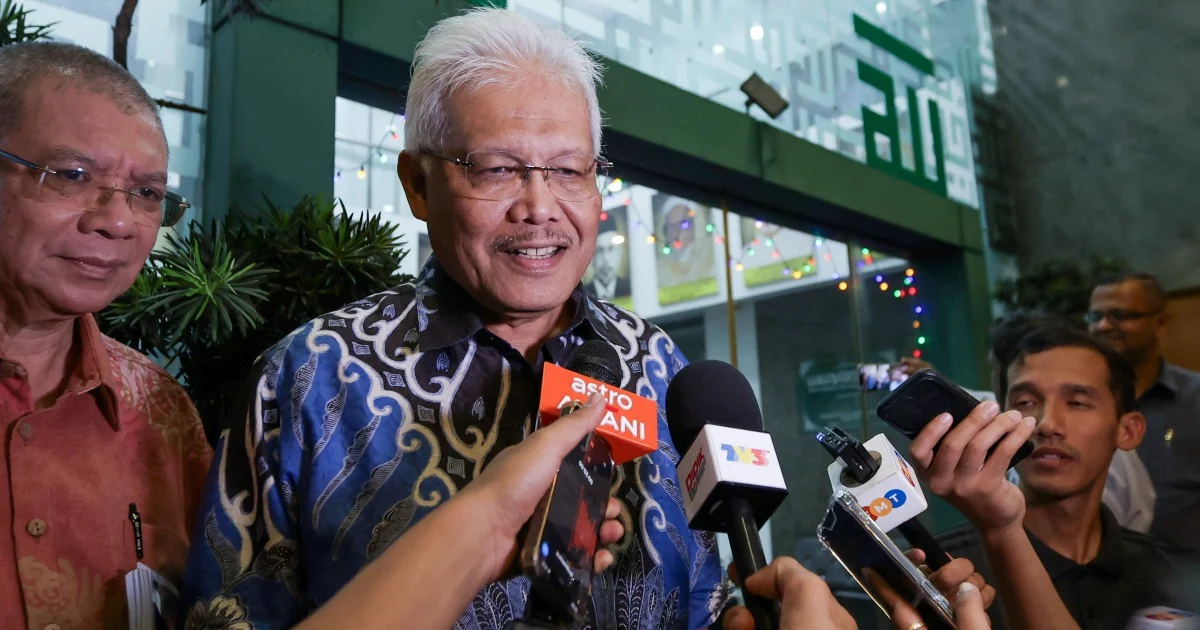
Perikatan Nasional's chief whip Datuk Seri Takiyuddin Hassan has lodged the official documentation with the Dewan Rakyat Speaker's office confirming Datuk Seri Hamzah Zainudin's continuation as the opposition leader, finalising the procedural steps required under parliamentary convention. The notification represents a formal acknowledgement of Hamzah's position leading the coalition's parliamentary opposition bloc and ensures his role is officially registered in the institution's records.
The submission of this notification underscores the significance of clear parliamentary documentation in Malaysia's legislative framework. The Speaker's office maintains comprehensive records of all opposition leadership appointments, which serves multiple administrative and procedural functions throughout the parliamentary calendar. These official designations carry weight beyond ceremonial considerations, influencing committee assignments, parliamentary speaking rights, and access to opposition research facilities funded by the government. The timely filing of such notifications helps prevent administrative ambiguities that could complicate parliamentary operations.
Hamzah's position as opposition leader carries considerable institutional responsibility within the Dewan Rakyat. The role traditionally involves coordinating parliamentary strategy for the opposition coalition, managing the scheduling of opposition business on the parliamentary agenda, and serving as the primary interface between the governing coalition and the opposition benches. As opposition leader, Hamzah would typically lead questioning during important parliamentary sessions and represent the opposition's interests during formal parliamentary business. His reappointment suggests continuity in PN's parliamentary leadership strategy heading into the remainder of the current parliamentary term.
Perikatan Nasional has solidified its position as the primary opposition force following the 2023 general election, consolidating support across multiple states and securing representation that, while not commanding a simple majority in Parliament, provides sufficient parliamentary weight to meaningfully influence legislative deliberations. The coalition's parliamentary presence has grown more structured and organized under consistent leadership, allowing for more coordinated responses to government proposals and policies. Hamzah's retention in this position reflects PN's assessment that maintaining continuity in opposition leadership serves the coalition's parliamentary interests more effectively than alternating personnel.
The formal notification process, though often overlooked by the general public, represents an essential component of parliamentary governance that ensures institutional transparency and adherence to procedural requirements. Malaysia's parliamentary system derives significant legitimacy from the consistent application of such administrative protocols. When political parties comply with these notification requirements promptly and completely, they demonstrate respect for parliamentary institutions and contribute to the stability of the legislative process. Conversely, failures to complete such procedures timeously can create parliamentary complications and invite scrutiny regarding a party's commitment to institutional rules.
For Malaysian opposition parties, securing clearly designated leadership positions within Parliament carries practical advantages that extend beyond symbolic recognition. The opposition leader typically receives a defined office allocation, research support from parliamentary administration, and recognition in parliamentary standing orders that govern speaking time and question periods. These material resources, though modest compared to government allocations, provide essential infrastructure for mounting effective parliamentary scrutiny. Hamzah's formal reappointment ensures that PN retains these institutional supports and maintains the procedural standing necessary to exercise meaningful parliamentary oversight of government activities.
The political context surrounding opposition leadership in Malaysia has evolved considerably over recent years. Previous transitions between government and opposition have sometimes involved contested claims regarding legitimate opposition representation, creating parliamentary ambiguities that required Speaker intervention. The current practice of formal notifications, while straightforward, emerged partly from experiences with such disputes. By maintaining clear documentation and timely procedural compliance, political parties reduce possibilities for misunderstanding regarding their parliamentary standing and responsibilities.
Takiyuddin's role as PN's chief whip positions him as a key intermediary in managing the coalition's parliamentary discipline and coordination. Chief whips traditionally bear responsibility for ensuring their party members attend parliamentary sessions, maintain voting discipline on important matters, and adhere to parliamentary protocols. His direct involvement in submitting Hamzah's notification reflects the integrated nature of these parliamentary leadership responsibilities and underscores that opposition governance involves multiple coordinated positions rather than isolated individual roles.
Looking forward, Hamzah's reappointment may signal PN's intentions regarding parliamentary engagement through the remainder of the current term. Opposition parties must balance providing robust scrutiny of government proposals while avoiding purely obstructionist tactics that alienate parliamentary colleagues and the broader public. The stability provided by consistent opposition leadership, as evidenced by Hamzah's reappointment, may enable more sophisticated parliamentary strategy that distinguishes between principled opposition to specific policies and blanket resistance to government initiatives. This nuanced approach generally proves more effective in influencing legislative outcomes and building support for opposition positions among non-partisan observers and parliamentary members from parties in the middle ground.
For Malaysian readers tracking parliamentary developments, the formal completion of such administrative procedures confirms that institutional processes are functioning normally and that political transitions occur within established frameworks rather than creating governance vacuums. The notification submitted by Takiyuddin represents the culmination of internal coalition decision-making and marks the beginning of the formal parliamentary period during which Hamzah will exercise his opposition leader responsibilities. This procedural regularity, while unglamorous compared to high-profile political announcements, provides essential continuity for legislative governance and ensures that Parliament can focus substantive attention on policy matters rather than resolving disputes about basic institutional standing.