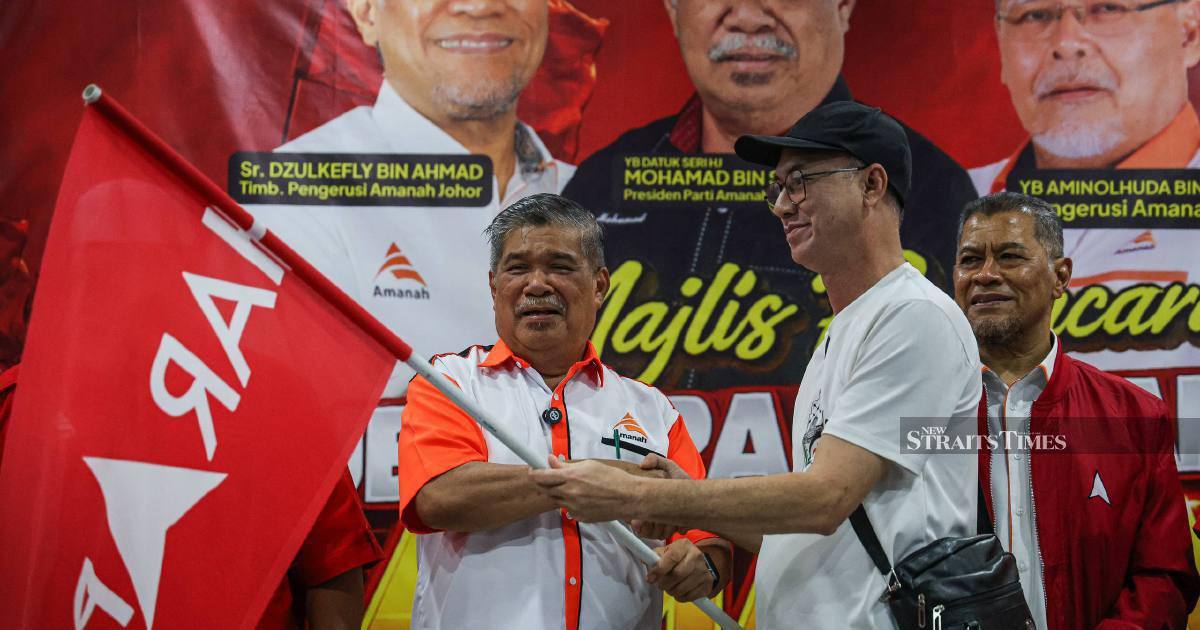
Amanah is gearing up for the Johor state election on July 11 with a rejuvenated slate of candidates, deploying 13 fresh faces alongside six seasoned campaigners in an apparent strategy to balance youth-driven dynamism with electoral experience. Party president Mat Sabu announced the candidate lineup in Johor Baru, signalling the Islamic party's commitment to expanding its footprint in a state that has long been dominated by the Barisan Nasional coalition and more recently contested by Perikatan Nasional.
The decision to elevate new candidates reflects broader shifts occurring across Malaysian political parties as they recalibrate their positioning ahead of anticipated electoral contests. For Amanah, which has gradually consolidated its presence within the Pakatan Harapan coalition, the infusion of newcomers represents both an opportunity to energise grassroots engagement and a calculated risk in seeking to displace entrenched incumbents from opposing camps. The Johor context carries particular significance, given the state's historical importance as a political battleground and its substantial representation in the federal parliament.
Amanah's 19-seat contest represents a significant commitment of resources and political capital to Johor. The party has been steadily building organisational infrastructure across peninsular Malaysia, and the state election provides a crucial platform to test its appeal beyond its core urban and intellectual constituencies. By introducing new candidates, Amanah potentially addresses voter fatigue with familiar faces whilst simultaneously reducing the baggage that some senior politicians carry from earlier electoral cycles.
The balance between debut candidates and returning members suggests a calculated approach rather than wholesale generational replacement. The six returning candidates presumably bring victory track records or perform important symbolic functions within their respective constituencies, anchoring Amanah's campaign with demonstrable success stories. These incumbents or previous strong performers can serve as mentors to the new entrants, potentially smoothing the integration of inexperienced campaigners into the party machinery.
For Malaysian voters and observers, the composition of Amanah's candidate list merits closer scrutiny as indicating the party's strategic direction. The Islamic agenda, governance credentials, and social policy positioning of these newcomers will signal whether Amanah intends to deepen its role as the progressive wing of Malaysia's Muslim-led political opposition or whether it seeks broader appeal that transcends religious demography. The socioeconomic background and professional credentials of the 13 new faces will reveal much about the party's vision for constituency representation and legislative priorities.
Johor's political landscape has experienced considerable turbulence over the past decade, with shifting coalitions and changing voter preferences reshaping traditional power structures. Amanah's entry into multiple constituencies reflects confidence in capitalising on whatever fractures exist within the ruling coalitions. The state's economic reliance on port operations, tourism, and manufacturing means that candidates' proposals on employment, industrialisation policy, and cost of living will resonate significantly with voters.
The July 11 election date positions this contest within a broader electoral calendar that includes various state and federal contests scheduled for the coming months. Amanah's performance in Johor will likely establish momentum or demonstrate limitations that affect its standing for subsequent elections, making the candidate selection particularly consequential. A strong showing could validate the party's coalition partnership and enhance its voice in national policy discussions, whilst a disappointing result might necessitate strategic recalibration.
Malaysian political parties routinely deploy fresh candidates as signals of renewal and commitment to their constituencies. However, the success of such strategies depends heavily on the quality of candidate vetting, campaign support structures, and the resonance of party messaging with local voters. Amanah's party machinery will need to invest substantially in supporting these newcomers through intensive campaign guidance, resource allocation, and coordinated outreach efforts to overcome the incumbent advantage that ruling coalition candidates typically enjoy.
The introduction of 13 new candidates also speaks to the competitive pressures Amanah faces from other opposition parties, particularly those within and outside the Pakatan Harapan alliance. Democratic Action Party and People's Justice Party also field candidates in Johor, potentially fragmenting opposition votes in certain constituencies. Amanah's strategy may involve targeting specific marginal seats where its organisational strength and ideological positioning offer genuine winning prospects rather than attempting comprehensive coverage of all constituencies.
For Southeast Asian observers tracking Malaysia's democratic trajectory, Amanah's candidate deployment exemplifies how opposition parties navigate the complex terrain of Malaysia's electoral system, voter expectations, and coalition politics. The party's evolution from a relatively new entrant into a coalition mainstay reflects broader normalisation of political competition, though Malaysia's institutional frameworks and regulatory environment continue to shape the competitive space within which parties operate.
As campaigning intensifies for the July 11 election, the performance of Amanah's candidates—particularly the newcomers—will provide valuable data about voter receptiveness to fresh political voices and the durability of existing political alignments. The election will ultimately determine whether Amanah's candidate strategy succeeds in translating organisational commitment into electoral gains or whether structural advantages held by entrenched incumbents prove too formidable.
%22%2F%3E%3C%2Fpattern%3E%3C%2Fdefs%3E%3Crect%20width%3D%22100%25%22%20height%3D%22100%25%22%20fill%3D%22url(%23ph4rgoug)%22%2F%3E%3Crect%20width%3D%22100%25%22%20height%3D%22100%25%22%20fill%3D%22url(%23ph4rgoup)%22%2F%3E%3Ctext%20x%3D%2250%25%22%20y%3D%2250%25%22%20text-anchor%3D%22middle%22%20dominant-baseline%3D%22central%22%20fill%3D%22rgba(255%2C255%2C255%2C0.95)%22%20font-family%3D%22Georgia%2C%20'Times%20New%20Roman'%2C%20serif%22%20font-weight%3D%22700%22%20font-size%3D%22226%22%20letter-spacing%3D%22-0.02em%22%3EPenang%3C%2Ftext%3E%3C%2Fsvg%3E)
%22%2F%3E%3C%2Fpattern%3E%3C%2Fdefs%3E%3Crect%20width%3D%22100%25%22%20height%3D%22100%25%22%20fill%3D%22url(%23ph4gj7hg)%22%2F%3E%3Crect%20width%3D%22100%25%22%20height%3D%22100%25%22%20fill%3D%22url(%23ph4gj7hp)%22%2F%3E%3Ctext%20x%3D%2250%25%22%20y%3D%2250%25%22%20text-anchor%3D%22middle%22%20dominant-baseline%3D%22central%22%20fill%3D%22rgba(255%2C255%2C255%2C0.95)%22%20font-family%3D%22Georgia%2C%20'Times%20New%20Roman'%2C%20serif%22%20font-weight%3D%22700%22%20font-size%3D%22272%22%20letter-spacing%3D%22-0.02em%22%3EFahmi%3C%2Ftext%3E%3C%2Fsvg%3E)