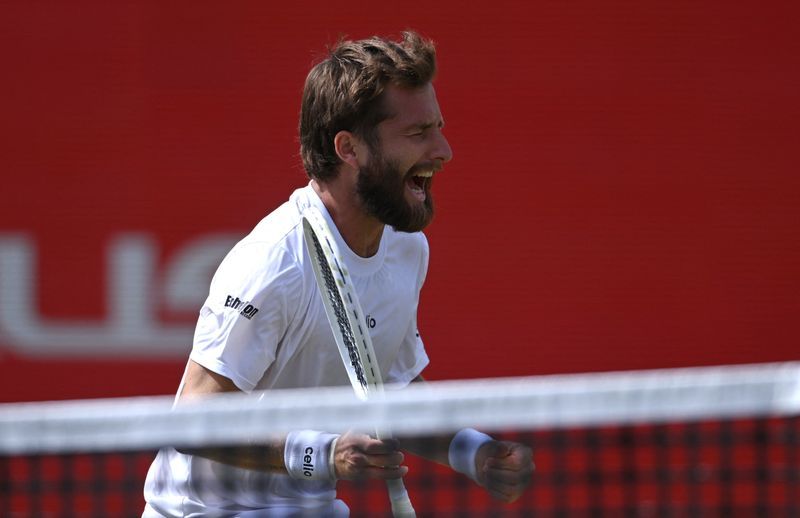
French tennis player Corentin Moutet has forfeited nearly all of his earnings from the prestigious Queen's Club tournament after incurring a substantial fine for his conduct during a televised post-match interview. The ATP has handed the 27-year-old a $40,000 penalty for unsportsmanlike behaviour, effectively eliminating the $43,000 in prize money he earned by reaching the second round of the London grass-court event. The world number 36 has filed an appeal against the decision, signalling his intention to contest the ruling.
The disciplinary action stems from an exchange that took place on court immediately following Moutet's opening-round victory over fellow Frenchman Giovanni Mpetshi Perricard. During the BBC's post-match interview, the player uttered profanities on no fewer than seven occasions, drawing an intervention from the interviewer who politely requested that he refrain from repeating one particular expletive. Rather than complying with this reasonable request, Moutet continued to swear repeatedly before the broadcaster ultimately cut short the segment and issued apologies to both the live crowd and television audience.
The trigger for Moutet's apparent frustration during the interview was the delivery of a 142mph second serve that produced an ace on match point—a moment that evidently prompted his initial outburst. While such intensity is not uncommon in professional tennis, where emotions run high during crucial moments, the subsequent repetition of obscenities across multiple turns of speech crossed the line from momentary passion into sustained breach of conduct standards. The player later attempted to defuse the situation by posting on Instagram that he had merely been joking, suggesting he viewed the incident as lighthearted banter rather than a serious transgression.
This disciplinary matter arrives at a particularly inopportune moment in Moutet's tournament, as he subsequently fell to Spain's Alejandro Davidovich Fokina in his second-round match. The loss meant the Frenchman's run at Queen's came to an early end, and combined with the substantial fine, has resulted in a financially disappointing fortnight for a player competing at the elite level of professional tennis. For context, prize money at grand tournaments often represents crucial income for mid-ranking players, and the loss of nearly $43,000 represents a significant financial setback.
Moutet's disciplinary record suggests this is not an isolated incident of behavioural issues during competition. In 2022, the French player was defaulted from the Adelaide International after directing profanities at the umpire during a match against Serbian opponent Laslo Djere. That incident demonstrated a pattern of struggling to maintain composure in high-pressure situations, a crucial skill expected of professional athletes competing on the world stage. The severity of being defaulted from a tournament—essentially ejected mid-competition—underscored how seriously the tennis authorities treat such conduct violations.
The French Tennis Federation added to Moutet's disciplinary history that same year by withdrawing support, citing ongoing behavioural concerns. This institutional sanction from his own national federation suggests the issues extended beyond isolated courtside incidents and reflected broader concerns about how he conducted himself within the professional tennis ecosystem. The FFT's decision to distance itself from the player indicated that behaviour management was viewed as a fundamental development area requiring attention.
The ATP's decision to levy such a substantial fine—one that nearly matches Moutet's entire Queen's earnings—demonstrates the governing body's commitment to maintaining broadcast standards and ensuring that on-court interviews conducted for television audiences meet minimum decency thresholds. Broadcasters have a responsibility to their viewers, including families watching live coverage during the day, and players must understand that microphones capture their language and conduct. The BBC's swift action in cutting short the interview reflected standard protocol when unexpected profanity occurs during live television.
For Malaysian and Southeast Asian tennis enthusiasts, this incident serves as a reminder of the professional standards expected in international sport, where regional athletes increasingly compete against European, American, and other global competitors. The incident also illustrates how modern broadcast technology means that conduct at elite tournaments reaches audiences worldwide instantaneously, making reputation management and composure all the more critical for emerging players seeking to build sponsorship relationships and fan bases.
Moutet's appeal of the ATP fine provides a potential avenue for reducing the financial penalty, though the underlying conduct that triggered the action remains undisputed. How the player responds to this latest disciplinary matter—whether through genuine behavioural reform or continued resistance to authority—may well determine his trajectory in professional tennis. At 27 years old and ranked 36th globally, Moutet possesses the talent to progress further, but sustained issues with conduct could ultimately limit his career ceiling and earning potential in a sport that increasingly scrutinises player behaviour both on and off court.
%22%2F%3E%3C%2Fpattern%3E%3C%2Fdefs%3E%3Crect%20width%3D%22100%25%22%20height%3D%22100%25%22%20fill%3D%22url(%23ph4rgoug)%22%2F%3E%3Crect%20width%3D%22100%25%22%20height%3D%22100%25%22%20fill%3D%22url(%23ph4rgoup)%22%2F%3E%3Ctext%20x%3D%2250%25%22%20y%3D%2250%25%22%20text-anchor%3D%22middle%22%20dominant-baseline%3D%22central%22%20fill%3D%22rgba(255%2C255%2C255%2C0.95)%22%20font-family%3D%22Georgia%2C%20'Times%20New%20Roman'%2C%20serif%22%20font-weight%3D%22700%22%20font-size%3D%22226%22%20letter-spacing%3D%22-0.02em%22%3EPenang%3C%2Ftext%3E%3C%2Fsvg%3E)
%22%2F%3E%3C%2Fpattern%3E%3C%2Fdefs%3E%3Crect%20width%3D%22100%25%22%20height%3D%22100%25%22%20fill%3D%22url(%23ph4gj7hg)%22%2F%3E%3Crect%20width%3D%22100%25%22%20height%3D%22100%25%22%20fill%3D%22url(%23ph4gj7hp)%22%2F%3E%3Ctext%20x%3D%2250%25%22%20y%3D%2250%25%22%20text-anchor%3D%22middle%22%20dominant-baseline%3D%22central%22%20fill%3D%22rgba(255%2C255%2C255%2C0.95)%22%20font-family%3D%22Georgia%2C%20'Times%20New%20Roman'%2C%20serif%22%20font-weight%3D%22700%22%20font-size%3D%22272%22%20letter-spacing%3D%22-0.02em%22%3EFahmi%3C%2Ftext%3E%3C%2Fsvg%3E)