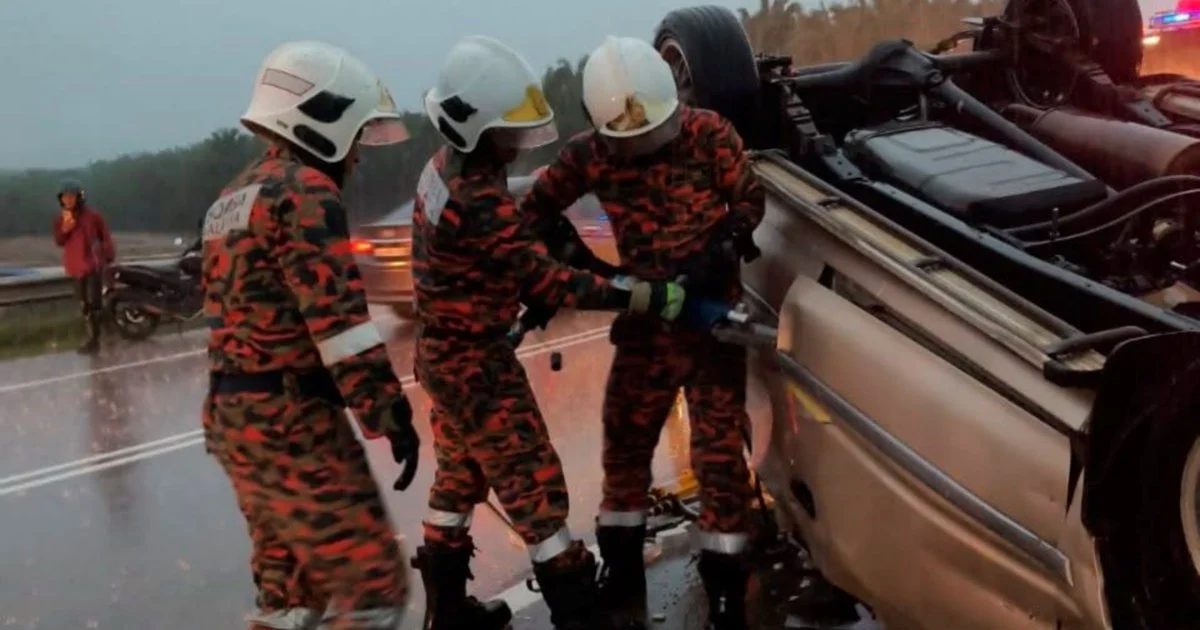
Two sisters were among four people killed in two separate road crashes that unfolded in Pahang within less than an hour, underscoring the persistent dangers facing motorists on Malaysian highways and rural routes. The incidents occurred in Maran and Pekan, two towns located within the Pahang interior, where traffic conditions and road infrastructure continue to pose significant hazards to commuters and travellers.
The clustering of fatal accidents within such a compressed timeframe raises questions about road safety management and the factors contributing to multiple collisions across different locations simultaneously. In Pahang particularly, where vast distances separate urban centres and traffic monitoring resources are stretched, the occurrence of two major incidents within 60 minutes reflects broader challenges in accident prevention and emergency response coordination.
Traffic fatalities in Malaysia remain a persistent public health concern, with road accidents consistently ranking among the leading causes of death, particularly among working-age adults. The losses recorded in the two Pahang collisions add to the grim statistics that authorities monitor throughout the year, especially during peak travel periods and festive seasons when road usage intensifies dramatically.
The death of two sisters in a single incident carries particular emotional resonance for families and communities affected by such tragedies. Beyond individual loss, road fatalities create cascading impacts on extended family networks and local economies, particularly when working-age individuals are involved. The simultaneous occurrence of multiple fatal accidents amplifies community shock and focuses public attention on systemic safety failures.
Maran and Pekan, though distinct municipalities, share infrastructure and transportation corridors typical of Pahang's interior regions. These areas often experience varying levels of traffic management and may lack consistent safety features such as modern street lighting, clear road markings, or regular maintenance protocols that characterise urban expressways. The geographic separation between the two crash sites suggests they may have involved different causative factors rather than representing a single incident cascade.
Road safety interventions in Malaysia have historically focused on enforcement, vehicle safety standards, and driver education programmes. However, infrastructure improvements, particularly in East Coast states like Pahang, remain slower than in more densely populated regions. The incidents highlight how rural and semi-rural road networks continue to present elevated risks to users despite years of awareness campaigns and regulatory efforts.
Emergency response coordination across multiple simultaneous incidents tests local authorities' capacity to manage major incidents effectively. In Pahang, where ambulance services and hospital trauma units must serve expansive territories, dual fatalities occurring concurrently can strain resources and impact response times. Improved coordination between police, fire and rescue services, and medical facilities becomes critical during such crises.
The timing of these accidents—occurring within 60 minutes—may reflect common risk factors such as weather conditions, traffic congestion, or time-of-day factors that increase collision likelihood. Alternatively, separate causative factors may have coincidentally aligned. Understanding the specific circumstances requires detailed accident investigation by the Pahang Police Traffic Investigation and Enforcement Division (JSPT) and forensic teams.
For Malaysian road users, incidents such as these serve as sobering reminders of the unpredictability and irreversibility of traffic accidents. Despite decades of safety messaging and regulatory frameworks, driver behaviour, mechanical failures, environmental conditions, and infrastructure limitations continue to generate preventable deaths. The loss of two sisters in a single event emphasises how personal tragedy and statistical mortality become intertwined on Malaysian roads.
The Pahang accidents underscore the need for renewed focus on East Coast road safety infrastructure and resource allocation. While major expressways connecting Kuala Lumpur and the east coast have undergone modernisation, secondary routes serving towns like Maran and Pekan often lag in safety features and maintenance standards. Investment in these areas could reduce accident frequency and severity.
Beyond immediate grief and investigation, these incidents prompt broader reflection on road user responsibility and institutional accountability. Malaysian authorities, working through agencies like the Royal Malaysia Police and the Road Transport Department, continue promoting defensive driving programmes and vehicle safety standards. Yet implementation gaps and inconsistent enforcement persist across different states and jurisdictions.
Community responses to such tragedies frequently generate temporary heightened awareness of road dangers, reflected in social media discussions and local news coverage. However, sustaining behavioural change and infrastructure improvements remains challenging without consistent policy commitment and resource allocation. The deaths in Maran and Pekan will resonate within Pahang communities but risk becoming absorbed into the national road fatality narrative without catalysing systemic reform.
Moving forward, comprehensive reviews of accident investigation findings from both incidents could reveal patterns or modifiable factors applicable to Pahang and similar regions across Malaysia. Whether involving vehicle maintenance, road design, traffic management, or driver behaviour, evidence-based interventions targeting identified root causes offer the most promise for preventing comparable tragedies.
%22%2F%3E%3C%2Fpattern%3E%3C%2Fdefs%3E%3Crect%20width%3D%22100%25%22%20height%3D%22100%25%22%20fill%3D%22url(%23ph4rgoug)%22%2F%3E%3Crect%20width%3D%22100%25%22%20height%3D%22100%25%22%20fill%3D%22url(%23ph4rgoup)%22%2F%3E%3Ctext%20x%3D%2250%25%22%20y%3D%2250%25%22%20text-anchor%3D%22middle%22%20dominant-baseline%3D%22central%22%20fill%3D%22rgba(255%2C255%2C255%2C0.95)%22%20font-family%3D%22Georgia%2C%20'Times%20New%20Roman'%2C%20serif%22%20font-weight%3D%22700%22%20font-size%3D%22226%22%20letter-spacing%3D%22-0.02em%22%3EPenang%3C%2Ftext%3E%3C%2Fsvg%3E)
%22%2F%3E%3C%2Fpattern%3E%3C%2Fdefs%3E%3Crect%20width%3D%22100%25%22%20height%3D%22100%25%22%20fill%3D%22url(%23ph4gj7hg)%22%2F%3E%3Crect%20width%3D%22100%25%22%20height%3D%22100%25%22%20fill%3D%22url(%23ph4gj7hp)%22%2F%3E%3Ctext%20x%3D%2250%25%22%20y%3D%2250%25%22%20text-anchor%3D%22middle%22%20dominant-baseline%3D%22central%22%20fill%3D%22rgba(255%2C255%2C255%2C0.95)%22%20font-family%3D%22Georgia%2C%20'Times%20New%20Roman'%2C%20serif%22%20font-weight%3D%22700%22%20font-size%3D%22272%22%20letter-spacing%3D%22-0.02em%22%3EFahmi%3C%2Ftext%3E%3C%2Fsvg%3E)