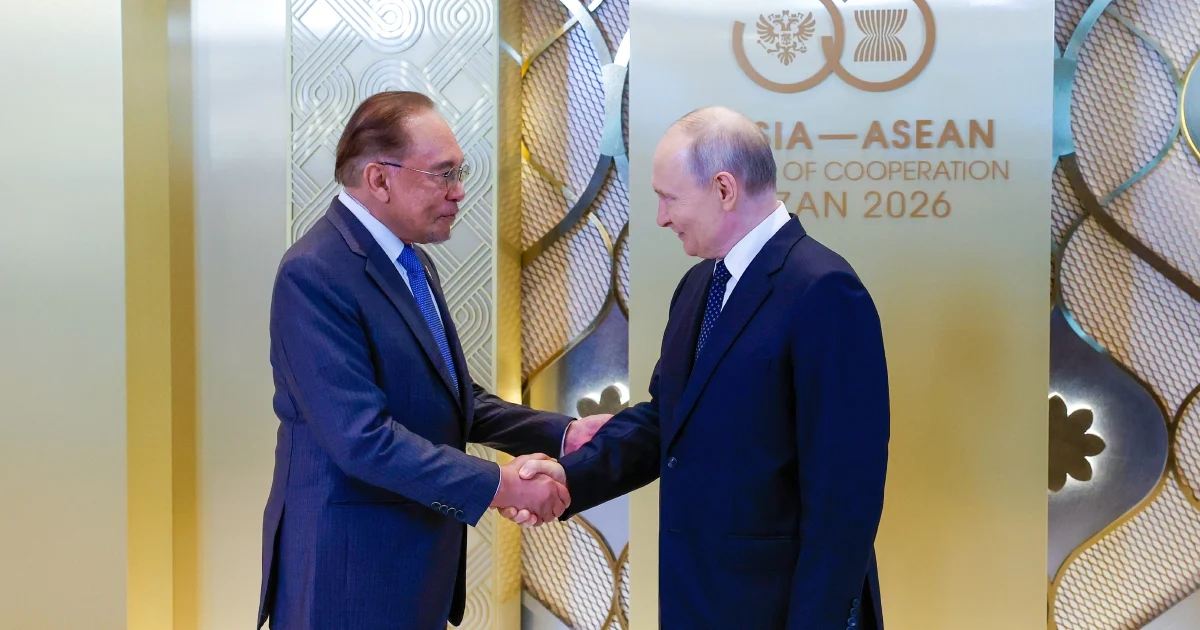
Malaysia is cementing its influence in global energy markets by cultivating relationships with leading energy-producing countries, Prime Minister Datuk Seri Anwar Ibrahim stated during a visit to Bintulu today, highlighting assurances from Russian President Putin regarding dependable energy deliveries.
The declaration underscores a deliberate policy shift toward diversifying Malaysia's energy sources and securing stable supplies beyond traditional partnerships. By engaging with established producers across different regions, the government aims to insulate the nation from supply disruptions and price volatility that often characterise international energy markets. This strategy recognises that overreliance on a single supplier or geographic region creates vulnerability, particularly for energy-dependent sectors including manufacturing, petrochemicals, and electricity generation.
Anwar's comments reflect broader regional concerns about energy independence and geopolitical influence. Southeast Asia, increasingly caught between competing great powers, has made energy security a cornerstone of its long-term planning. Malaysia's move to deepen ties with Russia represents part of a calculated effort to maintain options and flexibility in sourcing critical commodities. The timing of this engagement also signals Malaysia's willingness to navigate complex international relationships despite Western sanctions against Moscow, a pragmatic stance that prioritises domestic energy needs over external political pressures.
Russia's readiness to guarantee supplies carries strategic implications for both nations. For Moscow, maintaining energy partnerships with Asian economies provides revenue stability and geopolitical leverage in regions where Western influence has traditionally dominated. For Malaysia, securing commitments from such a major producer offers long-term price certainty and reduces dependence on Middle Eastern suppliers, where political instability occasionally disrupts markets. The arrangement potentially covers both traditional oil and gas supplies as well as emerging energy vectors like liquefied natural gas.
The Bintulu location of Anwar's announcement holds particular significance, as the coastal Sarawak town serves as a hub for Malaysia's petroleum and gas industries. Major oil and gas facilities operate in the region, making it symbolically appropriate for announcements about energy strategy. The choice of venue signals to both domestic stakeholders and international observers that energy security remains a top-tier government priority.
Malaysia's approach to diversifying energy partnerships extends beyond Russia. The government has been exploring arrangements with other major producers across Asia, the Middle East, and Africa, creating a portfolio that spreads risk and ensures continuity of supply regardless of disruptions in any single corridor. This multifaceted strategy contrasts with historical patterns where small and medium-sized nations often defaulted to a handful of suppliers, leaving themselves exposed to manipulation.
The geopolitical context surrounding these energy agreements deserves consideration. Western sanctions against Russia have prompted Moscow to intensify trade relationships with Asian and African nations, creating opportunities for countries willing to engage. Malaysia, maintaining a non-aligned foreign policy tradition dating to its founding principles, positions itself as a bridge between competing power centres rather than committing exclusively to any bloc. Energy partnerships represent a concrete expression of this balancing act.
For Malaysian consumers and businesses, such agreements promise moderate energy costs and reliable supply chains essential for economic competitiveness. Manufacturing sectors dependent on consistent electricity and fuel supplies can plan long-term investments with greater confidence when government-to-government arrangements guarantee delivery. Additionally, stable energy availability supports growth in energy-intensive industries including data centres, refineries, and integrated petrochemical complexes that drive export revenues.
The implications extend to Malaysia's regional standing within ASEAN. As Southeast Asian nations grapple with coordinated approaches to energy security, individual states pursuing bilateral arrangements contribute to a complex mosaic of agreements that collectively shape regional energy dynamics. Malaysia's proactive engagement demonstrates leadership in securing resources for one of the region's most developed economies.
Looking forward, these commitments will likely deepen as both Malaysia and Russia recognise mutual advantages. Malaysia gains reliable supply certainty while Russia secures market access outside Western-dominated spheres. The relationship also opens avenues for cooperation in other areas including technology transfer, investment partnerships, and joint development of energy resources. Such comprehensive engagement transforms energy supply agreements from transactional arrangements into broader strategic partnerships.
The government's emphasis on long-term supply assurances reflects lessons learned from previous energy market volatility and geopolitical shocks that disrupted supplies. By locking in commitments now through high-level diplomatic channels, Malaysia builds resilience into its energy infrastructure for decades ahead. This forward-looking perspective aligns with national development plans that envision sustained economic expansion requiring increasingly secure energy foundations.