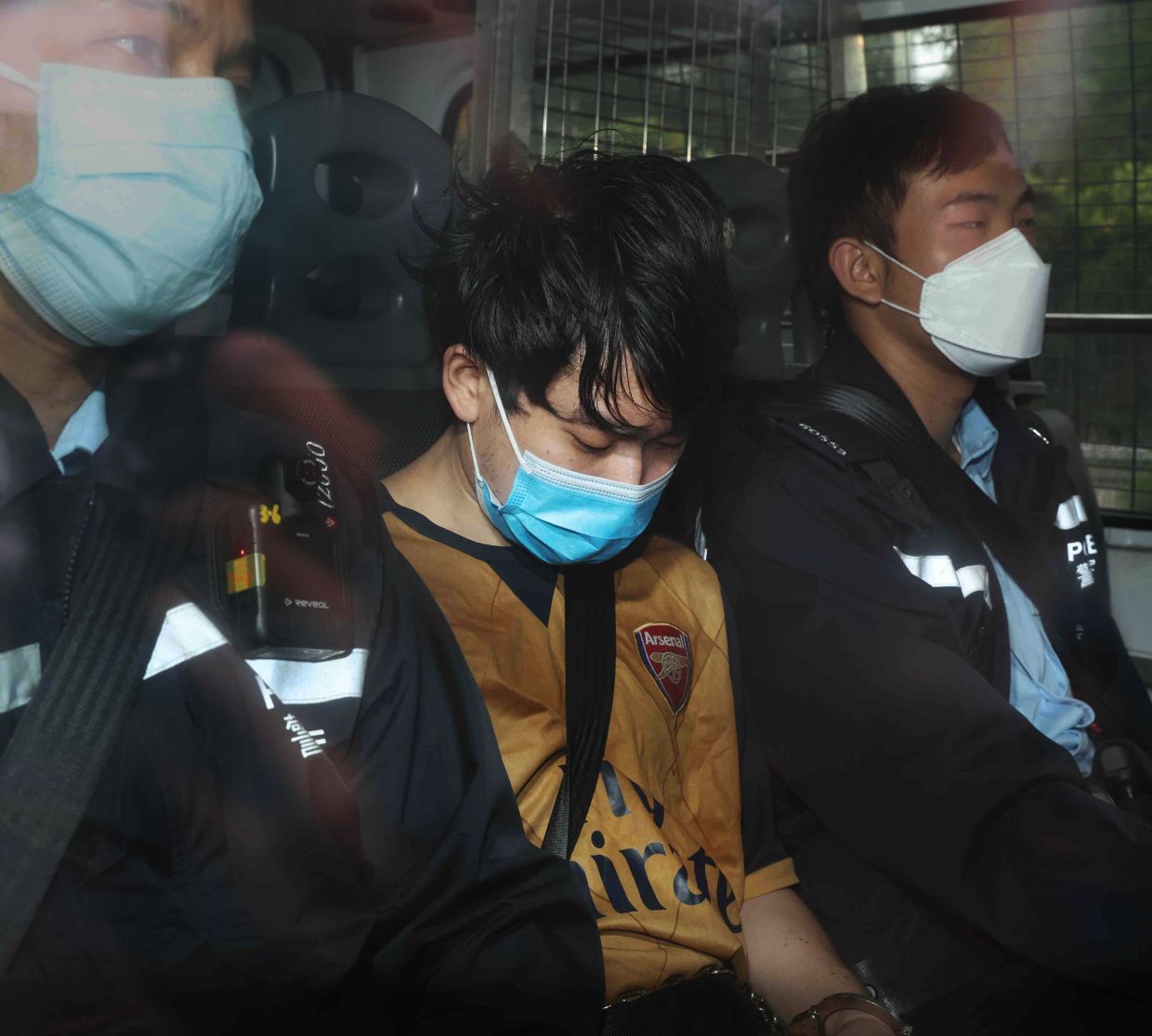
A 29-year-old jobless Hong Kong resident has offered an unusual defence in his trial for allegedly murdering his girlfriend four years ago: he claims he accidentally beat her to death in an attempt to help her lose weight. Ng Ka-sing faces charges of murder and illegal body disposal in connection with the death of his 30-year-old partner Yip Tsz-ching, whose body was discovered wrapped in quilts and plastic on a wheelboard in the Hung Shui Kiu area in April 2022. The case has drawn significant attention for its bizarre circumstances and the defendant's evolving explanations to authorities.
The incident occurred at a 700 square foot flat in Galore Garden between April 28 and 29, 2022, where Ng and Yip lived alongside his sworn sister's family. According to evidence presented at the High Court, Ng admitted to police that he had struck his girlfriend repeatedly with a rod over several hours, believing that keeping her awake would support her weight management goals. The prosecution has cast serious doubt on this account, with senior public prosecutor Audrey Parwani telling the jury that Ng has provided multiple conflicting explanations for his girlfriend's injuries and death.
The timeline of events as presented by the defence reveals a disturbing pattern of violence spanning approximately 19 hours. Ng allegedly began the beating at around 10 p.m. on April 27, continuing intermittently until 1.30 a.m. the following morning, then resuming again between 3 a.m. and 5.30 a.m. on April 28. According to his statement, when Ng questioned whether he should stop the assault, his sworn sister—who shared the living space—allegedly encouraged him to "continue for a bit longer". Ng has claimed he continued only because Yip did not explicitly tell him to cease, a justification that strains credibility given the severity of her injuries.
The injuries sustained by Yip were extensive and severe. Forensic evidence revealed that she suffered corrosive burns covering 55 percent of her body. According to Ng's account, Yip poured drain cleaner over herself, while he splashed the chemical on the floor to "stimulate" her feet. The defendant also claimed that Yip hit herself against a wall seven to eight times after slipping on the contaminated floor. By 5 a.m. on April 28, Yip reportedly told Ng that she was in pain and believed she might not survive. She lapsed into a coma after last speaking at 7.21 a.m., ultimately dying from suffocation following head injuries and the extensive chemical burns.
The discovery of Yip's body brought the case to public attention in a manner that undermined any narrative of accidental death. Early morning joggers spotted a human leg protruding from a rolled-up quilt on Ng's wheelboard at approximately 6 a.m. on April 29. Lau Kwok-yan, who reported the discovery to police, testified that Ng stood passively on the street while awaiting officers, showing no apparent panic or distress. When questioned by street cleaner Wong Ah-sum about the bundle, Ng straightforwardly identified it as a "corpse" and claimed he intended to transport it to a police station. Upon arrest at 6.36 a.m., Ng stated: "This was my girlfriend. I hit her to death with a rod by mistake."
The manner in which the body was prepared and concealed reveals premeditation inconsistent with a claim of accidental death. Forensic evidence specialist Lo Man-hung discovered that Yip's body had been securely tied to a toppled wooden chair using black rubbish bags. Her entire head was wrapped in multiple layers of cling film and adhesive tape, and the body was covered with a quilt. Such elaborate wrapping and restraint procedures suggest deliberate concealment rather than panic following an accident. Government pathologist Dr Foo Ka-chung estimated that Yip had been deceased for 12 to 24 hours at the time of discovery, indicating the body had remained in the flat for an extended period before Ng attempted to transport it.
The forensic pathology findings paint a picture of sustained and severe violence. Dr Foo identified multiple bruises, abrasions, and lacerations distributed across Yip's head and other body parts, consistent with blunt force trauma such as punching and kicking. The cause of death was determined to be suffocation following head injuries and the extensive chemical burns covering her chest, abdomen, and limbs. Such injuries are incompatible with the defensive account of a well-intentioned but misguided weight loss intervention.
Ng was initially charged with murder, but subsequently offered to plead guilty to the lesser offence of manslaughter. The prosecution rejected this offer, indicating confidence in securing a conviction on the more serious charge. This decision suggests that prosecutors believe the evidence establishes intent or recklessness sufficiently grave to warrant a murder conviction rather than accepting a manslaughter plea that would imply lesser culpability. The rejection underscores the prosecution's assessment that Ng's account is fundamentally unreliable and that the circumstances surrounding Yip's death demonstrate deliberate rather than accidental violence.
The trial, presided over by Mrs Justice Judianna Barnes, features a seven-member jury and is expected to extend over 18 days. The case presents several critical issues for the jury to resolve: whether Ng's explanation of attempting to facilitate weight loss through sleep deprivation and violence is credible, whether the extent and nature of injuries could plausibly result from such an intervention, and whether the elaborate concealment of the body is consistent with an accidental death. The jury must weigh Ng's own admissions against the physical evidence and the prosecution's assertion that his various explanations to police represent attempts to minimize his culpability.
For Malaysian and Southeast Asian observers, the case highlights ongoing concerns about domestic violence and the particular vulnerability of individuals living in shared accommodation with limited oversight. The involvement of Ng's sworn sister, who allegedly encouraged continuation of the assault, adds a troubling dimension regarding complicity and the failure of witnesses to intervene in violent situations. The case also underscores how offenders sometimes construct implausible defence narratives in attempt to escape serious charges, relying on juries to accept explanations that strain credibility when examined against forensic and circumstantial evidence. The outcome of this trial may have implications for how courts in the region evaluate claims of accidental death in cases involving significant trauma and injury.
%22%2F%3E%3C%2Fpattern%3E%3C%2Fdefs%3E%3Crect%20width%3D%22100%25%22%20height%3D%22100%25%22%20fill%3D%22url(%23ph54z1rg)%22%2F%3E%3Crect%20width%3D%22100%25%22%20height%3D%22100%25%22%20fill%3D%22url(%23ph54z1rp)%22%2F%3E%3Ctext%20x%3D%2250%25%22%20y%3D%2250%25%22%20text-anchor%3D%22middle%22%20dominant-baseline%3D%22central%22%20fill%3D%22rgba(255%2C255%2C255%2C0.95)%22%20font-family%3D%22Georgia%2C%20'Times%20New%20Roman'%2C%20serif%22%20font-weight%3D%22700%22%20font-size%3D%22272%22%20letter-spacing%3D%22-0.02em%22%3EMITRA%3C%2Ftext%3E%3C%2Fsvg%3E)
%22%2F%3E%3C%2Fpattern%3E%3C%2Fdefs%3E%3Crect%20width%3D%22100%25%22%20height%3D%22100%25%22%20fill%3D%22url(%23ph1sg7mg)%22%2F%3E%3Crect%20width%3D%22100%25%22%20height%3D%22100%25%22%20fill%3D%22url(%23ph1sg7mp)%22%2F%3E%3Ctext%20x%3D%2250%25%22%20y%3D%2250%25%22%20text-anchor%3D%22middle%22%20dominant-baseline%3D%22central%22%20fill%3D%22rgba(255%2C255%2C255%2C0.95)%22%20font-family%3D%22Georgia%2C%20'Times%20New%20Roman'%2C%20serif%22%20font-weight%3D%22700%22%20font-size%3D%22320%22%20letter-spacing%3D%22-0.02em%22%3ERim%3C%2Ftext%3E%3C%2Fsvg%3E)