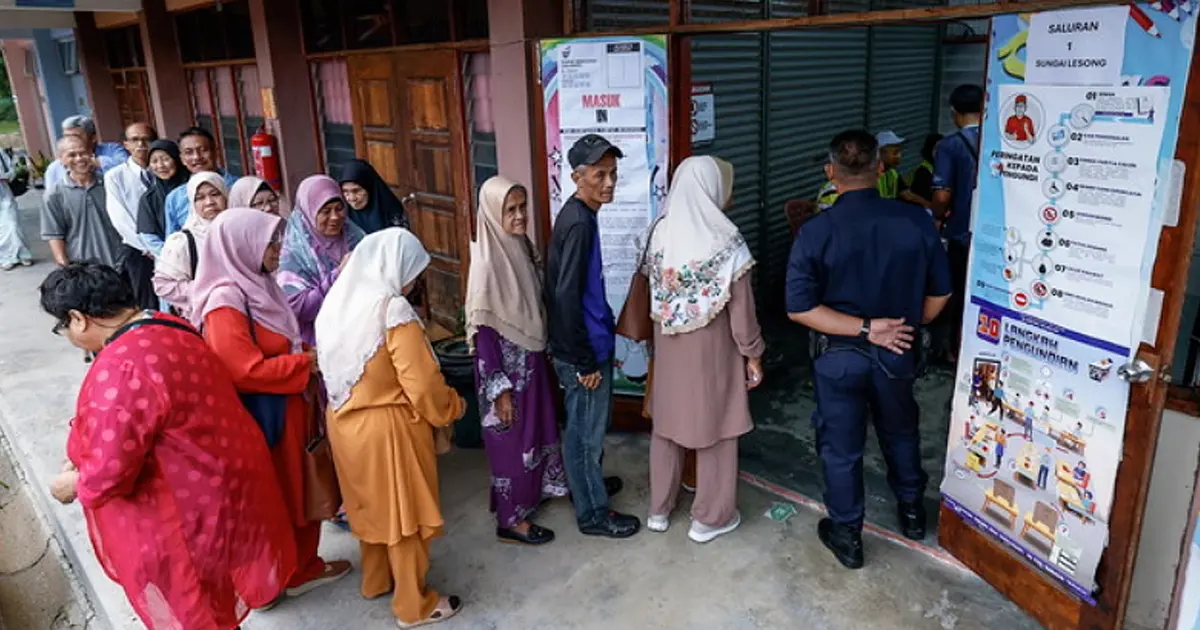
Prolonged wrangling over 3R issues—Religion, Royalty, and Rukun Negara—threatens to drain Malay voters of their political enthusiasm, according to Awang Azman Pawi of Universiti Malaya's political analysis department. The academic contends that while these themes carry cultural and constitutional weight, an endless cycle of debate may paradoxically alienate the demographic most directly invested in their preservation.
Awang Azman's observation arrives amid a political landscape where Malaysian parties increasingly pivot between identity-centred messaging and pragmatic governance pledges. The tension reflects a deeper strategic calculation: whether invoking foundational national principles consistently mobilises voters or whether repetition breeds indifference and cynicism. For Malay-majority constituencies, which form the electoral backbone of most ruling coalitions, the stakes are particularly acute.
The analyst emphasises that voters ultimately assess political parties through a dual lens. While symbolic and ideological commitments matter, Malaysians increasingly weigh parties against their demonstrated competence in managing the real economy. This shift suggests a gradual recalibration of voter priorities, particularly as household budgets face mounting pressures from inflation, utility costs, and transportation expenses.
Rising costs of living have emerged as a consistent pain point across Malaysia's demographic spectrum. From urban professionals to rural communities, the squeeze on household finances shapes voting behaviour more acutely than abstract constitutional debates. Parties that fail to address these material concerns risk appearing disconnected from voter priorities, regardless of how forcefully they champion 3R themes. Awang Azman's analysis suggests that this disconnect may prove electorally costly.
The concept of "emotional fatigue" carries particular significance in Malaysian politics. When parties repeatedly deploy identical rhetorical frameworks and issue priorities without demonstrable results, voter engagement can shift from active participation to resigned disengagement. Rather than galvanising support, endless iteration of the same themes may instead breed a weary detachment among core constituencies who feel their concerns are being subordinated to cyclical political messaging.
This dynamic is not unique to Malaysia. Across Southeast Asia, political parties leveraging identity-based appeals have discovered that such strategies possess diminishing returns if unaccompanied by credible economic performance. Thailand, Indonesia, and the Philippines have all witnessed instances where nationalist or religious rhetoric alone failed to overcome voter frustration with corruption, inflation, or inadequate public services. The lesson suggests that sustainable political support requires balancing ideological commitment with tangible governance delivery.
For Malaysian political practitioners, the implication is clear: the electorate, particularly the Malay-Muslim majority, expects their representatives to simultaneously protect constitutional arrangements and foundational principles while demonstrably improving living standards. Parties that attempt to substitute one for the other—or that deploy 3R messaging as a distraction from economic mismanagement—risk triggering precisely the voter apathy that Awang Azman warns against.
The timing of this analysis is instructive. As Malaysia navigates post-pandemic economic recovery and grapples with structural inflation challenges, voters face genuine hardship in affording housing, education, and basic necessities. Against this backdrop, political discourse that emphasises cultural preservation at the expense of addressing material welfare may appear tone-deaf or evasive. Parties perceived as avoiding economic responsibility through ideological posturing are likely to face electoral punishment.
Awang Azman's warning also reflects a broader intellectual current within Malaysian academia questioning whether contemporary politics has exhausted the mobilising capacity of traditionally potent identity narratives. If this assessment holds, the electoral battlefield is shifting toward performance-based evaluation, where voters judge parties principally on their ability to translate policy platforms into improved household conditions. This represents a potentially significant realignment in Malaysian political competition.
The implications extend beyond immediate electoral calculations. If Malay voters—the constituency for which 3R issues theoretically carry deepest resonance—exhibit fatigue with these recurring debates, the broader national conversation around constitutional fundamentals and identity-based governance could lose political salience. This might create space for more technocratic or issue-focused political competition, though it could also provoke reactionary efforts by parties seeking to revitalise ideological mobilisation through increasingly polarised rhetoric.
For political observers and strategists across the region, the Malaysian case illustrates a critical tension: identity-based politics remains powerful, but its potency depends on deployment strategy and complementary economic performance. Overreliance on cultural or constitutional messaging without delivering tangible improvements in living standards risks triggering voter burnout rather than sustained mobilisation. Parties that master the balance between defending fundamental principles and addressing bread-and-butter concerns are likely to command stronger, more durable electoral coalitions than those treating these dimensions as competing alternatives.


%22%2F%3E%3C%2Fpattern%3E%3C%2Fdefs%3E%3Crect%20width%3D%22100%25%22%20height%3D%22100%25%22%20fill%3D%22url(%23ph2yq5wg)%22%2F%3E%3Crect%20width%3D%22100%25%22%20height%3D%22100%25%22%20fill%3D%22url(%23ph2yq5wp)%22%2F%3E%3Ctext%20x%3D%2250%25%22%20y%3D%2250%25%22%20text-anchor%3D%22middle%22%20dominant-baseline%3D%22central%22%20fill%3D%22rgba(255%2C255%2C255%2C0.95)%22%20font-family%3D%22Georgia%2C%20'Times%20New%20Roman'%2C%20serif%22%20font-weight%3D%22700%22%20font-size%3D%22194%22%20letter-spacing%3D%22-0.02em%22%3EBernama%3C%2Ftext%3E%3C%2Fsvg%3E)