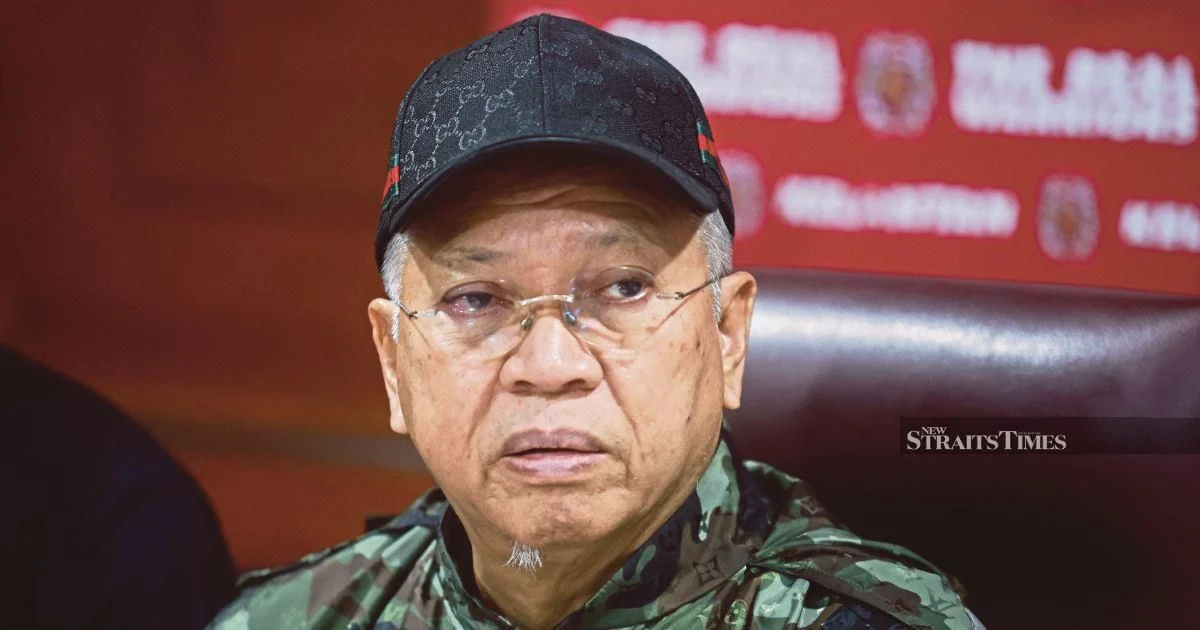
Tan Sri Annuar Musa has acknowledged that despite his personal interventions, efforts to heal widening divisions within the Perikatan Nasional coalition remain unsuccessful. Speaking in his home state of Kelantan, the senior political figure disclosed that he undertook multiple rounds of negotiations aimed at bridging disagreements between PAS and rival camps within Bersatu, the component parties driving Malaysia's current federal government arrangement.
The revelation underscores mounting strains within an alliance that has anchored the country's political landscape since 2020, when Perikatan Nasional first assumed power following the collapse of the Pakatan Harapan government. The coalition brought together organisations with divergent ideological orientations and territorial strongholds, creating structural vulnerabilities that have periodically threatened cohesion. As Malaysia's political dynamics continue to evolve, internal competition for influence and resources within coalition partners threatens to undermine their collective governing capacity.
Annuar's admission speaks to a pattern of escalating factional tensions that have preoccupied senior coalition figures in recent months. PAS, which controls key state governments and wields considerable influence within Perikatan Nasional, has increasingly found itself at odds with different Bersatu groupings over policy direction, ministerial appointments, and strategic priorities. These disagreements, while sometimes portrayed as personality clashes, reflect deeper structural incompatibilities between organisations with distinct power bases and organisational cultures.
The Bersatu situation is particularly complex, with multiple factions now competing for control and direction of the party. Rather than functioning as a unified political force, Bersatu has fragmented into competing camps with divergent visions for the party's future trajectory. This internal fragmentation creates complications for coalition management, as it becomes unclear which Bersatu faction represents the organisation's authentic position on key matters of governance and strategic alignment.
Peikatan Nasional's vulnerability to internal breakdown carries significant implications for Malaysia's political stability. Unlike opposition coalitions that can afford periodic divisions without immediate consequences for government operations, a ruling alliance faces constant pressure to maintain functional unity on critical votes and policy decisions. Every internal rift carries potential consequences for the government's legislative agenda, budgetary priorities, and ability to pass essential legislation through parliament.
Annuar's efforts at reconciliation likely involved behind-the-scenes diplomatic manoeuvres with senior figures across PAS and competing Bersatu camps, exploring potential compromise positions or confidence-building measures. Such efforts typically require patient negotiation, personal credibility across different factions, and willingness from disputants to prioritise collective interests over factional advantages. The failure of these attempts suggests that underlying disagreements run deeper than mere misunderstandings or communication breakdowns.
The significance of these developments extends beyond parliamentary mathematics. Malaysia's Kelantan, Annuar's political base, represents crucial terrain where PAS holds substantial influence and Bersatu maintains organisational presence. The state serves as a microcosm of broader coalition tensions, where local governance challenges, resource allocation, and political positioning intersect with national-level strategic considerations. Deteriorating harmony at regional level often signals deeper national coalition malaise.
For Southeast Asian political observers, Malaysia's coalition stability matters considerably given the region's broader patterns of unstable governments and coalition fragility. A successful Perikatan Nasional arrangement, despite its imperfections, demonstrates that ideologically diverse organisations can sustain functional governance partnerships. Conversely, coalition collapse would reinforce perceptions of regional democratic fragility and instantability that complicate long-term policy planning and investor confidence.
The inability to resolve current tensions through Annuar's mediation suggests that future coalition management will require either different diplomatic approaches, alternative conflict-resolution mechanisms, or acceptance of persistent underlying friction. Senior coalition leaders may need to develop more formalised frameworks for addressing disagreements, potentially including structured dispute-resolution processes or clearer protocols for resource-sharing and decision-making that reduce scope for future contention.
Addressing these challenges will test the maturity of Malaysian coalition politics. Perikatan Nasional partners must determine whether commitment to joint governance outweighs competitive impulses driving factional positioning. This requires not only high-level political will but also institutional innovations that align incentives toward coalition preservation rather than factional advancement at coalition expense.
Annuar's candid acknowledgement of reconciliation failure signals broader acceptance that Perikatan Nasional faces genuine structural challenges rather than temporary misunderstandings. Whether coalition participants can develop sustainable arrangements preserving joint interests whilst accommodating legitimate factional concerns will significantly influence not just government stability but Malaysia's trajectory through coming election cycles and policy challenges confronting the nation.


%22%2F%3E%3C%2Fpattern%3E%3C%2Fdefs%3E%3Crect%20width%3D%22100%25%22%20height%3D%22100%25%22%20fill%3D%22url(%23phd48ug)%22%2F%3E%3Crect%20width%3D%22100%25%22%20height%3D%22100%25%22%20fill%3D%22url(%23phd48up)%22%2F%3E%3Ctext%20x%3D%2250%25%22%20y%3D%2250%25%22%20text-anchor%3D%22middle%22%20dominant-baseline%3D%22central%22%20fill%3D%22rgba(255%2C255%2C255%2C0.95)%22%20font-family%3D%22Georgia%2C%20'Times%20New%20Roman'%2C%20serif%22%20font-weight%3D%22700%22%20font-size%3D%22151%22%20letter-spacing%3D%22-0.02em%22%3EMalaysian%3C%2Ftext%3E%3C%2Fsvg%3E)