%22%2F%3E%3C%2Fpattern%3E%3C%2Fdefs%3E%3Crect%20width%3D%22100%25%22%20height%3D%22100%25%22%20fill%3D%22url(%23ph2yq5wg)%22%2F%3E%3Crect%20width%3D%22100%25%22%20height%3D%22100%25%22%20fill%3D%22url(%23ph2yq5wp)%22%2F%3E%3Ctext%20x%3D%2250%25%22%20y%3D%2250%25%22%20text-anchor%3D%22middle%22%20dominant-baseline%3D%22central%22%20fill%3D%22rgba(255%2C255%2C255%2C0.95)%22%20font-family%3D%22Georgia%2C%20'Times%20New%20Roman'%2C%20serif%22%20font-weight%3D%22700%22%20font-size%3D%22194%22%20letter-spacing%3D%22-0.02em%22%3EBernama%3C%2Ftext%3E%3C%2Fsvg%3E)
Bernama's execution of the National Journalists' Day (HAWANA) 2026 Grand Finale in Butterworth has underscored the Malaysian National News Agency's ability to orchestrate complex, large-scale gatherings through its own personnel and resources. The event, held at PICCA Convention Centre @ Butterworth Arena on June 20, brought together roughly 1,000 media practitioners from across Malaysia and neighbouring ASEAN nations under the theme "Media Integrity Strengthens Credibility." The successful conclusion of the three-day gathering signals a maturation of Bernama's event management capabilities and validates its role as a strategic communications coordinator beyond its traditional newswire function.
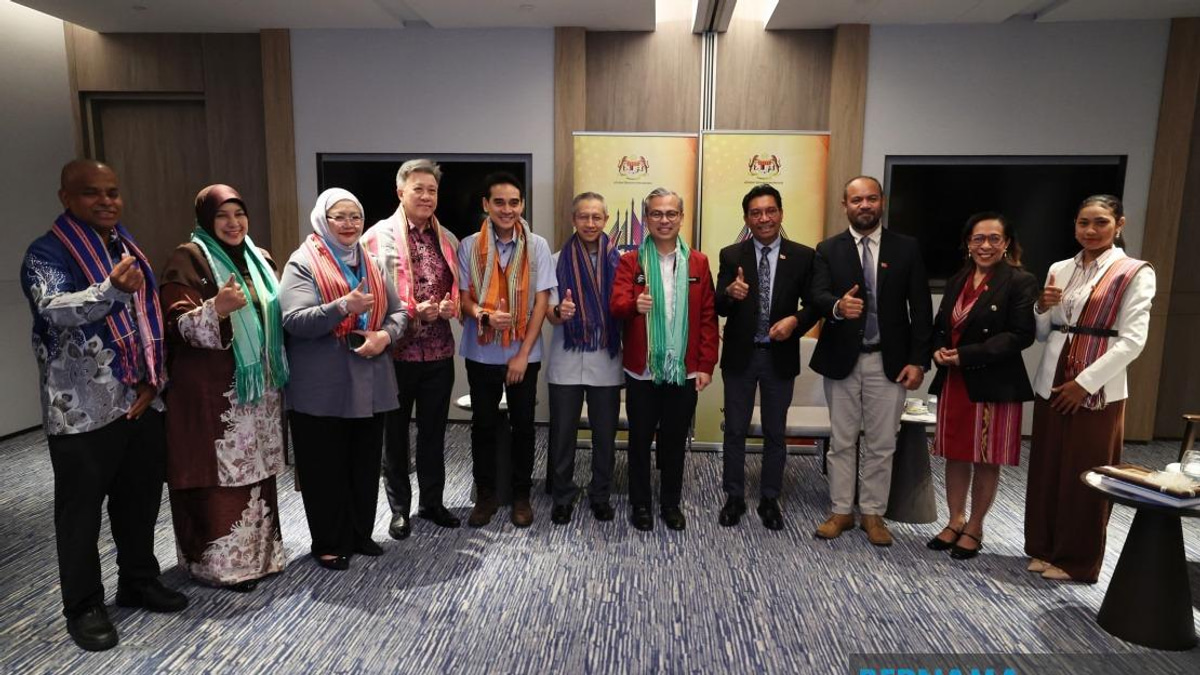
The scale and scope of HAWANA 2026 represented a significant undertaking for any organisation. Roughly a thousand journalists, editors, and media professionals converged on Penang, requiring coordination across accommodation, programming, venue logistics, and participant engagement. That Bernama managed this influx while maintaining the professional standards expected at a national journalism conference reflects substantive operational capability. The presence of Prime Minister Datuk Seri Anwar Ibrahim as official opener, alongside Penang Chief Minister Chow Kon Yeow and Communications Minister Datuk Fahmi Fadzil, elevated the event's prominence and demonstrated governmental confidence in the agency's execution.
Bernama chief executive officer Datin Paduka Nur-ul Afida Kamaludin, who chaired the HAWANA 2026 Working Committee, emphasised the agency's reliance on internal expertise rather than external contractors. This approach carries both practical and symbolic importance. Practically, it reduced costs and ensured continuity of messaging and brand identity throughout the event. Symbolically, it demonstrated that a government agency could develop sophisticated event management capabilities without depending on private sector intermediaries—a matter of institutional pride and organisational self-sufficiency.
A particularly noteworthy achievement was Bernama's execution of its first-ever live broadcast produced entirely through in-house efforts. The agency handled all production elements internally, including artificial intelligence-assisted video production, graphic design, poster layouts, and technical broadcasting logistics. This represents a meaningful expansion of Bernama's technical infrastructure and workforce capability. For a news agency traditionally focused on content gathering and distribution, developing broadcast production capacity signals strategic repositioning toward multimedia news delivery, an increasingly essential capability in the digital media landscape.
The reliance on AI-assisted production tools warrants particular attention for Malaysian and Southeast Asian media observers. As news organisations across the region grapple with technological transformation, Bernama's integration of artificial intelligence into event production suggests a pragmatic approach to modernisation. This neither replaces journalism expertise nor abandons human creative judgment; rather, it leverages computational tools to enhance efficiency and professional output quality. For other regional media organisations watching Bernama's evolution, the model demonstrates how government news agencies might adopt emerging technologies without sacrificing editorial independence or journalistic standards.
Nur-ul Afida indicated that the positive reception from attending media practitioners validated HAWANA's significance as an annual gathering for Malaysia's journalism community. Practitioners apparently expressed continued enthusiasm, with several already enquiring about venues for subsequent editions. This sustained interest suggests the event has transcended its initial positioning as a bureaucratic gathering and developed genuine professional value. Journalists view HAWANA as a legitimate platform for networking, professional development, and industry dialogue rather than merely as a government relations exercise.
The decision to rotate future HAWANA editions across different states represents a strategic approach to geographic inclusivity and regional media development. Nur-ul Afida articulated the intention to hold future events in other Malaysian states, thereby creating opportunities for provincial media communities to participate and for host regions to gain exposure and economic benefit from hosting visiting journalists. This decentralisation strategy aligns with broader Malaysian development priorities emphasising equitable growth beyond Kuala Lumpur and Selangor, while simultaneously strengthening bonds between federal communications institutions and state-level media ecosystems.
Bernama's continuous role as HAWANA's implementing agency has now extended into its sixth consecutive year under this responsibility. The agency's track record suggests the Communications Ministry views it as a reliable, capable partner for managing significant national media events. Nur-ul Afida explicitly expressed hope that the ministry would maintain this confidence, emphasising satisfaction with planning and organisational execution. This reflects an implicit understanding that successful institutional continuity depends on demonstrated performance and stakeholder satisfaction—Bernama must consistently deliver quality outcomes to retain its privileged position.
For Malaysian media professionals, HAWANA's evolution carries practical implications. The event provides a rare occasion when journalists from print, broadcast, digital, and alternative media platforms convene for collective dialogue and professional enrichment. The gathering's success in 2026 likely ensures continued access to such forums, benefiting individual career development and industry-wide professional standards. Moreover, the event's thematic focus on media integrity and credibility speaks to contemporary challenges facing journalism throughout Southeast Asia, where misinformation, political pressure, and commercial disruption increasingly threaten editorial independence.
From a regional perspective, HAWANA's ability to attract journalists from other ASEAN nations elevates its significance beyond Malaysia's borders. The event becomes a venue for cross-border professional exchange, allowing Southeast Asian journalists to share experiences, methodologies, and insights relevant to their respective markets. Given the region's diverse media landscapes—spanning from relatively open systems to more restrictive environments—such gatherings create valuable opportunities for peer learning and solidarity among practitioners navigating varied political and commercial pressures.
Bernama's successful management of HAWANA 2026 also reflects broader institutional transformation within Malaysia's government news sector. Beyond conventional newswire operations, the agency has developed expertise in event management, multimedia production, and stakeholder engagement. This diversification enhances Bernama's relevance and institutional value, justifying continued government investment and positioning the agency as a multifaceted communications organisation rather than a narrowly focused news distributor.
The event's conclusion marks not an endpoint but rather a foundation for future development. Bernama's demonstrated capability creates expectations for increasingly sophisticated future editions. Media practitioners who participated in HAWANA 2026 now expect comparable or enhanced experiences in subsequent years. This cyclical dynamic of performance and expectation will drive Bernama to continuously improve its event management practices, invest in new technologies and skills, and maintain the professional standards that have earned stakeholder confidence and industry respect.