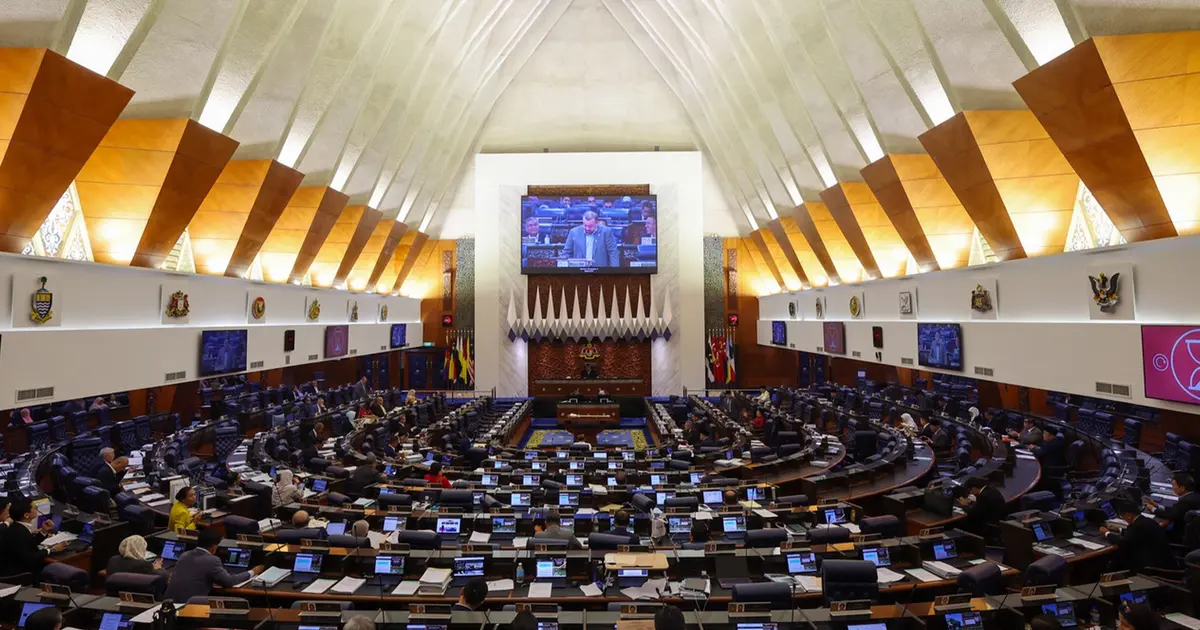
The Dewan Rakyat will convene from Monday to deliberate on four major bills, most prominently a constitutional amendment seeking to impose a decade-long ceiling on the prime minister's time in office. This measure represents a significant attempt at institutional reform, having been introduced during parliament's previous session before faltering at the critical stage of securing the supermajority needed for passage.
The proposal to establish a 10-year maximum term for Malaysia's chief executive addresses long-standing concerns within civil society and governance circles about concentrated executive power and the absence of constitutional safeguards on consecutive tenure. Proponents argue that structured limits would inject greater institutional discipline into the highest executive office, preventing indefinite accumulation of power and encouraging succession planning that extends beyond individual personalities.
The initial failure to secure two-thirds approval reflects the complexity of constitutional engineering in Malaysia's parliamentary system, where amendments require not merely simple majority support but substantial cross-party consensus. This supermajority threshold, while establishing a high bar for constitutional change, also reflects the founders' intention that fundamental institutional modifications command broad legislative agreement rather than narrow partisan advantage.
The reintroduction of this bill signals determination among its backers to advance the reform agenda despite previous setbacks. Parliamentary procedure allows reconsideration of measures that have not secured passage, provided sponsors maintain momentum and can marshal sufficient support across factional lines. The upcoming sitting therefore represents another crucial juncture in what has become an extended negotiation over constitutional governance structures.
Understanding the political arithmetic surrounding this legislation requires recognising the delicate balance in Malaysia's current parliament, where no single coalition commands overwhelming dominance. The two-thirds requirement necessitates meaningful cooperation between government and opposition benches, a condition that transforms constitutional amendments from partisan exercises into genuine exercises in cross-party consensus-building.
The proposal carries particular resonance in Southeast Asia, where questions of executive term limits have sparked contentious debates across the region. Thailand, Indonesia, and the Philippines have all grappled with similar constitutional questions, with outcomes ranging from successful term limitations to sustained struggles over succession arrangements. Malaysia's approach to this challenge will inevitably be observed by regional peers navigating comparable governance concerns.
Beyond the prime ministerial term bill, the three additional measures warrant serious scrutiny from observers tracking Malaysia's institutional evolution. While details of these companion bills remain less prominent in initial reporting, their collective inclusion in a single sitting suggests a coordinated legislative agenda addressing multiple facets of constitutional governance or parliamentary procedure.
The significance of this parliamentary sitting extends beyond mere legislative mechanics. Constitutional amendments represent moments when societies formally reconsider the fundamental rules governing state power and institutional relationships. Public and parliamentary engagement with these measures provides windows into contemporary thinking about accountability, representation, and the appropriate distribution of authority across the executive, legislative, and judicial branches.
For Malaysian businesses and international observers, the outcomes of these parliamentary deliberations carry implications beyond symbolic constitutional reform. Clarity regarding executive succession and institutional continuity affects investor confidence, policy predictability, and the perceived stability of governance frameworks. Markets and multinational corporations pay close attention to signals regarding the robustness of institutional constraints on executive discretion.
The coming parliamentary sitting also reflects broader momentum around institutional scrutiny in Malaysia following years of political turbulence and multiple government transitions. Civil society organisations, academic institutions, and concerned citizens have increasingly articulated views on constitutional governance, and parliamentary consideration of these bills demonstrates receptiveness, at least at the legislative level, to reform discussions that were previously considered beyond the bounds of serious political debate.
Success or failure of these measures will likely shape the trajectory of future constitutional conversations. Victory would demonstrate that supermajority consensus, while demanding, remains achievable on substantive governance questions. Conversely, renewed failure might prompt extended reconsideration of reform strategies, potentially including consultation on whether the two-thirds threshold itself requires examination.
Parliamentary observers and governance analysts will scrutinise not only whether these bills achieve passage but also the nature and tone of parliamentary debate surrounding them. The quality of argumentation, extent of cross-party engagement, and level of public attention accompanying these deliberations will collectively indicate the maturity and seriousness with which Malaysia's political class approaches institutional reform and constitutional governance questions that will shape the nation's democratic architecture for decades ahead.

%22%2F%3E%3C%2Fpattern%3E%3C%2Fdefs%3E%3Crect%20width%3D%22100%25%22%20height%3D%22100%25%22%20fill%3D%22url(%23ph2hy9vg)%22%2F%3E%3Crect%20width%3D%22100%25%22%20height%3D%22100%25%22%20fill%3D%22url(%23ph2hy9vp)%22%2F%3E%3Ctext%20x%3D%2250%25%22%20y%3D%2250%25%22%20text-anchor%3D%22middle%22%20dominant-baseline%3D%22central%22%20fill%3D%22rgba(255%2C255%2C255%2C0.95)%22%20font-family%3D%22Georgia%2C%20'Times%20New%20Roman'%2C%20serif%22%20font-weight%3D%22700%22%20font-size%3D%22272%22%20letter-spacing%3D%22-0.02em%22%3EAnwar%3C%2Ftext%3E%3C%2Fsvg%3E)