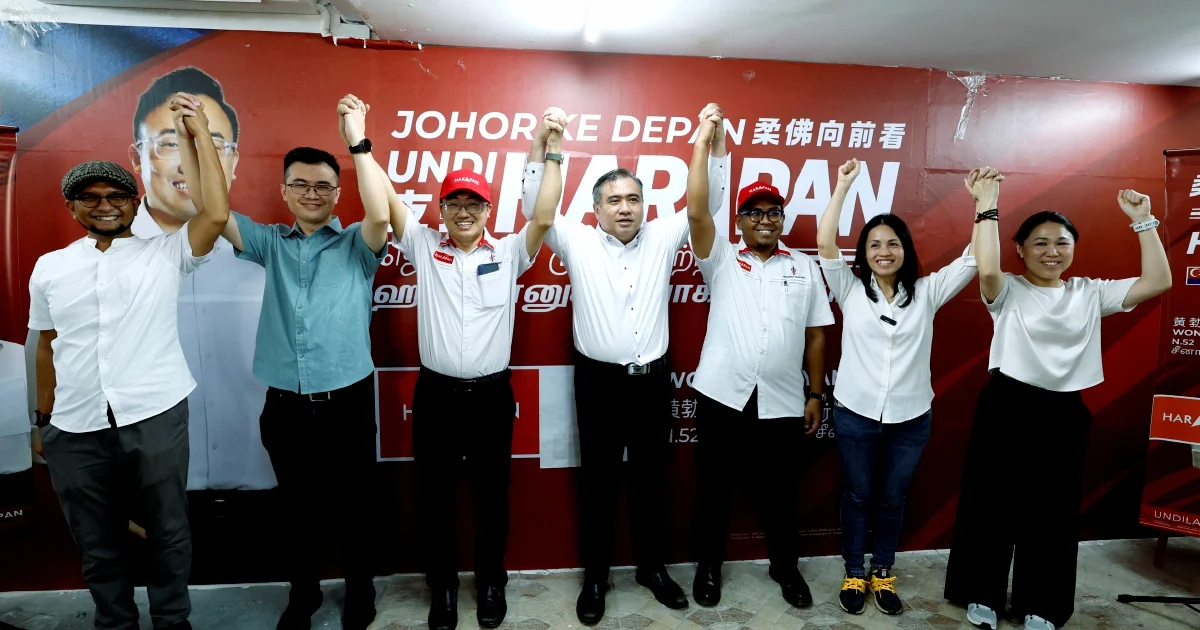
Pakatan Harapan is keeping its cards close regarding the identity of its Johor Menteri Besar candidate, signalling that focusing on electoral success takes precedence over announcing the position ahead of voting. The coalition's approach suggests a deliberate strategy to concentrate momentum on campaigning rather than become distracted by internal leadership selection processes that could potentially invite division among its support base.
Loke, speaking in Johor Baru, emphasised that naming a candidate for the chief minister role would only occur after Pakatan Harapan has successfully won the election. This measured stance reflects broader lessons learnt by the opposition coalition from previous campaigns, where premature announcements of leadership positions have sometimes sparked controversy or created factional tensions within the alliance. By deferring the decision, the coalition aims to maintain unity and present a singular focus to voters.
The decision-making authority for selecting the Johor MB will ultimately rest with Pakatan Harapan's top leadership council, a body comprising representatives from the coalition's member parties. This structure ensures that any appointment reflects consensus among the major components of the alliance, including the Democratic Action Party, Amanah, and the People's Justice Party. Such a consultative approach underscores the coalition's commitment to collective decision-making rather than unilateral selection by a single party or faction.
Johor represents one of Malaysia's most politically significant states, commanding substantial parliamentary seats and considerable economic influence. The state has traditionally been contested ground, with previous elections producing closely contested outcomes and shifts in political control. Securing victory in Johor would substantially bolster Pakatan Harapan's position nationally and provide the coalition with greater leverage in federal politics.
The timing of this statement reflects Pakatan Harapan's strategic calculations ahead of state-level polling. By maintaining flexibility regarding the MB position, the coalition preserves space for negotiations and consensus-building among its partners. Different member parties may harbour preferred candidates, and announcing a choice prematurely could risk alienating sections of the coalition or triggering public discourse that diverts attention from the coalition's policy agenda and campaign messaging.
For Malaysian voters in Johor, this approach means that the election will be contested largely on policy grounds and the coalition's performance record rather than centring on a specific personality or leadership appointment. This format can encourage voters to evaluate the broader vision and capabilities of Pakatan Harapan as a governing alternative, though it may also leave some supporters uncertain about actual leadership arrangements should the coalition prevail.
The PH coalition's strategy contrasts with approaches sometimes employed by competing political formations that announce leadership selections early to generate momentum or project decisiveness. However, Loke's comments indicate that Pakatan Harapan judges the risks of early announcement to outweigh the benefits, particularly given the coalition's need to maintain cohesion across its constituent parties.
Regional observers have noted that such deferential approaches to MB selection can sometimes reflect underlying negotiations between coalition partners regarding power-sharing arrangements and ministerial portfolios. In Johor's case, the specific allocation of the chief minister position and related senior state positions would likely form part of broader discussions about how to distribute authority and key posts across the coalition's member parties.
The coalition's emphasis on winning the election first also suggests confidence in its ability to secure victory regardless of whether voters know the MB candidate in advance. This reflects potential polling data or campaign intelligence suggesting that Pakatan Harapan's performance on issues and governance capabilities resonates sufficiently with the electorate to overcome any disadvantage created by not naming a leadership face early in the campaign.
For Southeast Asia's broader political landscape, Johor's outcome carries implications beyond the state itself. Malaysia's federal politics remain fluid, and Johor's election results will likely influence calculations about potential future coalition arrangements at the national level. Parties in the region often observe Malaysian political developments closely, viewing them as barometers for coalition dynamics and voter sentiment across Southeast Asia's democracies.
Looking forward, Johor voters should anticipate that the identity of Pakatan Harapan's prospective Menteri Besar will only become public once election results are confirmed. This timeline means that final confirmation of leadership may not arrive until several days after voting concludes, as the coalition's top council convenes to formalise the appointment. Such arrangements are not unusual in Malaysian politics, though they do require voter patience and reflect the coalition's confidence in its ability to negotiate smoothly among its partners.

%22%2F%3E%3C%2Fpattern%3E%3C%2Fdefs%3E%3Crect%20width%3D%22100%25%22%20height%3D%22100%25%22%20fill%3D%22url(%23ph2hy9vg)%22%2F%3E%3Crect%20width%3D%22100%25%22%20height%3D%22100%25%22%20fill%3D%22url(%23ph2hy9vp)%22%2F%3E%3Ctext%20x%3D%2250%25%22%20y%3D%2250%25%22%20text-anchor%3D%22middle%22%20dominant-baseline%3D%22central%22%20fill%3D%22rgba(255%2C255%2C255%2C0.95)%22%20font-family%3D%22Georgia%2C%20'Times%20New%20Roman'%2C%20serif%22%20font-weight%3D%22700%22%20font-size%3D%22272%22%20letter-spacing%3D%22-0.02em%22%3EAnwar%3C%2Ftext%3E%3C%2Fsvg%3E)