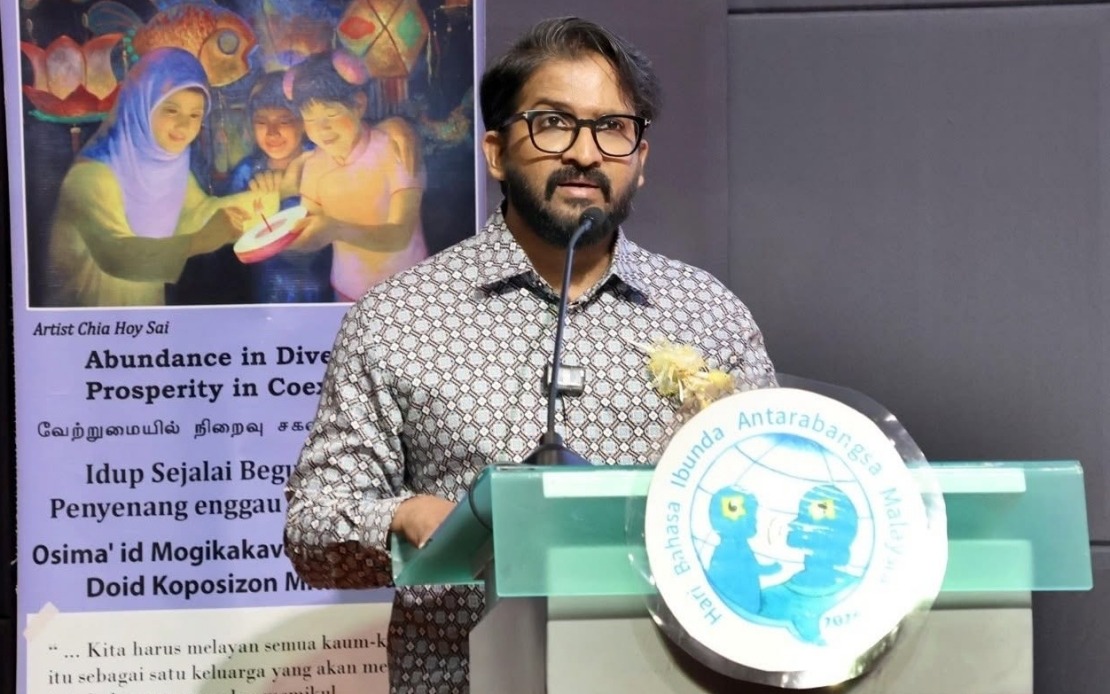
Deputy National Unity Minister R. Yuneswaran has made a compelling case for elevating mother-tongue proficiency as a strategic tool in addressing the pervasive 3R conflicts that plague Malaysian social media. The minister argues that the daily eruption of disputes centred on race, religion, and royalty issues fundamentally stems from insufficient mutual understanding of one another's historical narratives, linguistic traditions, and cultural frameworks. His perspective challenges the conventional approach to managing these tensions by proposing that linguistic and cultural grounding—rather than suppression—holds the key to building a more cohesive society.
Yuneswaran's intervention arrives at a moment when Malaysian digital platforms have become battlegrounds for identity-based disagreements. Rather than attributing these conflicts solely to malicious intent or deliberate incitement, the minister suggests a more nuanced diagnosis: that individuals unfamiliar with the deeper meanings embedded in other communities' languages, histories, and customs are ill-equipped to appreciate diverse perspectives. This diagnosis has significant implications for how Malaysia approaches social cohesion, pointing toward educational and cultural interventions rather than purely regulatory or enforcement-based measures.
The minister's personal testimony carries particular weight in this discussion. As an Indian Malaysian with exposure to both Chinese and national school educational systems, Yuneswaran embodies the multicultural learning pathway he advocates. His lived experience serves as evidence that proficiency in one's heritage language need not create obstacles to mastering Bahasa Malaysia or acquiring additional languages. Instead, this multilingual foundation appears to enable deeper cultural self-awareness and, by extension, greater capacity for cross-cultural respect.
Malaysia's linguistic landscape underscores the minister's central argument about cultural wealth. The nation's approximately 130 languages represent an extraordinary repository of human meaning-making, each carrying distinct worldviews, philosophical traditions, and ways of understanding community. Rather than treating this diversity as a liability or potential source of fragmentation, Yuneswaran reframes it as a fundamental strength that should be celebrated and leveraged for nation-building purposes. This reorientation of perspective is particularly significant for a multi-ethnic nation navigating post-colonial questions of identity and belonging.
The connection Yuneswaran draws between language proficiency and cultural transmission extends beyond mere vocabulary or grammatical competence. Languages encode values, historical experiences, and community memory in ways that written translations cannot fully capture. When speakers lose fluency in their mother tongue, they forfeit access to these deeper cultural substrates—the jokes, idioms, philosophical concepts, and shared references that constitute a community's collective identity. For young Malaysians increasingly oriented toward English and Bahasa Malaysia, this represents a potential loss of intergenerational transmission of cultural knowledge.
The National Unity Ministry's incorporation of this agenda within the 13th Malaysia Plan represents an institutional commitment to what might be termed "unity through diversity." Rather than pursuing homogenization or assimilation as traditional nation-building strategies, the ministry appears to be adopting a model where stronger communal self-understanding and pride in heritage languages creates the psychological and emotional foundation for respecting others' equivalent attachments to their traditions. This approach assumes that secure cultural identity reduces defensive posturing and intergroup anxiety.
Yuneswaran's emphasis on understanding, respect, and mutual curiosity as pillars of his ministry's work signals a shift away from top-down enforcement toward fostering organic social cohesion. The effort to encourage Malaysians to proactively learn about one another's languages, histories, and cultural practices positions cultural knowledge-seeking as an act of patriotic nation-building. This frames interest in colleagues', neighbours', and fellow citizens' heritage not as a distraction from national identity but as integral to strengthening it.
The practical implications of this perspective warrant closer examination. If mother-tongue proficiency and cultural grounding reduce susceptibility to 3R conflicts, policy interventions might logically target mother-tongue education funding, curriculum development, and community language programs. This could include supporting Tamil, Mandarin, and indigenous language instruction alongside Bahasa Malaysia, positioning them as complementary rather than competitive priorities. For Malaysian educators and policymakers, this opens questions about how school curricula and extracurricular programming might be restructured to deepen students' engagement with multiple cultural traditions.
The minister's framing also carries implications for how Malaysia addresses the specifically digital dimension of 3R disputes. If these conflicts stem substantially from cultural misunderstanding rather than mere trolling or coordinated disinformation campaigns, then online literacy programs might beneficially incorporate cultural and historical context alongside critical media evaluation. Social media platforms hosting these disputes might become venues for multilingual cultural education rather than predominantly contentious battlegrounds.
Yuneswaran's intervention suggests that linguistic and cultural pride need not be zero-sum. A young Malaysian who strengthens competence in Tamil, Mandarin, or an indigenous language while maintaining or improving command of Bahasa Malaysia and English is acquiring multiple lenses through which to interpret Malaysia's complex tapestry. This multilayered linguistic capability creates more sophisticated citizens capable of navigating difference without defaulting to conflict.
The broader Southeast Asian context lends additional significance to this approach. Across the region, nations contend with similar questions about maintaining linguistic diversity amid globalization pressures and digital convergence. Malaysia's experimentation with cultural grounding as a conflict-reduction strategy may offer instructive lessons for neighbouring countries managing comparable ethnic and religious complexities.
Looking forward, translating Yuneswaran's vision into measurable outcomes will require sustained commitment beyond rhetorical endorsement. This involves resource allocation to mother-tongue education, curriculum reform, community engagement, and potentially changing prevailing attitudes about which languages merit institutional support. The success of this approach ultimately depends on whether strengthened cultural self-knowledge genuinely reduces intergroup tension or whether additional structural reforms remain necessary. Nevertheless, the minister's intervention reorients the conversation toward building unity through cultural richness rather than cultural erosion—a distinctly Malaysian approach to managing the perpetual challenge of plural societies.