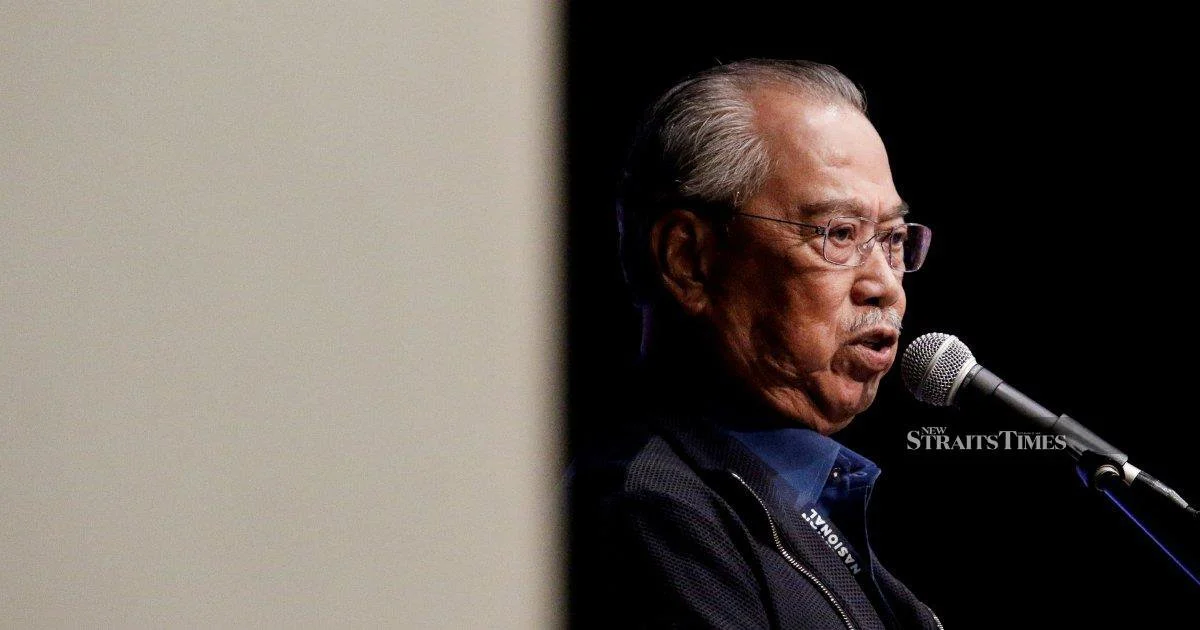
Datuk Dr Marzuki Mohamad has pushed back against characterisations that Perikatan Nasional (PN) lost its chance to lead the federal government following the 15th General Election (GE15) due to personal rivalry or an individual's refusal to yield the top job to another prime ministerial contender. In dismissing what he frames as a misreading of events, Marzuki has instead anchored PN's position in constitutional principle rather than interpersonal conflict, offering a perspective that sheds light on the complex negotiations that unfolded in late 2022.
The narrative that personal ambition scuttled PN's bid for federal power has circulated widely in Malaysian political commentary since GE15 in November 2022. This interpretation typically focuses on the fractious relationship between key figures within the coalition and their competing aspirations for the premiership. Marzuki's rebuttal suggests that such readings miss the substantive legal and constitutional questions at stake in those negotiations, underscoring the tension between forming a functional majority and adhering to constitutional conventions regarding how governments are constituted and legitimised.
For Malaysian observers tracking coalition politics, Marzuki's assertion carries particular significance given PN's post-election trajectory. The coalition had secured 73 parliamentary seats in GE15, falling considerably short of the 112 required for a simple majority in the Dewan Rakyat. In contrast, Barisan Nasional (BN) secured 30 seats and Pakatan Harapan (PH) won 82 seats. The arithmetic necessitated that any governing coalition would require cross-coalition support or negotiated partnerships with independents and members from other blocs. How those negotiations were conducted and why they ultimately failed to materialise into a PN-led government remains contested political history.
Constitutional niceties around government formation in Westminster systems often escape public scrutiny, yet they fundamentally shape political outcomes. Malaysia's Yang di-Pertuan Agong plays a custodial role in determining which political leader commands the confidence of parliament and is thus entitled to form government. The process involves consultations with parliamentary leaders and typically results in an invitation to the individual most likely to secure sufficient backing to govern. Marzuki's emphasis on constitutional grounds suggests that PN may have encountered obstacles rooted not in personality clashes but in constitutional propriety—perhaps relating to how coalition partners would be accommodated, what conditions would govern the distribution of ministerial portfolios, or questions about the legitimacy of particular alliance configurations.
The alternative framing that ego and personal unwillingness to compromise drove events has proven politically convenient for critics of PN. It simplifies a multi-layered negotiation into a morality tale about individual ambition trumping national interest. Yet such narratives often overlook the genuine policy and institutional questions that coalitions must navigate. Which coalition partners would hold key positions? How would conflicting policy agendas be reconciled? What assurances would safeguard minority coalition members' interests? These structural questions can prove insurmountable regardless of the goodwill or flexibility of individual protagonists.
For Malaysian politics, the implications of this dispute extend beyond scoring rhetorical points in post-election postmortems. PN's subsequent evolution and current status as an opposition force have reshaped the coalition landscape. The failure to govern left PN out of federal power and forced PH and BN into an unprecedented unity government that has itself navigated significant tensions. Understanding whether PN's 2022 setback reflected constitutional or personal obstacles illuminates the coalition's prospects in future electoral cycles and its capacity to navigate the complex negotiations required to build governing majorities in a fragmented parliament.
Marzuki's intervention also reflects broader anxieties within PN about its public image and internal cohesion. Since GE15, questions about leadership transitions, internal discipline, and the coalition's ideological coherence have surfaced repeatedly. By anchoring the failed 2022 bid to constitutional principle rather than individual failing, PN signals that the collapse reflects systemic constraints rather than personal inadequacy. This positioning matters for the coalition's future credibility with voters and coalition partners who might contemplate working with PN in subsequent elections.
The constitutional argument Marzuki articulates deserves closer examination precisely because it challenges the superficial consensus around post-GE15 politics. Malaysian political analysts and informed observers ought to scrutinise the documentary record and public testimony more carefully to determine whether constitutional impediments to PN governance were genuine and substantive, or whether that framing serves as retrospective justification for outcomes driven by other factors. The distinction matters for assessing PN's competence and judgment in political negotiation, qualities essential for any coalition aspiring to federal power.
Looking forward, Marzuki's defence of PN's post-GE15 position carries implications for how coalition negotiations might unfold in subsequent electoral contests. If PN positions itself once more as a potential governing force, the lessons drawn from 2022—whether emphasising constitutional constraints or individual accountability—will influence both internal coalition dynamics and negotiations with external partners. Clear-eyed analysis of what actually transpired becomes essential for all Malaysian stakeholders invested in understanding how power transitions occur and how coalitions navigate the technical and political demands of government formation.

%22%2F%3E%3C%2Fpattern%3E%3C%2Fdefs%3E%3Crect%20width%3D%22100%25%22%20height%3D%22100%25%22%20fill%3D%22url(%23ph2hy9vg)%22%2F%3E%3Crect%20width%3D%22100%25%22%20height%3D%22100%25%22%20fill%3D%22url(%23ph2hy9vp)%22%2F%3E%3Ctext%20x%3D%2250%25%22%20y%3D%2250%25%22%20text-anchor%3D%22middle%22%20dominant-baseline%3D%22central%22%20fill%3D%22rgba(255%2C255%2C255%2C0.95)%22%20font-family%3D%22Georgia%2C%20'Times%20New%20Roman'%2C%20serif%22%20font-weight%3D%22700%22%20font-size%3D%22272%22%20letter-spacing%3D%22-0.02em%22%3EAnwar%3C%2Ftext%3E%3C%2Fsvg%3E)