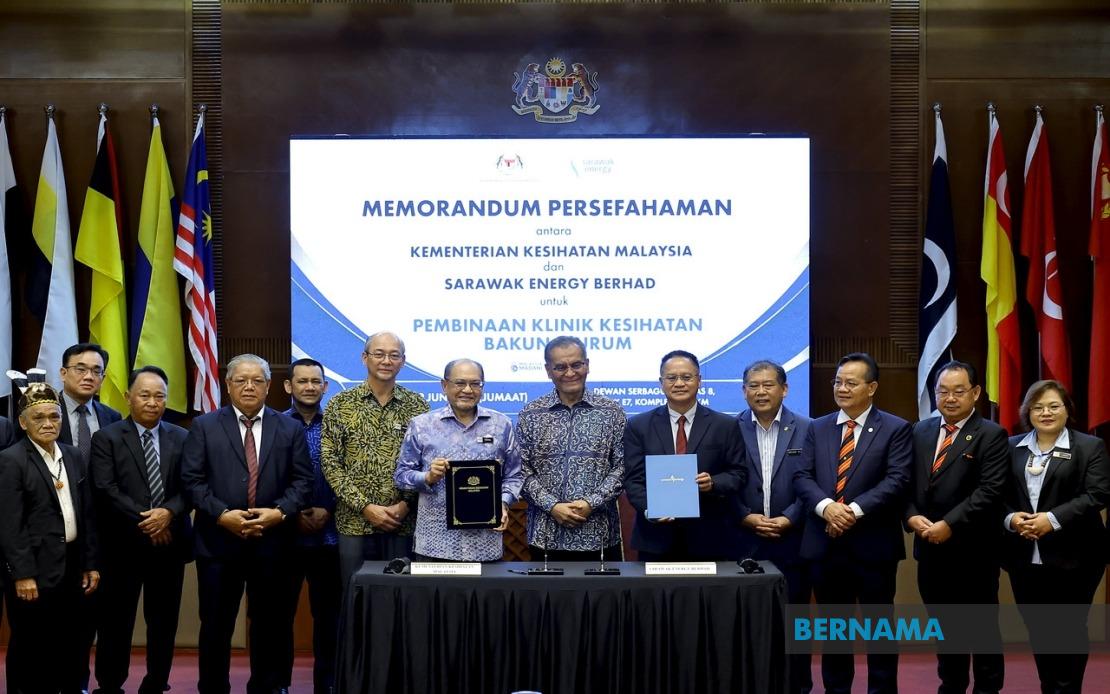
Malaysia's Health Ministry is pressing ahead to dismantle administrative obstacles that have been constraining the development and training of medical specialists across the country's healthcare system. Health Minister Datuk Seri Dr Dzulkefly Ahmad disclosed on June 19 that his ministry has identified multiple structural bottlenecks requiring urgent resolution to accelerate the production of qualified specialists. Speaking at a press conference in Putrajaya following the signing of a memorandum of understanding between the ministry and Sarawak Energy for construction of the Bakun-Murum Health Clinic, Dzulkefly acknowledged the complexity of the challenge but expressed confidence that remedial measures are nearing completion.
The urgency of these efforts reflects a mounting crisis in Malaysia's healthcare workforce. The country is currently experiencing a deficit of approximately 11,000 medical specialists, a shortfall that encompasses vacancies across both the public and private health sectors. This substantial gap has raised alarm bells about the public healthcare system's ability to accommodate rising patient demand and maintain service quality, particularly in tertiary and specialized care facilities that form the backbone of complex treatment provision. The deficiency becomes increasingly critical when considered against Malaysia's aging population and the corresponding surge in non-communicable diseases requiring specialized intervention.
Dzulkefly's approach to addressing this crisis emphasizes careful planning and synchronization with broader infrastructure development. Rather than pursuing rapid, ad hoc expansions of the specialist workforce, the ministry is implementing its expansion strategy in carefully calibrated phases. This measured approach reflects recognition that simply training more doctors without corresponding investments in hospital facilities, equipment, and support services would prove counterproductive. The minister stressed that growth in specialist numbers must be continually reassessed and adjusted based on prevailing healthcare priorities and the operational capacity of existing medical facilities. This positions the ministry's expansion plan as part of a comprehensive ecosystem improvement rather than a standalone recruitment initiative.
The constraint of synchronized infrastructure development presents both a challenge and an opportunity for Malaysian healthcare. While it may slow the immediate resolution of specialist shortages, it ensures that new specialists enter a system better equipped to support their work and provide patients with appropriate diagnostic and treatment capabilities. Regional variations in healthcare infrastructure mean that specialist expansion must also account for geographical disparities, with rural and less developed areas requiring particular attention. The ministry's phased approach allows for targeted deployment of specialists to areas with the greatest need, potentially improving healthcare equity across Malaysian states.
To manage the interim period while long-term solutions are being finalized, the Health Ministry has adopted a cluster crisis management system. This operational framework facilitates closer coordination among hospitals operating within the same geographic cluster, as well as integration of these institutions with nearby health clinics. The system enables dynamic redeployment and reorganization of healthcare personnel based on real-time operational requirements, allowing the existing workforce to be utilized more efficiently across multiple facilities. This flexible staffing model represents a pragmatic response to immediate service pressures while the ministry works toward structural improvements in specialist numbers.
The cluster approach also acknowledges the reality that healthcare workers are experiencing significant occupational pressure, a concern that extends beyond Malaysia and affects medical professionals across Southeast Asia. By redistributing workload more evenly across a network of facilities rather than concentrating strain on individual hospitals, the system aims to make working conditions more sustainable and reduce burnout among existing medical staff. This consideration is particularly important given the ongoing competition for medical talent, both within Malaysia and internationally, where skilled doctors may be attracted to countries or health systems perceived as less demanding or better-resourced.
Dzulkefly's emphasis on maintaining uninterrupted healthcare service delivery underscores the ministry's central concern: continuity of care must be preserved even as systemic improvements are being implemented. This focus reflects the dual pressures facing any large healthcare system—the need to plan for future growth while simultaneously meeting current population needs. For Malaysian patients, this means that while specialist availability may still be constrained in the near term, the government is actively working to prevent the situation from deteriorating further and to establish the conditions for meaningful improvement.
The identification and resolution of bureaucratic constraints carries implications beyond Malaysia's borders. Many Southeast Asian nations face similar challenges in developing their specialist medical workforces, and the solutions being pursued by Malaysia may offer lessons for regional peers. The emphasis on aligning specialist training with infrastructure development, rather than treating workforce expansion in isolation, represents a sophisticated approach that could inform healthcare planning across the region.
The pathway toward resolving Malaysia's specialist shortage remains complex and time-dependent, contingent on sustained investment in healthcare infrastructure and continued refinement of training and deployment systems. However, the ministry's explicit acknowledgment of current bottlenecks and its demonstration of concrete interim management strategies suggest a healthcare system confronting its challenges candidly and methodically. For patients, healthcare workers, and policymakers alike, this represents movement toward more sustainable and equitable specialist care distribution, though the transition period will require careful navigation and realistic expectations about timeline and scope of improvement.


%22%2F%3E%3C%2Fpattern%3E%3C%2Fdefs%3E%3Crect%20width%3D%22100%25%22%20height%3D%22100%25%22%20fill%3D%22url(%23ph2hy9vg)%22%2F%3E%3Crect%20width%3D%22100%25%22%20height%3D%22100%25%22%20fill%3D%22url(%23ph2hy9vp)%22%2F%3E%3Ctext%20x%3D%2250%25%22%20y%3D%2250%25%22%20text-anchor%3D%22middle%22%20dominant-baseline%3D%22central%22%20fill%3D%22rgba(255%2C255%2C255%2C0.95)%22%20font-family%3D%22Georgia%2C%20'Times%20New%20Roman'%2C%20serif%22%20font-weight%3D%22700%22%20font-size%3D%22272%22%20letter-spacing%3D%22-0.02em%22%3EAnwar%3C%2Ftext%3E%3C%2Fsvg%3E)