The Malaysian government has committed to overhauling governance at Tabung Haji through a series of structural and regulatory changes designed to prevent a recurrence of the financial mismanagement that nearly devastated the Islamic pilgrimage savings institution. The plan emerged during an extended parliamentary session where lawmakers and ministers addressed the findings of a Royal Commission of Inquiry, marking a decisive governmental response to what has become one of Malaysia's most significant corporate governance failures affecting ordinary Muslims.
The proposed amendments to the Tabung Haji Act 1955 represent the most fundamental restructuring of the institution in decades. Rather than dismantling Tabung Haji entirely, the government has opted to preserve its identity while introducing dual regulatory oversight that separates investment management from religious operations. This bifurcated approach acknowledges that Tabung Haji performs two distinct functions—managing Islamic pilgrimage logistics and overseeing substantial financial assets—that require different supervisory expertise.
Under the new framework, the Securities Commission will assume regulatory authority over Tabung Haji's fund management and investment decisions, a responsibility traditionally left to internal management. Simultaneously, the Minister in the Prime Minister's Department (Religious Affairs) will oversee pilgrimage operations and related religious matters. The task force implementing these changes, headed by Tabung Haji chairman Tan Sri Abdul Rashid Hussain with participation from Bank Negara Governor Datuk Seri Abdul Rasheed Ghaffour and Securities Commission chairman Datuk Mohammad Faiz Azmi, demonstrates the cross-institutional coordination now considered essential.
One of the most significant proposed amendments addresses the institutional culture that enabled the crisis. The revised Act 535 will explicitly prohibit active politicians from sitting on Tabung Haji's board of directors, a measure that directly responds to concerns that political considerations influenced investment decisions and governance oversight. This change carries particular weight in Malaysian context, where institutional independence from political interference remains contested. The restriction targets a practice that observers contend compromised the institution's ability to make purely merit-based decisions regarding the deployment of Muslim savings.
The financial scope of the crisis illustrates why such comprehensive reform proved necessary. Tabung Haji accumulated losses approaching RM13 billion through problematic investments spanning 2014 to 2020, with seven of fourteen troubled investments resulting in total losses. The government's exposure extended far beyond these direct losses; had depositors engaged in panic withdrawals following loss of confidence in the institution, the state would have faced liabilities potentially exceeding RM74.5 billion. Only government intervention through a bailout prevented what could have constituted a financial emergency affecting millions of Malaysian Muslim households.
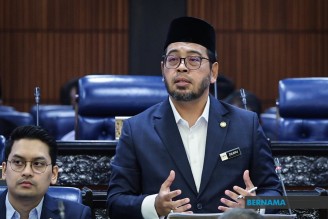
Finance Minister II Datuk Seri Amir Hamzah Azizan emphasised that accountability would be pursued without regard for political affiliation or rank, stressing that the current government was not concealing the severity of the situation despite politically painful revelations. The discovery that Tabung Haji had become indirectly entangled with 1Malaysia Development Bhd through its investment in Putrajaya Perdana Bhd particularly damaged institutional credibility, linking ordinary pilgrims' savings to one of Malaysia's most controversial corporate scandals.
Parliamentary debate revealed broader anxieties about Malaysia's non-bank financial sector beyond Tabung Haji's specific failures. Several lawmakers highlighted the absence of unified regulatory oversight for major non-bank financial institutions, which include the Employees Provident Fund, Permodalan Nasional Bhd, the Retirement Fund Incorporated, and the Armed Forces Fund Board. This fragmented supervisory approach creates systemic gaps that leave large pools of Malaysian savings—encompassing retirement funds, national investment vehicles, and military pensions—vulnerable to weaknesses that Tabung Haji's experience has exposed.
Deputy for Bentong Young Syefura Othman raised specific concerns about structural vulnerabilities in Tabung Haji's income generation, noting that the institution had become excessively dependent on returns from UJSB sukuk investments, which historically contributed nearly 26 per cent of annual income. This concentration risk meant that performance difficulties in a single asset class could cascading effects throughout the institution's operations. Addressing such structural dependencies requires not merely governance reform but strategic diversification of income sources and investment portfolios.
The Royal Commission of Inquiry, established in 2021 with members appointed in January 2022, conducted an exhaustive examination spanning the period 2014 to 2020. Its 211-page report, released publicly on 29 July, identified systemic weaknesses in management and operations while proposing twenty-five recommendations for improvement. By 30 July, Tabung Haji had already begun implementing 75 per cent of these recommendations, suggesting institutional receptiveness to change, though critics contend that genuine transformation requires more than procedural adjustments.
The proposed regulatory framework introduces important safeguards previously absent from Tabung Haji's operations. Profit distributions will henceforth rest upon audited accounts rather than projections or management discretion, eliminating what many observers viewed as problematic incentives encouraging risky investment behaviour. Every institutional decision will be explicitly measured against a singular benchmark: the interests of the Muslim community whose savings the institution holds in trust.
The financial sector implications of Tabung Haji's crisis extend beyond the institution itself, influencing broader Malaysian conversations about institutional accountability and investor protection. The episode has accelerated discussions regarding whether Malaysia's regulatory architecture adequately protects large pools of citizen savings, particularly those managed by non-bank financial institutions operating outside traditional banking supervision. The government's willingness to undertake comprehensive institutional reform, while politically costly given revelations of past failures, reflects recognition that public confidence in Islamic financial institutions depends upon demonstrable governance standards.
Implementation of these reforms will unfold over coming months as the government presents detailed recommendations to cabinet and subsequently amends relevant legislation. The effectiveness of these measures will ultimately depend upon whether Securities Commission oversight proves sufficiently robust to prevent future investment misadventures, whether political actors respect the prohibition on board participation, and whether Tabung Haji management genuinely internalises accountability principles rather than viewing reform as temporary political pressure. For Malaysian Muslim savers, the institutional overhaul represents both acknowledgment of past failures and commitment to protecting the Islamic pilgrimage savings that remain fundamental to the faith practice of hundreds of thousands of Malaysians.

