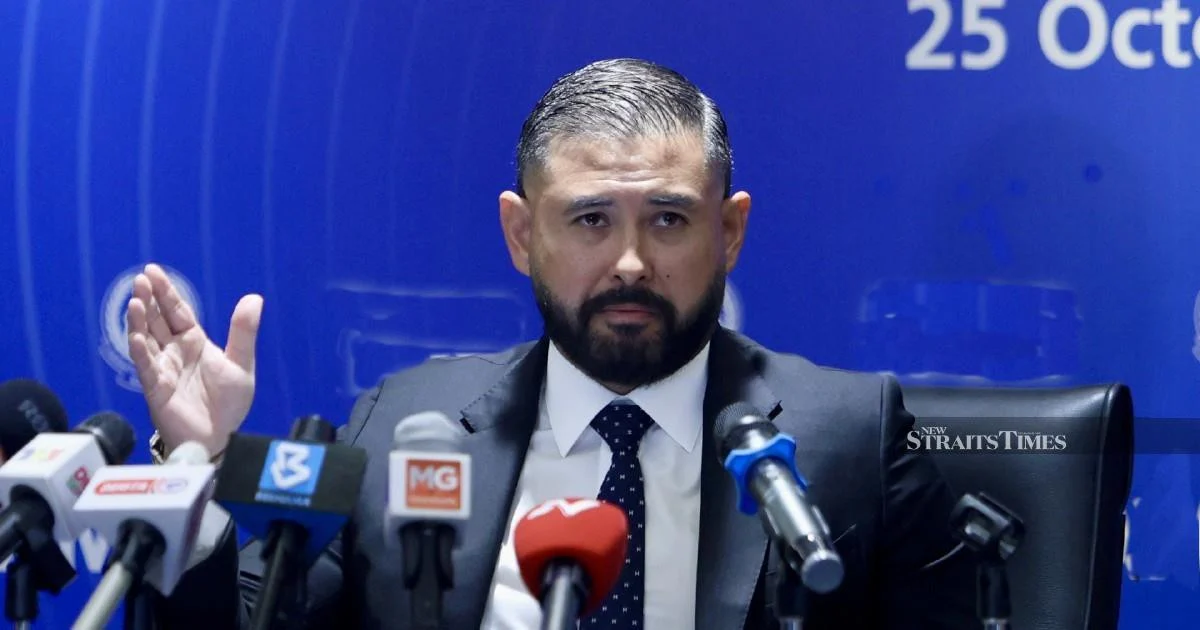
Johor's Regent Tunku Ismail Sultan Ibrahim has disputed characterizations of his state as a wealthy jurisdiction hampered by severe financial leakages, insisting instead that the real impediment to Johor's development lies with how the federal government manages and distributes revenue collected from the state. His comments represent a notable escalation in the dialogue between Johor's leadership and Malaysia's federal authorities regarding resource distribution and fiscal autonomy, issues that have simmered beneath the surface of Malaysian governance for years.
The Regent's intervention came in direct response to statements made by the Prime Minister describing Johor as a prosperous state struggling to retain its earnings due to poor management and systemic inefficiencies. This characterization, while acknowledging Johor's economic importance to the nation, implicitly suggested that state-level governance bore significant responsibility for revenue shortfalls. The Regent's rebuttal reframes the narrative entirely, shifting accountability upward to the federal administration and its fiscal policies that ostensibly disadvantage resource-rich states like Johor.
This dispute reflects deeper tensions within Malaysia's federal structure, where states rich in natural resources and economic output often feel their contributions to the national treasury outweigh the development benefits they receive in return. Johor, as one of Malaysia's most economically dynamic states with substantial manufacturing, agriculture, and service sectors, has historically occupied an ambiguous position—wealthy enough to attract federal taxation and development initiatives, yet constrained by revenue-sharing formulas that critics argue do not adequately compensate its productivity. The Regent's remarks underscore frustration with these structural imbalances that have persisted across multiple administrations.
The concept of revenue 'leakage' traditionally refers to wastage, corruption, mismanagement, or diversion of public funds within state-level institutions and agencies. The Prime Minister's invocation of this term implicitly blamed Johor's administration for ineffective financial stewardship. However, the Regent's counter-narrative redefines 'leakage' not as internal institutional failure but as the outflow of revenue to federal coffers without commensurate reinvestment in Johor's infrastructure, education, healthcare, and economic development. This reframing is significant because it transfers responsibility from state management to federal fiscal policy and resource allocation mechanisms.
For Malaysian observers, the exchange highlights ongoing questions about federalism and inter-governmental financial relationships that affect how states like Selangor, Sabah, and Sarawak—each resource-rich in different ways—view their relationship with Kuala Lumpur. The debate carries particular resonance in Johor given its strategic location, substantial port facilities at Port Klang's neighbouring region, and its role as a gateway to Singapore. These advantages translate into substantial economic activity and tax collection, yet the state's government contends that federal mechanisms do not adequately recognize or reward this contribution.
The timing of this public disagreement is noteworthy, emerging against a backdrop of broader national governance discussions and fiscal pressures. Malaysia's federal government continues to navigate complex budgetary constraints, infrastructure maintenance costs, and competing demands from all thirteen states. Meanwhile, individual states increasingly voice concerns about the adequacy of federal allocation formulas, which have not substantially evolved despite significant changes in economic geography and state-level wealth distribution across the decades. Johor's leadership, through the Regent's intervention, is articulating grievances that likely resonate across state capitals nationwide.
The Regent's position also carries political weight given his prominent role within Johor's governance structure. As a figure with both traditional authority and practical influence over state policy directions, his public statements shape perceptions of Johor's relationship with federal authorities. His willingness to engage in this public dispute suggests that state leadership views the matter as sufficiently important to warrant direct communication with the Prime Minister and, by extension, the Malaysian public.
This exchange raises fundamental questions about how Malaysia structures its federation and whether current mechanisms adequately serve economically dynamic states. Federal revenue collection formulas, petroleum taxation arrangements, and development allocations are technical matters that rarely generate public discourse, yet their real-world consequences affect state governments' capacity to deliver services and drive local development. The Regent's intervention brings these ordinarily technocratic issues into the public sphere, framing them as central to Johor's developmental prospects.
The broader Southeast Asian context adds another dimension to this dispute. As regional economic competition intensifies, states like Johor must attract and retain investment, talent, and manufacturing capacity. Perceived imbalances in federal resource allocation could, theoretically, influence investor confidence or the willingness of state leadership to implement aggressive pro-business policies. The Regent's public advocacy for more equitable treatment reflects recognition that Johor's economic vitality depends partly on state capacity to invest in competitive advantages like infrastructure, digital connectivity, and talent development—all areas where adequate funding is essential.
Moving forward, this public disagreement between Johor and the federal government will likely influence how other states approach their own fiscal relationships with Kuala Lumpur. Whether the Prime Minister's administration addresses the Regent's contentions through policy adjustments, formula revisions, or formal dialogue remains to be seen. The outcome could set precedents for how federal-state financial disputes are resolved, potentially reshaping Malaysia's inter-governmental fiscal architecture in ways that extend well beyond Johor alone.
%22%2F%3E%3C%2Fpattern%3E%3C%2Fdefs%3E%3Crect%20width%3D%22100%25%22%20height%3D%22100%25%22%20fill%3D%22url(%23ph2yq5wg)%22%2F%3E%3Crect%20width%3D%22100%25%22%20height%3D%22100%25%22%20fill%3D%22url(%23ph2yq5wp)%22%2F%3E%3Ctext%20x%3D%2250%25%22%20y%3D%2250%25%22%20text-anchor%3D%22middle%22%20dominant-baseline%3D%22central%22%20fill%3D%22rgba(255%2C255%2C255%2C0.95)%22%20font-family%3D%22Georgia%2C%20'Times%20New%20Roman'%2C%20serif%22%20font-weight%3D%22700%22%20font-size%3D%22194%22%20letter-spacing%3D%22-0.02em%22%3EBernama%3C%2Ftext%3E%3C%2Fsvg%3E)