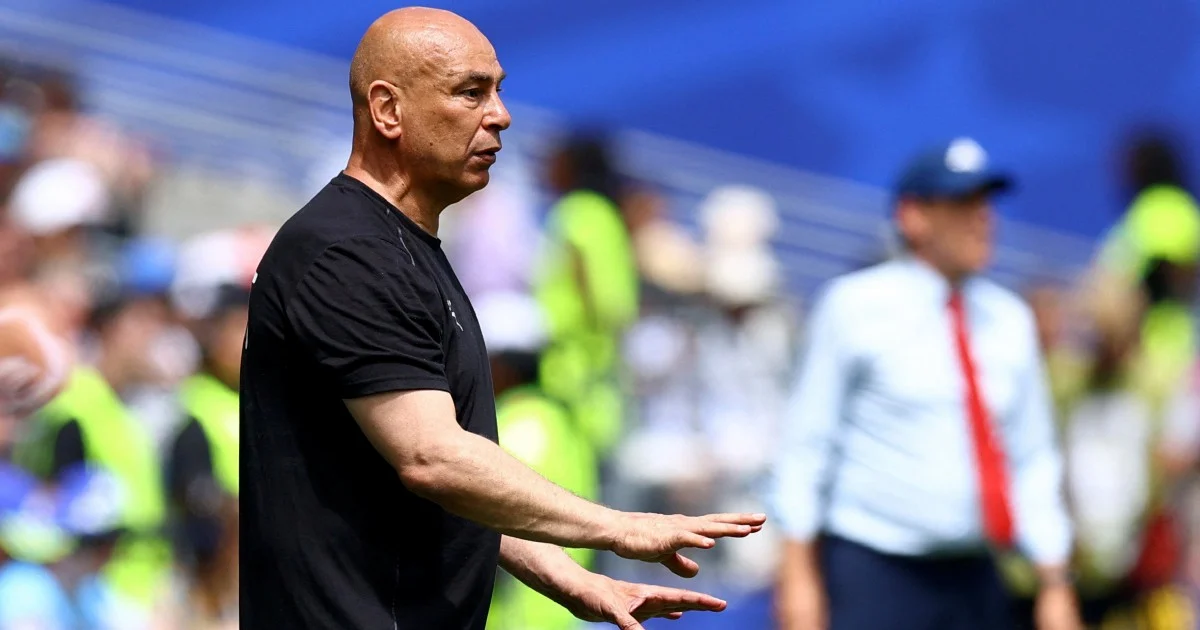
Egypt's coaching staff faces mounting pressure to deliver on the international stage, with manager Hossam Hassan taking the unusual step of publicly addressing speculation about discord within his playing group. The focus of much speculation has been Mohamed Salah, the Liverpool superstar whose performances often dictate Egypt's fortunes in major tournaments. Speaking ahead of Sunday's Group G encounter with New Zealand at BC Place in Vancouver, Hassan sought to quell any lingering doubts about team cohesion by flatly denying that friction exists between the celebrated forward and the broader squad.
The timing of Hassan's intervention reflects the delicate nature of managing elite footballers at a World Cup, where external pressures and media scrutiny can easily seep into dressing room dynamics. Egypt's journey to this tournament represented a significant achievement in itself, overcoming a highly competitive African qualification campaign to earn their place. The significance of maintaining squad harmony cannot be overstated in such circumstances, as even minor disagreements risk unravelling collective focus at precisely the moment when unity becomes most valuable.
Salah's influence on Egyptian football extends far beyond his individual talent. As arguably the most recognizable athlete from the Arab world, his every action and statement undergoes intense scrutiny both domestically and internationally. This extraordinary level of attention creates an environment where unfounded rumours can spread rapidly and gain disproportionate weight. Hassan's decision to address speculation head-on suggests the coaching staff takes seriously the psychological dimensions of tournament football, where confidence and belief become as important as tactical preparation.
The New Zealand fixture holds enormous significance for Egypt's World Cup ambitions. Group G competition will be fiercely contested, with multiple teams harbouring genuine prospects of progression. A positive result against New Zealand would substantially improve Egypt's chances of advancing to the knockout stages, representing a watershed moment for African football. The stakes surrounding this particular match therefore intensify the importance of squad morale and the unified approach that Hassan is emphasizing.
For Malaysian and Southeast Asian observers, Egypt's World Cup campaign carries particular relevance. The Pharaohs represent one of Africa's strongest footballing nations, and their performance inevitably shapes the continental balance. Moreover, Salah's prominence in European football means that Middle Eastern and Asian audiences have developed strong familiarity with his capabilities. The narrative surrounding Egypt's tournament provides compelling viewing for regional football enthusiasts who follow the global game closely.
Hassan's managerial experience encompasses multiple competitive environments, providing him with perspective on handling squad management during high-pressure situations. His assertion that no internal problems exist carries weight precisely because tournament football rarely affords coaches the luxury of addressing false rumours unless they genuinely threaten group cohesion. By moving proactively to dispel uncertainty, Hassan demonstrates awareness that distraction represents a genuine threat to performance.
The broader context of Egypt's World Cup positioning cannot be ignored when assessing the significance of Hassan's comments. The North African nation harbours legitimate aspirations of progressing beyond the group stage, something that would mark a genuine achievement given the calibre of opposition they face. Maintaining psychological stability and collective purpose becomes instrumental to realizing such ambitions. Hassan's intervention thus serves a practical function in protecting the environment that his team needs to perform optimally.
Salah himself carries enormous expectation whenever he represents Egypt. His performances at club level generate immense pride among Egyptian supporters and wider Arab audiences. Managing the psychological burden of such elevated expectations represents a crucial aspect of Hassan's responsibilities as coach. By publicly reaffirming unity and denying division, Hassan signals to his star player and his teammates that the environment remains positive and stable, regardless of external commentary.
The psychological dimension of World Cup football often receives insufficient attention in post-match analysis and technical discussion. Teams that maintain strong internal relationships and collective belief frequently outperform those beset by interpersonal tension or uncertainty. Hassan's proactive stance regarding squad harmony therefore represents smart management rather than mere public relations. The New Zealand encounter will test whether such unity translates into tangible performance on the pitch, with the result offering crucial insight into Egypt's tournament prospects moving forward.