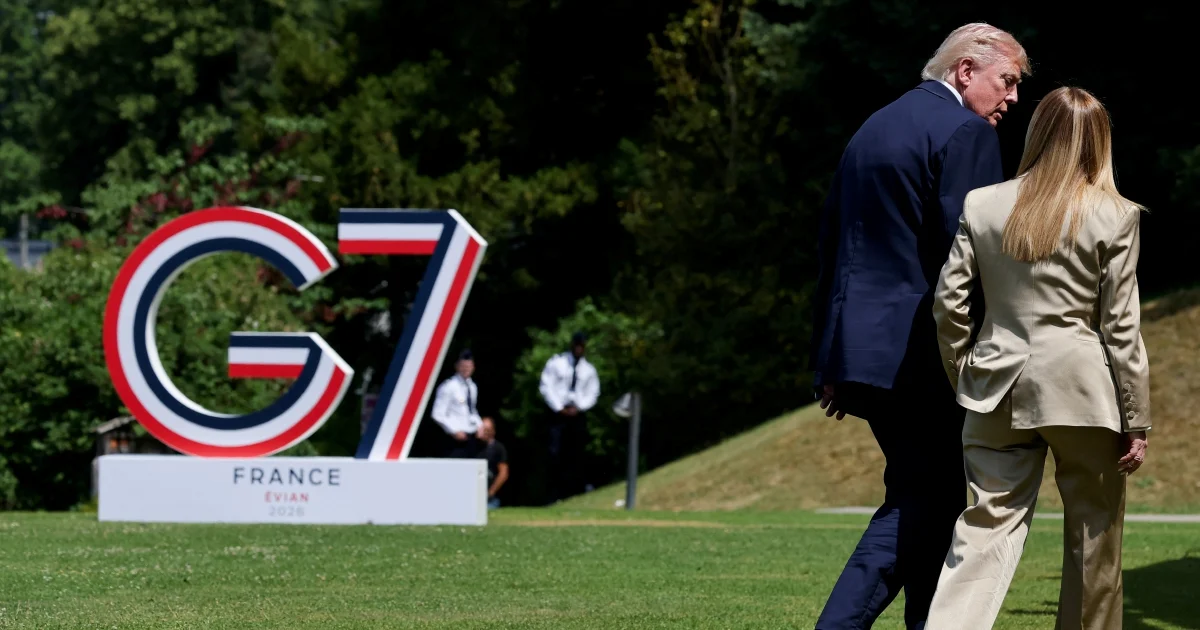
A diplomatic spat between Rome and Washington escalated on Friday when Italy's government expressed sharp displeasure over reported comments by US President Donald Trump regarding Prime Minister Giorgia Meloni, leading Foreign Minister Antonio Tajani to abandon plans for an imminent visit to the United States. The incident underscores simmering tensions in transatlantic relations and raises questions about the stability of bilateral ties at a moment when both nations face significant geopolitical pressures across Europe and beyond.
Trump's alleged remarks, which characterised the Italian premier as having sought a photograph opportunity with him, drew swift condemnation from Rome's political establishment. The nature of the comments—suggesting that Meloni was overeager for media exposure—struck many Italian officials as demeaning and disrespectful to the leader of a longstanding NATO ally and Group of Seven member. The characterisation contradicted Italy's diplomatic protocol and the customary courtesies extended between allied heads of government, amplifying domestic outrage across the Italian political spectrum.
Tajani's decision to cancel his American visit represented a tangible response to what Rome viewed as a slight against national dignity. The foreign minister, serving as a key representative of Italy's diplomatic corps, determined that proceeding with the planned engagement would tacitly accept an affront to the nation's leadership. Such cancellations, though sometimes employed as negotiating tactics or symbolic gestures, carry real consequences for bilateral coordination on pressing matters including Ukraine, Mediterranean security, and NATO operations. The move signalled that Italy, despite its NATO commitments and historical alignment with the United States, would not tolerate perceived disrespect at the highest levels of government.
For Malaysian and Southeast Asian observers, the episode offers instructive context about the contemporary dynamics of Western alliances and how even the most institutionalised relationships remain vulnerable to personalised diplomacy and unpredictable rhetorical volleys. The incident illustrates that mutual respect and established diplomatic norms cannot be taken as givens, even between nations bound by decades of institutional cooperation. This carries implications for Asian nations navigating their own relationships with larger powers, suggesting that institutional frameworks alone provide insufficient protection against individual leaders' inclinations to test boundaries or reshape relational dynamics through public statements.
Meloni, who has cultivated a political brand emphasising nationalist sentiment and Italian interests, found herself in the unexpected position of defending national honour against a figure she has otherwise sought to cultivate as an ally. Her government has generally taken a pragmatic approach to managing relations with Trump's administration, seeking beneficial economic and defence arrangements whilst maintaining European commitments. Trump's comments disrupted this calculated balance, forcing Italy's leadership to demonstrate domestic resolve and national pride—values central to Meloni's political identity and electoral coalition.
The timing of the dispute proved particularly significant. Italy holds considerable strategic importance within NATO's southern flank, commanding critical Mediterranean passages and serving as a bulwark against Russian expansion across the Balkans. Rome has also positioned itself as a bridge between Europe and North Africa, leveraging historical and geographical proximity to shape migration and security policy. Any strain in Italy-US relations inevitably reverberates through NATO planning and European strategic coordination, creating potential complications for larger security arrangements and burden-sharing discussions.
Tajani's cancellation also reflected broader Italian sensitivities around national standing within Western hierarchies. Italy, despite its considerable economic and military capabilities, sometimes experiences marginalisation in major international decisions dominated by larger powers. A perceived personal slight from the American president, particularly one amplified through media coverage, touched a nerve regarding Italy's status and respect within the Western alliance. The government's robust response sought to reassert Italy's dignified position and establish clear boundaries regarding acceptable diplomatic conduct.
The incident emerged amid broader uncertainty regarding Trump's approach to traditional alliances and NATO structures. His past comments questioning the mutual defence obligations embedded in Article 5, coupled with his transactional approach to diplomatic relationships, have created considerable anxiety among European members. Italy, like many European nations, must now navigate the dual imperatives of maintaining security commitments whilst protecting national interests and honour in an environment where established norms appear increasingly negotiable.
Domestically, Meloni's government benefitted from the opportunity to demonstrate strength and principled leadership, uniting her coalition and opposition parties in defence of national dignity. Such moments, when a government stands firm against perceived external disrespect, often strengthen political standing at home regardless of the underlying merits of the dispute. The cancellation allowed Italian leaders to demonstrate that they would not accept subordinate treatment, reinforcing messages of national sovereignty that resonate particularly strongly with Meloni's political base.
The path forward remained unclear, with possibilities ranging from quiet diplomatic resolution to sustained tension. Both nations possessed mutual interests in maintaining functional relations, yet neither could easily back down without appearing to capitulate. The episode serves as a reminder that even institutionalised alliances depend significantly on the personalities and judgements of individual leaders, and that rhetoric and symbolic actions carry genuine diplomatic weight in shaping international relationships and perceptions of national standing.

%22%2F%3E%3C%2Fpattern%3E%3C%2Fdefs%3E%3Crect%20width%3D%22100%25%22%20height%3D%22100%25%22%20fill%3D%22url(%23ph14rfdg)%22%2F%3E%3Crect%20width%3D%22100%25%22%20height%3D%22100%25%22%20fill%3D%22url(%23ph14rfdp)%22%2F%3E%3Ctext%20x%3D%2250%25%22%20y%3D%2250%25%22%20text-anchor%3D%22middle%22%20dominant-baseline%3D%22central%22%20fill%3D%22rgba(255%2C255%2C255%2C0.95)%22%20font-family%3D%22Georgia%2C%20'Times%20New%20Roman'%2C%20serif%22%20font-weight%3D%22700%22%20font-size%3D%22272%22%20letter-spacing%3D%22-0.02em%22%3EAnwar%3C%2Ftext%3E%3C%2Fsvg%3E)