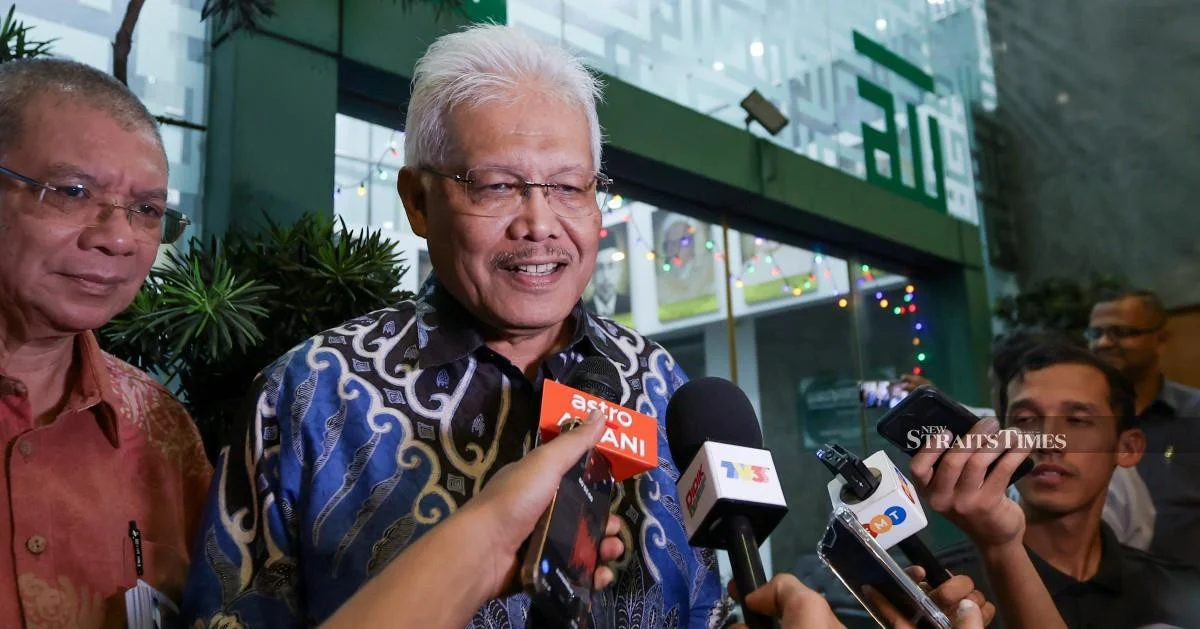
Datuk Seri Hamzah Zainudin is set to reclaim the opposition leader's front-row seat in Malaysia's parliament on Monday following a formal reshuffling of the Dewan Rakyat's seating chart. The move will see Bersatu president Tan Sri Muhyiddin Yassin relocated further down the opposition bench, marking a significant repositioning within the opposition coalition's parliamentary structure.
The seating rearrangement reflects shifting political dynamics within the opposition bloc, which has undergone considerable transformation over recent months. The decision to restore Hamzah to the opposition leader's designated seat signals a reconfiguration of authority and visibility within the opposition ranks, with implications for how the bloc will coordinate its parliamentary activities and media presence during legislative sessions.
Hamzah's return to the prominent frontbench position represents a transition in the opposition leadership's public-facing role. As opposition leader, he will occupy a seat that carries considerable symbolic weight in Malaysia's parliamentary democracy, positioning him directly opposite government ministers and determining his prominence during televised parliamentary proceedings. This placement affects the narrative around opposition messaging and establishes a clear focal point for media coverage of opposition statements and rebuttals.
The repositioning of Muhyiddin, who has served as Bersatu's president and previously held the post of Prime Minister, illustrates the ongoing negotiations and power dynamics within the opposition coalition. While moving down the row may appear cosmetic, parliamentary seating carries genuine implications for a politician's visibility during Question Time, ministerial statements, and televised debates—elements that shape public perception of opposition effectiveness.
This shift occurs within the context of Malaysia's broader political landscape, where opposition unity has been tested repeatedly since the 2022 general election. The opposition comprises multiple parties with distinct interests, and managing their collective parliamentary presence requires careful choreography of both messaging and physical positioning within the chamber. The seating rearrangement suggests ongoing efforts to present a more cohesive and clearly defined opposition front to the electorate.
For Malaysian observers tracking opposition strategy, the resumption of Hamzah's leadership role in the parliamentary setting carries tactical significance. His frontbench position enables more frequent engagement with government ministers, better sightlines for parliamentary photographers and broadcasters, and enhanced ability to lodge urgent parliamentary questions and procedural interventions that draw immediate government responses.
The parliamentary seating chart, while seemingly administrative in nature, functions as a practical tool for managing parliamentary business and establishing hierarchy within the chamber. Traditional conventions have long dictated that the opposition leader occupies a designated seat opposite the Prime Minister or Senior Minister, creating a symbolic pairing that has defined Malaysian parliamentary theatre for decades. Hamzah's repositioning reestablishes this conventional arrangement.
Muhyiddin's movement reflects broader questions about Bersatu's role within the opposition coalition. As a relatively newer opposition party that defected from the government side, Bersatu's positioning within opposition ranks remains subject to ongoing negotiation. The party's influence and visibility within parliament depend partly on how many frontbench seats its senior figures occupy, making the seating reorganisation a matter of genuine political importance for the party's internal dynamics.
The timing of Monday's transition suggests coordination among opposition party leaders regarding how to present a united front during the coming parliamentary session. Such rearrangements typically require consensus among coalition partners to ensure smooth implementation and to avoid appearances of internal conflict or last-minute scrambling that could damage opposition credibility.
For Southeast Asian democracy watchers, Malaysia's parliamentary seating arrangements offer insights into how coalition politics function within Westminster-influenced systems. Unlike some regional parliaments with more rigid ideological divisions, Malaysian opposition groupings demand constant attention to internal power-sharing and visibility allocation. Seating positions become negotiating points that reflect each party's bargaining power within the broader coalition structure.
The opposition's ability to project unity through carefully coordinated parliamentary positioning remains relevant to its electoral prospects. As Malaysia approaches potential future general elections, how effectively opposition parties coordinate their parliamentary performance—including physical presence and visibility—affects public perceptions of their readiness for government and their current capacity to hold the executive accountable.
Hamzah's assumption of the opposition leader's seat represents a recalibration of established expectations about opposition leadership. His previous tenure in various government positions, combined with his current opposition role, positions him as a figure capable of bridging different political narratives—a quality that may have influenced the decision to restore him to the most visible opposition parliamentary position.

%22%2F%3E%3C%2Fpattern%3E%3C%2Fdefs%3E%3Crect%20width%3D%22100%25%22%20height%3D%22100%25%22%20fill%3D%22url(%23ph2hy9vg)%22%2F%3E%3Crect%20width%3D%22100%25%22%20height%3D%22100%25%22%20fill%3D%22url(%23ph2hy9vp)%22%2F%3E%3Ctext%20x%3D%2250%25%22%20y%3D%2250%25%22%20text-anchor%3D%22middle%22%20dominant-baseline%3D%22central%22%20fill%3D%22rgba(255%2C255%2C255%2C0.95)%22%20font-family%3D%22Georgia%2C%20'Times%20New%20Roman'%2C%20serif%22%20font-weight%3D%22700%22%20font-size%3D%22272%22%20letter-spacing%3D%22-0.02em%22%3EAnwar%3C%2Ftext%3E%3C%2Fsvg%3E)