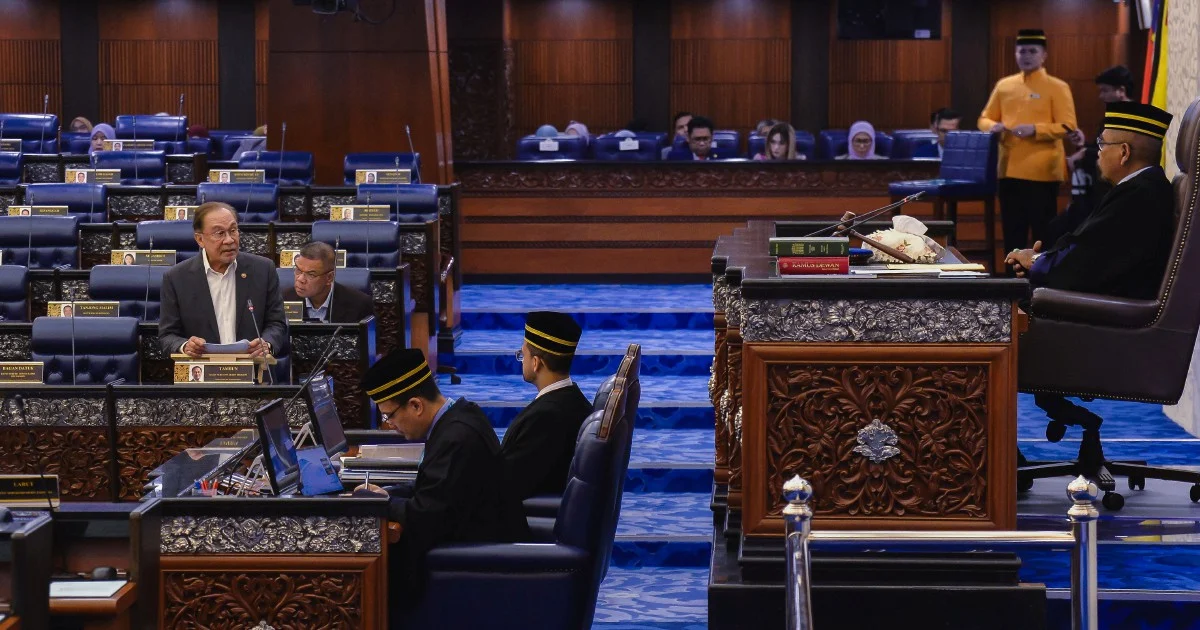
The Election Commission will take decisive action against caretaker governments that breach electoral guidelines by announcing major policies or making financial commitments, Prime Minister Datuk Seri Anwar Ibrahim has confirmed. The pledge represents a firm stance on maintaining the integrity of election campaigns and preventing sitting administrations from leveraging state resources and policy initiatives to gain electoral advantage during transition periods.
Caretaker governments occupy a uniquely sensitive position within Malaysia's constitutional framework. Once an election is called, the sitting government enters caretaker mode, ostensibly limiting its powers to routine administrative functions while the campaign machinery operates independently. The principle underlying this arrangement is straightforward: government resources, officials, and policy announcements should not be weaponised to influence voter behaviour. Yet in practice, the boundary between legitimate administration and strategic politicking has often blurred.
Financial implications form the crux of the Election Commission's regulatory concern. When a caretaker government announces subsidies, development projects, hiring initiatives, or spending commitments, it effectively deploys the state's financial machinery as a campaign instrument. Malaysian voters have witnessed this tension repeatedly—announcements timed conveniently during nomination periods, disbursements accelerated before polling day, and infrastructure projects officially launched as election campaigns unfold. The Commission's focus on decisions with budgetary consequences suggests it recognises these mechanisms as particularly potent election influence tools.
The Prime Minister's statement indicates the Election Commission possesses both the willingness and organisational clarity to identify and prosecute breaches. This represents a departure from historical patterns where enforcement appeared inconsistent or reactive rather than proactive. Anwar's public commitment effectively signals that future caretaker administrations cannot assume lax supervision or selective enforcement. The political messaging is deliberate: democratic institutions will hold power accountable during vulnerable transition periods when electoral temptation runs highest.
Malaysia's experience with caretaker conventions reflects broader challenges facing electoral systems across Asia. Unlike some democracies with explicit statutory restrictions on caretaker government activities, Malaysia has historically relied on constitutional convention and Election Commission guidelines rather than codified legislation. This reliance on procedural norms rather than legal mandates creates enforcement gaps and interpretive disputes. Political actors frequently exploit ambiguity about what constitutes prohibited conduct, and previous caretaker periods have witnessed numerous borderline decisions that technically escaped sanction.
The financial implications criterion provides the Commission with a reasonably clear evaluative standard. Unlike subjective assessments of intent or indirect influence, financial commitments generate documentary evidence and budget trails. Policy announcements can be tracked, expenditure authorisations can be audited, and announcements can be timestamped. This objective focus enhances the Commission's capacity to demonstrate breach and build administrative or legal cases. For future caretaker administrations, the clarity of this financial metric reduces plausible deniability about guideline compliance.
Regional context sharpens the significance of this commitment. Across Southeast Asia, caretaker governments have sometimes operated as barely disguised campaign extensions. The Commission's assertiveness potentially positions Malaysia as a jurisdiction taking electoral regulation seriously during the most challenging enforcement moments. Thailand's turbulent electoral history, where caretaker periods have deteriorated into power consolidation phases, illustrates consequences of weak enforcement. By contrast, Singapore's tightly controlled caretaker framework and Indonesia's more explicitly codified restrictions demonstrate alternative approaches. Malaysia's evolution toward stricter enforcement sits between these models, relying on administrative diligence rather than draconian legal sanctions.
The practical implications for civil servants merit consideration. Government officials, particularly those in finance, planning, and development ministries, operate within institutional hierarchies during caretaker periods. Senior political figures may signal expectations informally; budget approvals may be expedited; announcements may be scheduled strategically. Junior officials face difficult decisions about whether following superiors' directives constitutes acceptable administration or guideline violation. The Commission's enforcement stance implicitly extends accountability beyond political leadership toward bureaucratic actors who facilitate breaches, adding pressure to organisational compliance cultures.
Scrutiny will intensify particularly around development spending and social assistance disbursements during caretaker periods. Infrastructure projects, recruitment announcements, scholarship allocations, and welfare payments represent visible government actions with electoral resonance. Previously, timing these announcements for campaign effect appeared standard political practice, with limited consequences. Anwar's statement suggests this tolerance has contracted. Government agencies may face audit questions about approval timelines, decision-making processes, and announcement scheduling—a compliance burden likely to constrain political manipulation.
The Election Commission's enforcement capability will ultimately determine whether this commitment translates into behavioural change. Institutional resources, investigative capacity, and political independence influence the Commission's practical authority. Malaysia's Commission has demonstrated variable effectiveness across different electoral cycles and different types of violations. Building the organisational capacity to monitor government announcements, investigate financial decisions, and establish breach cases requires sustained funding and protection from political pressure. The Prime Minister's statement should therefore be interpreted partly as commitment to supporting the Commission's operational requirements.
Longer-term, sustained enforcement builds democratic legitimacy by signalling that election rules apply equally to incumbent governments. Voters gain confidence that the playing field, while never perfectly level, contains enforceable boundaries. Caretaker periods transition from understood campaign advantages toward constrained administrative windows. This evolution reflects democratic maturation, even if implementation remains incomplete. Malaysian democracy strengthens when institutions credibly commit to rules that constrain those holding power most acutely.

