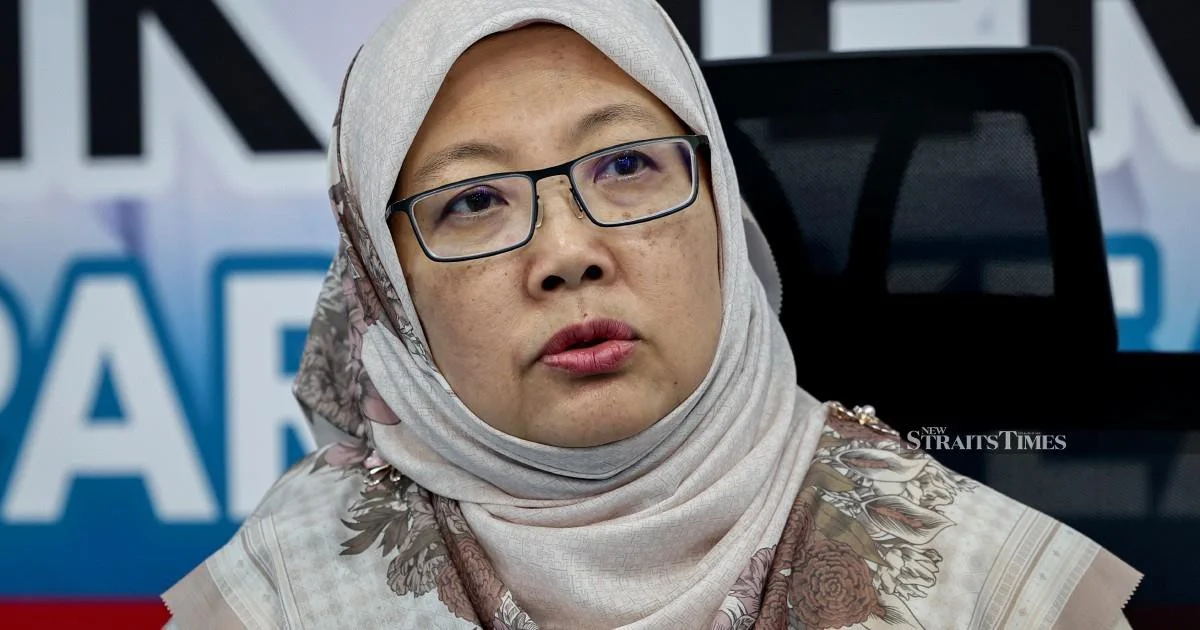
The political temperature in Johor is rising as internal disagreements between competing coalition blocs spill into public view over ground rules for the state's upcoming electoral contest. Datuk Seri Dr Zaliha Mustafa, serving as PKR vice-president, has called out what she perceives as inconsistent messaging from Datuk Onn Hafiz Ghazi, the Johor Barisan Nasional chairman, regarding whether opposition coalition Pakatan Harapan should publicly announce its menteri besar candidate before or after state elections are called.
The apparent contradiction centres on a procedural question that has become increasingly contentious in Malaysian state-level politics. Onn Hafiz has repeatedly pressured Pakatan Harapan to commit to naming its chief ministerial hopeful in advance of the polls, framing this transparency as essential before voters cast their ballots. However, Zaliha's intervention suggests that the Johor BN leadership's public statements and private positions may not align, presenting what she views as an untenable negotiating posture that lacks clarity or consistency.
This dispute reflects deeper tensions within Malaysia's competitive two-coalition system, where Barisan Nasional continues to hold Johor despite losing federal power in 2018 and facing electoral headwinds in multiple states since then. The stakes surrounding menteri besar selection procedures are not merely procedural niceties—they carry substantial strategic implications for how campaigns unfold and how voters perceive coalition readiness to govern. Onn Hafiz's insistence on advance disclosure potentially aims to expose internal disagreements within Pakatan Harapan, particularly between PKR, DAP, and Amanah on power-sharing arrangements and chief ministerial candidates.
For Pakatan Harapan, maintaining flexibility on timing for menteri besar announcements reflects the coalition's historically fraught internal dynamics when allocating top positions. The opposition has struggled previously to present unified candidacies at state level, with disputes over chief minister positions contributing to electoral losses and intra-coalition friction. By resisting Onn Hafiz's pressure to pre-announce, Pakatan Harapan leadership may be attempting to preserve negotiating space until closer to election dates, when vote projections become clearer and negotiating positions are better calibrated.
Zaliha's public challenge to Onn Hafiz signals that PKR is unwilling to accept what it views as unfair preconditions being imposed by the ruling coalition. Rather than responding to pressure quietly through back-channel negotiations, the PKR vice-president has chosen to expose what she characterizes as the incoherence of her political rival's position, potentially appealing to voters by framing Barisan Nasional's demands as unreasonable or politically motivated. This confrontational approach suggests that Pakatan Harapan intends to contest Johor aggressively in the coming election.
The Johor election carries significance beyond the state's borders. As one of Malaysia's most populous and economically important states, electoral outcomes there influence national political momentum and coalition stability. Should Pakatan Harapan capture or retain Johor, it would represent a historic shift in a state that has been Barisan Nasional's traditional stronghold and an important revenue generator for the federal government. Conversely, decisive Barisan Nasional victory would reinforce the ruling coalition's claim to durable support among certain voter segments and potentially weaken confidence in Pakatan Harapan's capacity to expand beyond its 2022 footprint.
The menteri besar naming controversy also intersects with broader questions about democratic transparency and coalition governance. Voters understandably wish to know who will lead their states before casting ballots, and Onn Hafiz's demand for advance disclosure resonates with legitimate democratic principles. However, if Zaliha's suggestion that his position is contradictory proves accurate, it undermines claims that this demand stems from genuine commitment to voter information, instead suggesting it may be a tactical maneuver designed to destabilize opposition coalition unity.
Regional observers in Southeast Asia will monitor this dispute as a case study in coalition management and electoral procedure. Many regional democracies struggle with similar tensions between transparency and strategic flexibility in coalition campaigns. Malaysia's experience, reflected in this Johor controversy, demonstrates how procedural disagreements quickly become proxies for deeper questions about coalition legitimacy, organizational coherence, and readiness to govern.
The clash between Zaliha and Onn Hafiz also underscores that Johor's political narrative is no longer predetermined in Barisan Nasional's favour. The fact that opposition figures can publicly challenge the ruling coalition chairman on procedural grounds—and do so with confidence—suggests that electoral competition in Johor has become genuinely competitive rather than predetermined. This represents a significant shift from the state's political history, when Barisan Nasional's dominance went largely unchallenged.
As the election approaches, this dispute over menteri besar candidacy timing will likely intensify, with both coalitions seeking to control the narrative around when and how such announcements occur. The resolution of this procedural disagreement may well shape the tone and trajectory of the campaign itself, determining whether Johor's voters receive clarity on leadership options well before polling day or whether uncertainty persists into the final campaign stages.

%22%2F%3E%3C%2Fpattern%3E%3C%2Fdefs%3E%3Crect%20width%3D%22100%25%22%20height%3D%22100%25%22%20fill%3D%22url(%23ph2hy9vg)%22%2F%3E%3Crect%20width%3D%22100%25%22%20height%3D%22100%25%22%20fill%3D%22url(%23ph2hy9vp)%22%2F%3E%3Ctext%20x%3D%2250%25%22%20y%3D%2250%25%22%20text-anchor%3D%22middle%22%20dominant-baseline%3D%22central%22%20fill%3D%22rgba(255%2C255%2C255%2C0.95)%22%20font-family%3D%22Georgia%2C%20'Times%20New%20Roman'%2C%20serif%22%20font-weight%3D%22700%22%20font-size%3D%22272%22%20letter-spacing%3D%22-0.02em%22%3EAnwar%3C%2Ftext%3E%3C%2Fsvg%3E)