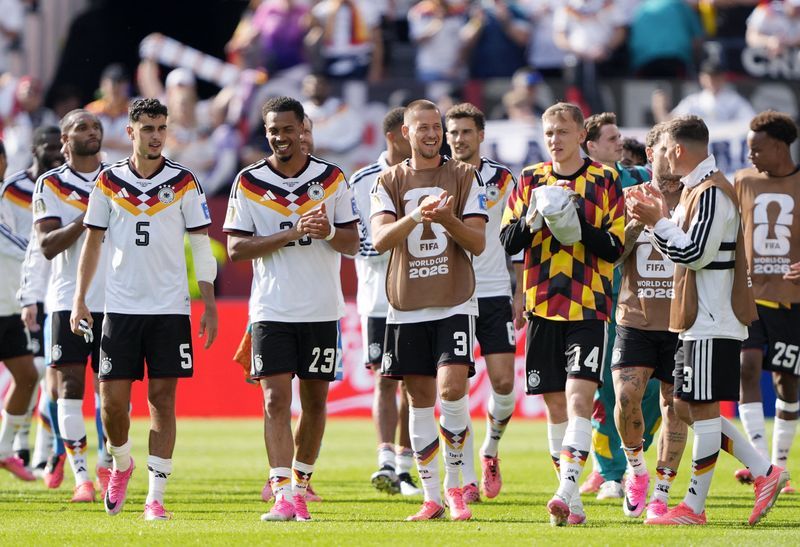
Germany's passage into the World Cup knockout stage was secured through a stirring second-half comeback against Ivory Coast, with substitute Deniz Undav delivering the decisive blows in a 2-1 victory at Toronto on Saturday. The result marked a significant milestone for Julian Nagelsmann's side, who have now qualified for the final 32 for the first time since claiming the trophy nine years earlier. Playing before more than 100,000 supporters of German descent in the Canadian city, the European powerhouse had endured considerable frustration before Undav's introduction shifted the contest decisively in their favour.
The opening stages saw Germany dominate possession and create numerous opportunities, yet their inability to convert proved costly. The Germans fashioned eight shots in the first half alone, but a combination of poor finishing and contentious refereeing decisions left them trailing at the interval. Aleksandar Pavlovic appeared to have opened the scoring from a short corner in the 25th minute, only for the referee to adjudge him guilty of fouling goalkeeper Yahia Fofana in the aerial challenge. The decision provoked visible frustration among the German contingent in the crowd and seemed to lift Ivory Coast's confidence at a critical juncture.
That momentum shift proved temporary, as Ivory Coast capitalised on the reprieve to claim the lead through Franck Kessie. The midfielder's goal came from a loose ball following an attempt by Amad Diallo, who had benefited from a well-executed move down the left flank orchestrated by Yan Diomande. The West Africans' opener extended their impressive tournament record of scoring in seven consecutive matches, a sequence unmatched in their World Cup history. The goal reflected both the attacking prowess that Ivory Coast had brought to the contest and Germany's occasional vulnerability in defensive transition despite their overall control of the match.
Germany's frustration mounted shortly after when another effort was chalked off for a foul in the build-up. Jamal Musiala's involvement in the move preceding his team's second goal was deemed illegal, with the referee determining that the Bayern Munich forward had committed a foul on Odilon Kossounou. The successive disallowed attempts threatened to derail German momentum entirely, yet Nagelsmann's tactical adjustments and continued emphasis on intricate passing patterns gradually exerted decisive pressure on their opponents' defensive organisation.
The introduction of Undav from the bench proved transformative. The versatile striker, who had scored nine goals in his previous eight matches, levelled proceedings in the 68th minute with a controlled volley that showcased both technical quality and composure in a high-pressure situation. Rather than retreat into defensive consolidation following the equaliser, Germany pressed forward aggressively, seeking the winner that would provide psychological advantage heading into the final group matches. Undav struck again moments later, receiving possession on the turn before executing a crisp finish that gave Fofana no opportunity to intervene.
Ivory Coast attempted a late resurgence through Simon Adingra, who carved out a promising position deep in the German penalty area but squandered the chance by failing to strike cleanly. The missed opportunity proved decisive, as Germany countered with incisive play that nearly produced a third goal when Nathaniel Brown's low drive was blocked by Fofana. The West African goalkeeper's interventions provided occasional respite, but ultimately proved insufficient to prevent his team's defeat.
The outcome substantially altered the complexion of Group E. Germany now occupies first place with six points accumulated, having secured their knockout stage berth with one group match remaining. Ivory Coast, by contrast, find themselves in third position with three points from two encounters, their hopes of progression now dependent on results elsewhere in the group. Ecuador and Curaçao contested their own fixture later on Saturday in Kansas City, with those outcomes potentially reshaping the final standings.
Germany's qualifying performance, though ultimately successful, highlighted vulnerabilities that more formidable opponents might exploit in the knockout rounds. The early miscues in finishing and the refereeing controversies that dominated the first half suggest that greater clinical efficiency and defensive solidity will be required against stronger opposition. Nevertheless, the manner of their comeback—driven by intelligent movement off the ball and sustained pressure through possession-based attacking—demonstrated the quality that has underpinned their historical success at major tournaments.
The respective teams now prepare for contrasting final group assignments. Germany face Ecuador in New Jersey on Thursday, a fixture in which they will seek to consolidate their position and build confidence through a convincing performance. Ivory Coast travel to Philadelphia to contest their final group match against Curaçao, knowing that only victory offers realistic hopes of progression. The tournament's demands of consistent performance across multiple matches have proven particularly severe for the West Africans, whose defensive lapses against Germany's technical superiority underscored the fine margins that separate success from elimination at football's premier competition.

%22%2F%3E%3C%2Fpattern%3E%3C%2Fdefs%3E%3Crect%20width%3D%22100%25%22%20height%3D%22100%25%22%20fill%3D%22url(%23ph2a6vmg)%22%2F%3E%3Crect%20width%3D%22100%25%22%20height%3D%22100%25%22%20fill%3D%22url(%23ph2a6vmp)%22%2F%3E%3Ctext%20x%3D%2250%25%22%20y%3D%2250%25%22%20text-anchor%3D%22middle%22%20dominant-baseline%3D%22central%22%20fill%3D%22rgba(255%2C255%2C255%2C0.95)%22%20font-family%3D%22Georgia%2C%20'Times%20New%20Roman'%2C%20serif%22%20font-weight%3D%22700%22%20font-size%3D%22136%22%20letter-spacing%3D%22-0.02em%22%3EPAS-Bersa%E2%80%A6%3C%2Ftext%3E%3C%2Fsvg%3E)