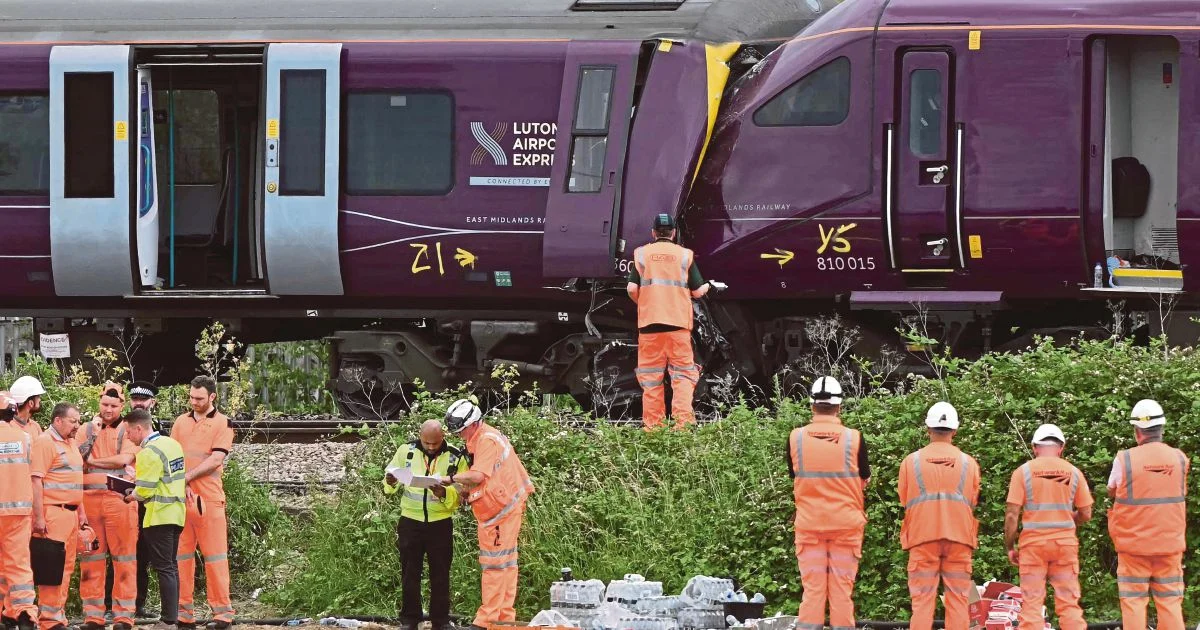
The death toll from Saturday's collision involving two trains north of London has risen to one confirmed fatality, with emergency services confirming that a driver perished in the impact. The incident, occurring in the Bedford area, has brought the regional rail network under heightened scrutiny as authorities work to establish the precise sequence of events that led to the crash. Twenty-eight people have been admitted to hospitals across the region, with nine classified as sustaining critical injuries requiring intensive medical intervention.
Accident investigators from the UK's regulatory bodies mobilized to the scene within hours of the collision, beginning a comprehensive examination that will involve detailed analysis of track conditions, signal systems, train maintenance records, and driver communications. The investigation represents a standard protocol for major railway incidents in the United Kingdom, where rail safety oversight has become increasingly rigorous following historical accidents. Investigators will likely spend days reconstructing the collision's mechanics and reviewing data from multiple sources before drawing preliminary conclusions.
The incident has sent shockwaves through Britain's railway industry, which has experienced sporadic safety concerns despite technological advances. For passengers across Southeast Asia and beyond who regularly use European rail networks, such incidents underscore the inherent risks associated with rail travel, even in developed nations with supposedly robust safety infrastructure. The collision raises questions about whether existing safety protocols adequately address all potential hazards on Britain's aging rail network.
Bedford, situated north of London along a major rail corridor, serves as a critical junction connecting the capital to Midlands and northern regions. The area handles substantial passenger volumes daily, making it a focal point for railway operations and safety management. The timing of Saturday's collision, and the specific circumstances that allowed two trains to occupy the same section of track simultaneously, will form the crux of investigators' inquiries. Signal failures, human error, maintenance lapses, or unexpected track obstructions could all be contributing factors that the investigation will systematically examine.
The critical injuries sustained by nine passengers suggest the collision occurred at considerable speed or involved particular violence in impact dynamics. Modern trains incorporate substantial safety features including crumple zones and passenger compartment reinforcement, yet catastrophic collisions can overwhelm these protections. The hospitalization of an additional nineteen people with less severe injuries indicates that many passengers experienced trauma ranging from minor lacerations to significant fractures and internal injuries requiring observation and treatment.
For Malaysia and the broader Southeast Asian region, such incidents abroad carry indirect relevance. Many Malaysian travellers utilize European rail networks for tourism and business, and understanding safety standards across different rail systems provides important context for assessing travel risk. Additionally, as various nations including Malaysia develop and upgrade railway infrastructure, studying how established rail networks investigate and respond to accidents offers valuable lessons for implementing best practices in passenger safety and emergency response protocols.
The UK's rail safety record, while generally strong compared to many nations globally, has been marked by occasional significant incidents that prompt regulatory review and operational adjustments. The Railway Accident Investigation Branch, the designated investigative body, possesses extensive experience conducting detailed technical analyses of such events. Their work will determine whether the collision resulted from systemic failures requiring infrastructure investment or isolated lapses in operational procedure remediable through training and protocol revision.
Emergency services' response to the collision has been characterized as swift and coordinated, with multiple ambulance units, fire services, and medical personnel deploying to the scene with considerable efficiency. Such emergency response capacity represents a strength of the British system, enabling rapid casualty treatment that likely prevented additional fatalities. Hospital staff across the affected region activated major incident protocols to accommodate the sudden influx of injured passengers, demonstrating the interconnected nature of modern emergency healthcare systems.
The psychological impact on survivors and witnesses to such an event extends beyond immediate physical injuries. Many passengers will require counselling and support services to process trauma from the collision, with some potentially developing post-traumatic stress responses. Railway operators typically coordinate victim support programmes following major incidents, recognizing that comprehensive care encompasses mental health alongside physical recovery.
Investigators will examine whether speed restrictions were properly observed by either train, and whether automated safety systems designed to prevent collisions functioned as intended. Modern rail networks increasingly incorporate positive train control systems and automated braking mechanisms specifically engineered to prevent exactly this category of incident. If such systems were present but inactive or malfunctioning, this revelation would prompt serious questions about maintenance protocols and regulatory oversight.
The incident's resolution will likely influence safety discussions across European rail networks for months ahead, with industry bodies and regulatory agencies convening to discuss whether additional measures might further protect passengers. For businesses and individuals planning rail journeys through the UK, the collision represents a stark reminder that despite technological sophistication, railway incidents remain a realistic possibility requiring appropriate precautions and awareness.
%22%2F%3E%3C%2Fpattern%3E%3C%2Fdefs%3E%3Crect%20width%3D%22100%25%22%20height%3D%22100%25%22%20fill%3D%22url(%23ph5n8pwg)%22%2F%3E%3Crect%20width%3D%22100%25%22%20height%3D%22100%25%22%20fill%3D%22url(%23ph5n8pwp)%22%2F%3E%3Ctext%20x%3D%2250%25%22%20y%3D%2250%25%22%20text-anchor%3D%22middle%22%20dominant-baseline%3D%22central%22%20fill%3D%22rgba(255%2C255%2C255%2C0.95)%22%20font-family%3D%22Georgia%2C%20'Times%20New%20Roman'%2C%20serif%22%20font-weight%3D%22700%22%20font-size%3D%22320%22%20letter-spacing%3D%22-0.02em%22%3EIJN%3C%2Ftext%3E%3C%2Fsvg%3E)
%22%2F%3E%3C%2Fpattern%3E%3C%2Fdefs%3E%3Crect%20width%3D%22100%25%22%20height%3D%22100%25%22%20fill%3D%22url(%23ph1txqpg)%22%2F%3E%3Crect%20width%3D%22100%25%22%20height%3D%22100%25%22%20fill%3D%22url(%23ph1txqpp)%22%2F%3E%3Ctext%20x%3D%2250%25%22%20y%3D%2250%25%22%20text-anchor%3D%22middle%22%20dominant-baseline%3D%22central%22%20fill%3D%22rgba(255%2C255%2C255%2C0.95)%22%20font-family%3D%22Georgia%2C%20'Times%20New%20Roman'%2C%20serif%22%20font-weight%3D%22700%22%20font-size%3D%22272%22%20letter-spacing%3D%22-0.02em%22%3EPerak%3C%2Ftext%3E%3C%2Fsvg%3E)