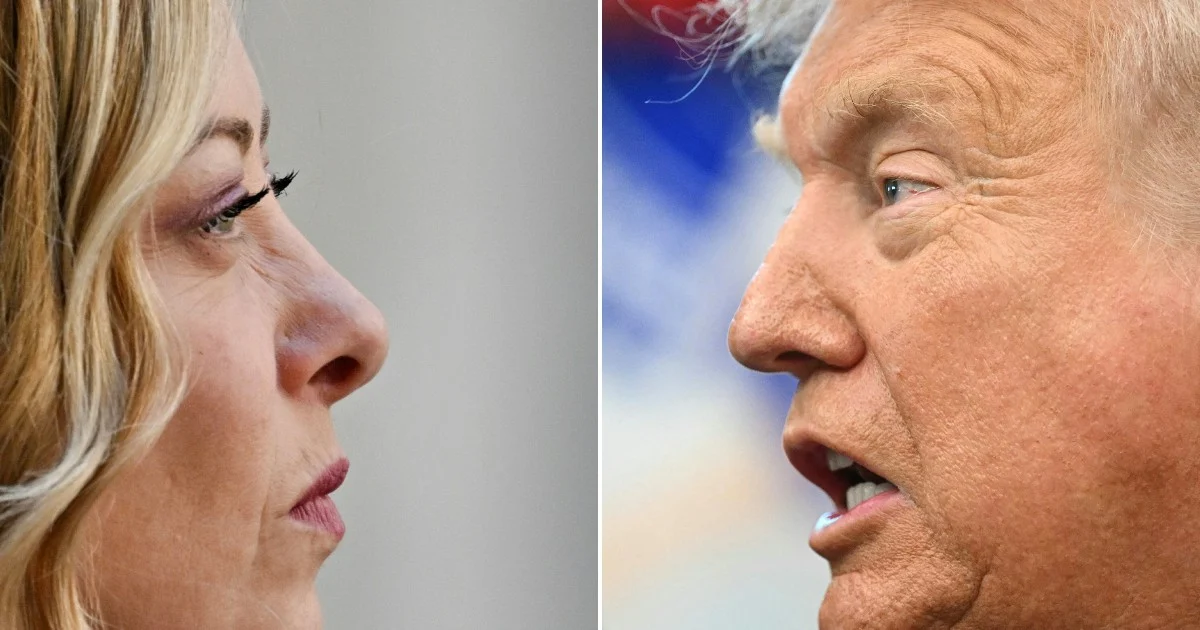
The relationship between United States President Donald Trump and Italian Prime Minister Giorgia Meloni has taken an unusually public and personal turn, with Trump levelling accusations of persistent photo-seeking behaviour against the European leader on Saturday. The escalating exchange marks a notable deterioration in what had previously been characterized as a relatively cordial working relationship between two leaders of significant NATO and G7 nations, raising questions about the durability of transatlantic alliances during Trump's second term.
Trump's accusation that Meloni has repeatedly sought photographs with him speaks to a broader pattern of his approach to international diplomacy, where personal interactions and public perceptions carry considerable weight in his foreign policy calculations. The photograph issue, while superficially trivial, reflects deeper anxieties about how leaders position themselves within the international system and their alignment with the American president. For Meloni, who has sought to position Italy as a strategic partner bridging various geopolitical divides, such public rebukes from Washington carry significant domestic political implications.
The timing of this escalation is particularly noteworthy given the broader context of international relations in 2024 and 2025. Both Trump and Meloni lead nations grappling with complex foreign policy challenges, and their public disagreement sends mixed signals about the cohesion of Western democratic leadership. Italy, as the current or recent G7 chair and a crucial Mediterranean power, has maintained its own independent foreign policy approach even while remaining anchored within NATO and broader Western structures. Trump's willingness to openly criticize Meloni suggests his administration prioritizes immediate policy disputes over the diplomatic niceties traditionally governing great power relationships.
The Iran dimension of Trump's criticism adds substantive weight to what might otherwise appear as merely interpersonal friction. The United States has long sought unified Western pressure on Iran regarding nuclear weapons development and regional activities, and disagreements over how strictly to enforce sanctions or engage diplomatically have been persistent sources of transatlantic tension. Italy's geographic proximity to the Middle East and its historical trade relationships have sometimes placed it in a different position than the United States on Iran policy, a dynamic that Trump appears determined to reshape through direct pressure on Meloni.
NATO represents another crucial flashpoint embedded in Trump's remarks toward Meloni. The former and current president has repeatedly demanded that European NATO members, including Italy, increase defence spending significantly and take greater responsibility for their own security rather than relying on American military presence. Italy, while committed to NATO, has not always matched Trump's expectations regarding defence investment or his preferred geopolitical strategies. Trump's linking of personal slights to NATO concerns suggests he views Meloni's approach to alliance commitments as insufficiently aligned with his vision of American interests.
For Malaysian and broader Southeast Asian observers, this diplomatic rupture offers important lessons about the volatility of relationships under Trump's foreign policy approach. Nations in the region that have sought to balance relationships with the United States, China, and other major powers may recognize in Trump's behaviour toward Meloni a warning that personal and policy disputes can rapidly escalate without the traditional constraints of diplomatic protocol. The unpredictability demonstrated in the Trump-Meloni row underscores the risks smaller nations face when managing relationships with an American administration that prizes directness and public confrontation over quiet negotiation.
The dispute also illuminates how Trump assesses loyalty and alignment within Western institutions. His accusation against Meloni suggests that he evaluates leaders not merely on their stated commitments to NATO or shared values, but on their perceived enthusiasm for his particular vision of Western strategic interests. This approach contrasts sharply with post-Cold War diplomatic norms, where leaders could disagree on specific issues while maintaining cordial public relationships. Trump's willingness to publicly call out Meloni represents a significant departure from this model.
Italy's position is particularly delicate given its role as a G7 member and its stake in European stability. Meloni has worked to establish herself as a serious statesman capable of managing Italy's interests while respecting international obligations. Public criticism from Trump potentially undermines this effort by suggesting that even alignment-minded European leaders cannot rely on respectful treatment from Washington. The photograph dispute, treated seriously by Trump rather than dismissed with humour, indicates that he views Meloni's behaviour as symptomatic of broader problems in her commitment to shared American-Italian objectives.
The Iran and NATO linkages in Trump's criticism suggest these are not isolated grievances but part of a comprehensive reassessment of Italian policy alignment with American preferences. Italy has navigated complex relationships with both Russia and China while remaining a NATO member, and Trump may view these balancing acts as insufficient commitment. The public nature of his criticism serves notice that he expects clearer, more explicit prioritization of American interests in Italian foreign policy decisions.
Looking forward, this dispute has implications for how the Trump administration will manage relationships with other European allies who may have different foreign policy priorities. The willingness to publicly embarrass a fellow leader could either discipline allies into stricter alignment or produce resentment that corrodes alliance cohesion. For Southeast Asian nations watching from a distance, the Trump-Meloni row demonstrates that even developed, strategically important allies cannot assume immunity from sudden diplomatic pressure or public criticism. This unpredictability may encourage regional players to diversify their international partnerships further, reducing reliance on any single great power.
The photograph dispute, while unusual as a subject of high-level diplomatic tension, ultimately masks deeper disagreements over strategic direction. Trump's public airing of grievances against Meloni represents a conscious choice to reshape alliance relationships according to his specifications, accepting short-term diplomatic friction as a worthwhile cost for securing what he perceives as more genuine alignment with American interests. Whether this approach succeeds in achieving his objectives or instead alienates key allies remains a crucial question for international stability.

%22%2F%3E%3C%2Fpattern%3E%3C%2Fdefs%3E%3Crect%20width%3D%22100%25%22%20height%3D%22100%25%22%20fill%3D%22url(%23ph2a6vmg)%22%2F%3E%3Crect%20width%3D%22100%25%22%20height%3D%22100%25%22%20fill%3D%22url(%23ph2a6vmp)%22%2F%3E%3Ctext%20x%3D%2250%25%22%20y%3D%2250%25%22%20text-anchor%3D%22middle%22%20dominant-baseline%3D%22central%22%20fill%3D%22rgba(255%2C255%2C255%2C0.95)%22%20font-family%3D%22Georgia%2C%20'Times%20New%20Roman'%2C%20serif%22%20font-weight%3D%22700%22%20font-size%3D%22136%22%20letter-spacing%3D%22-0.02em%22%3EPAS-Bersa%E2%80%A6%3C%2Ftext%3E%3C%2Fsvg%3E)