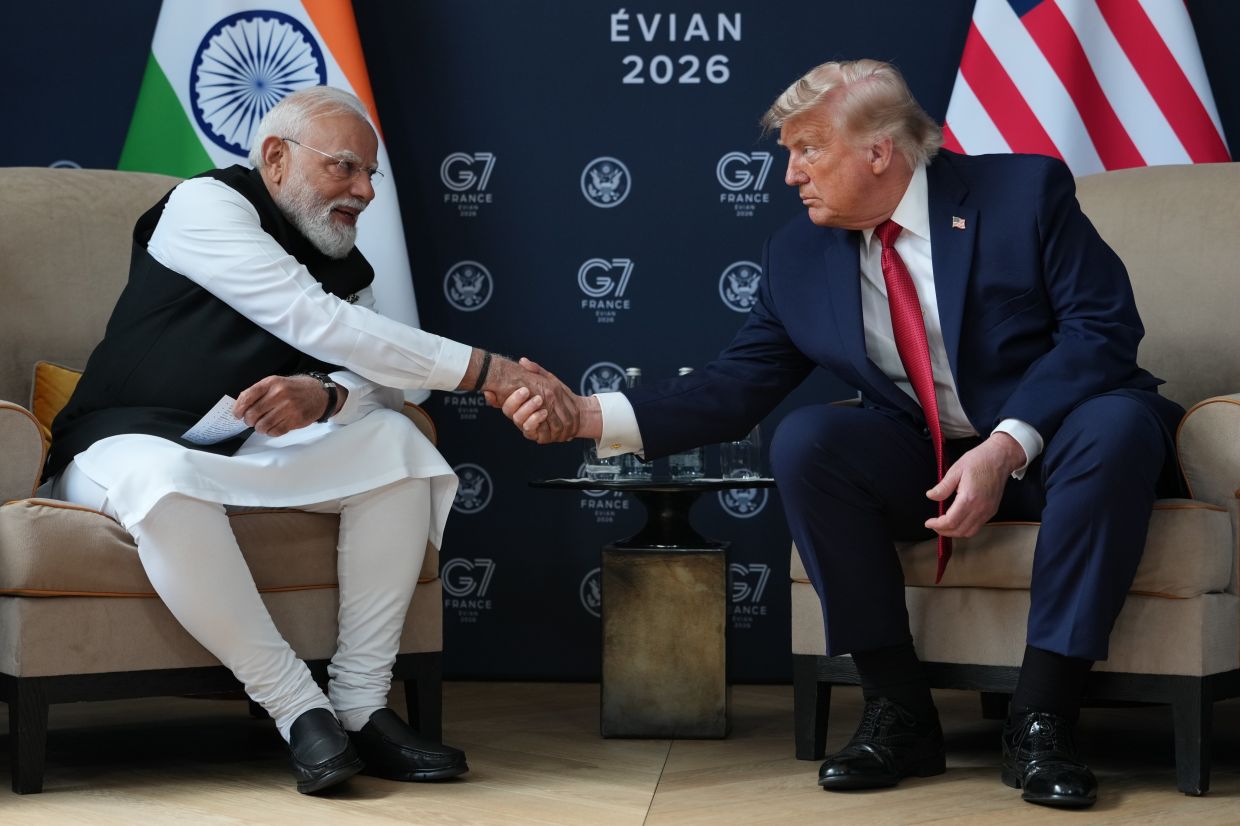
When Donald Trump addressed reporters following his first bilateral meeting with Narendra Modi in sixteen months, his characterization of the deaths of three Indian sailors came across as notably detached. Rather than offering condolences or expressing regret over the incident, Trump framed maritime operations as an inherently hazardous profession, suggesting such tragedies were inevitable occurrences. His statement that "this has been happening throughout time" appeared to trivialize the loss of life, while his assertion that both nations "work together" and "love all of those people" rang hollow in the absence of any formal acknowledgment of responsibility or sympathy.
The three Indian sailors perished when United States Central Command forces launched missiles at the MT Settebello, a commercial vessel registered under the Palau flag. The vessel was targeted as part of American enforcement operations against what Washington characterized as violations of its blockade on Iranian ports in the strategic Strait of Hormuz. Alongside the MT Settebello, US forces also attacked two additional merchant ships crewed by Indian nationals during the same enforcement campaign, escalating tensions between the world's two largest democracies at a critical moment in their bilateral relations.
Indian Foreign Secretary S. Jaishankar had previously lodged what he termed a "strong protest" with American officials following the strikes. However, the State Department's official readout of that conversation revealed the starkly different messaging emanating from Washington. Rather than acknowledging the concerns raised by New Delhi, the American position hardened, with emphasis placed on the assertion that "violations of the US blockade and the illicit transport of Iranian oil will not be tolerated." This divergence between India's protest and America's defensive posture highlighted growing friction beneath the surface of the two nations' carefully cultivated strategic partnership.
The public reaction within India reflected deep frustration with both the incident and the government's perceived acquiescence. Videos circulated showing auto rickshaw drivers in Delhi aggressively removing Trump posters from their vehicles, acts of protest directed at the American president's policies. These banners, distributed as part of the US embassy's public engagement campaign and bearing birthday greetings to America alongside Trump's image, became unintended symbols of American heavy-handedness in the eyes of ordinary Indians. The destruction of the promotional materials served as a visceral expression of popular anger that official diplomatic channels seemed unable to adequately convey.
Political opposition in India seized upon the government's restrained response to criticize Prime Minister Modi. Rahul Gandhi, a prominent opposition leader, accused the premier of compromising India's sovereignty through excessive deference to American demands. In a provocative social media post, Gandhi characterized Modi as "silent" in the face of what he called unacceptable language from Washington, drawing a pointed contrast between a "free country" that would defend its citizens and an administration allegedly content to operate as an "obedient servant" complying with American orders. The accusation struck at the heart of Indian political sensitivities around national independence and agency in foreign relations.
Despite the friction surrounding the sailor deaths, Trump and Modi sought to project continuity and warmth in their public presentation. Trump described Modi as both a "tough trader" and a "great guy," compliments likely intended to soften the impact of America's harder positions. He also announced plans to visit India in the future, gesturing toward ongoing engagement. The two leaders appeared intent on compartmentalizing the maritime incident from their broader strategic conversation, though the depth of Indian public anger suggested this approach might prove insufficient for managing the political fallout.
The bilateral relationship carries significant economic stakes that both sides appear reluctant to jeopardize. Trump and Modi had previously begun negotiations toward a comprehensive trade agreement during their February 2025 meeting in Washington, positioning India among the first nations to enter into such discussions with the Trump administration. These talks remain active, with US Trade Representative engagement continuing over the terms of what may eventually become an interim trade deal. The commercial dimension of the relationship provides Washington with leverage that Trump appeared willing to use, particularly on the Iranian oil transport issue.
Secretary of State Marco Rubio's subsequent visit to India offered an additional signal of American commitment to the partnership. Rubio characterized India as one of America's "most important strategic partners," language designed to reassure New Delhi that despite the recent tensions, the fundamental strategic calculus remained unchanged. The visit itself represented an attempt at damage control, though it arrived after the diplomatic wounds had already opened. The emphasis on India's strategic value underscored American interest in maintaining alignment with New Delhi, particularly given shared concerns about China's growing regional influence and India's pivotal position in the Indo-Pacific balance of power.
When questioned about the Quad—the four-nation strategic grouping comprising the United States, India, Japan, and Australia—Trump opted to redirect the conversation rather than engage substantively with the topic. This deflection suggested either lack of interest in elaborating on the framework or a desire to avoid further complications in the already strained bilateral context. The Quad represents an important architectural element of American strategy in Asia, and India's central role makes New Delhi's commitment crucial to its effectiveness. However, the visible tensions between Trump and Modi potentially complicated this multilateral arrangement.
The incident highlighted the precarious balance that India must maintain in its foreign policy. As a rising power with genuine strategic autonomy, New Delhi seeks partnership with Washington without subordination. Yet India also remains dependent on American technology, investment, and security cooperation in ways that constrain its ability to push back forcefully against American actions. The deaths of the three sailors and Trump's cavalier response exposed the limits of the strategic partnership narrative both countries have been constructing. What appeared to be a solid bilateral relationship built on shared democratic values and strategic interests revealed fault lines when tested by concrete instances of American force affecting Indian citizens.
%22%2F%3E%3C%2Fpattern%3E%3C%2Fdefs%3E%3Crect%20width%3D%22100%25%22%20height%3D%22100%25%22%20fill%3D%22url(%23ph5pufhg)%22%2F%3E%3Crect%20width%3D%22100%25%22%20height%3D%22100%25%22%20fill%3D%22url(%23ph5pufhp)%22%2F%3E%3Ctext%20x%3D%2250%25%22%20y%3D%2250%25%22%20text-anchor%3D%22middle%22%20dominant-baseline%3D%22central%22%20fill%3D%22rgba(255%2C255%2C255%2C0.95)%22%20font-family%3D%22Georgia%2C%20'Times%20New%20Roman'%2C%20serif%22%20font-weight%3D%22700%22%20font-size%3D%22170%22%20letter-spacing%3D%22-0.02em%22%3EJudicial%3C%2Ftext%3E%3C%2Fsvg%3E)