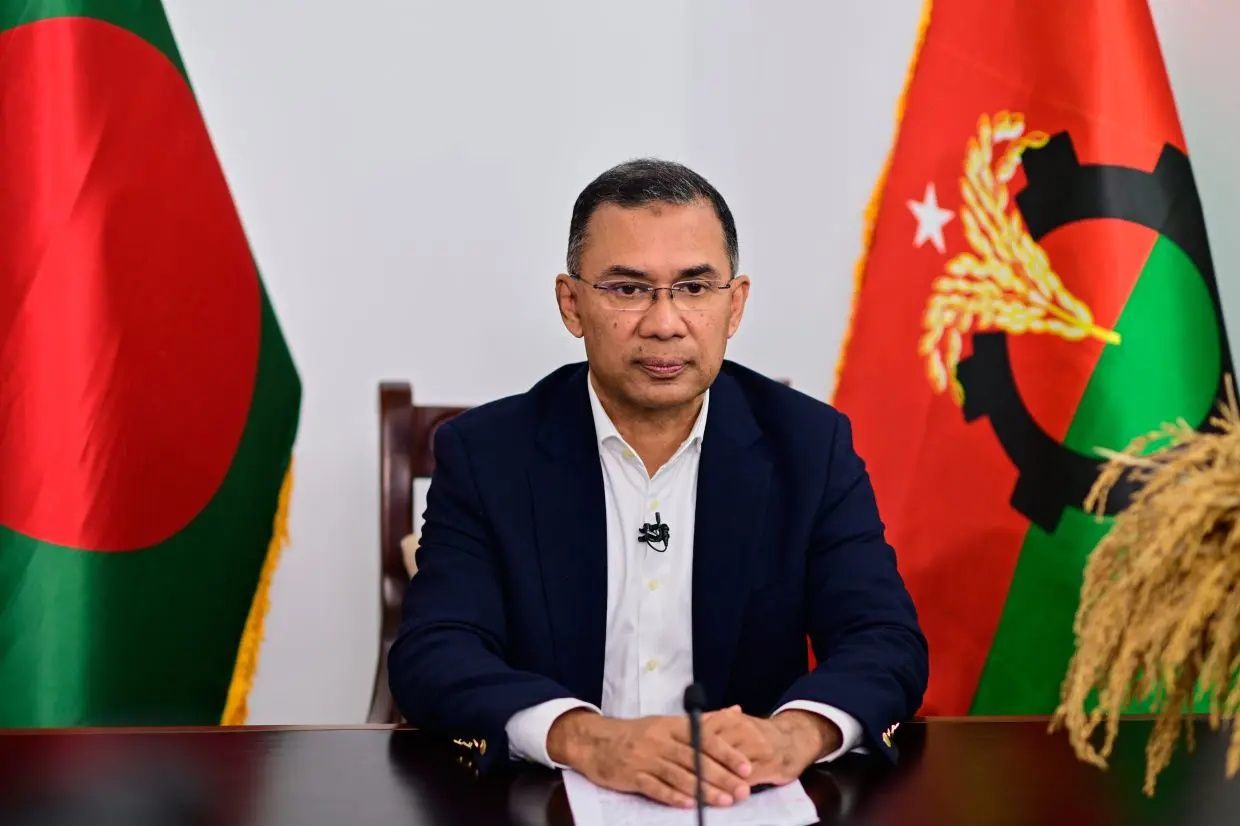
Bangladesh Prime Minister Tarique Rahman is embarking on his first foreign tour as leader, choosing Malaysia and China as his initial destinations rather than taking the traditional diplomatic path to neighbouring India. The carefully choreographed itinerary, with Malaysia visited on Sunday followed by China the day after, represents a significant statement about how the new administration intends to position the country within South Asian and broader regional geopolitics. The decision to bypass India as an inaugural destination carries symbolic weight that extends far beyond routine diplomatic protocol, particularly given the fraught history between the two nations over recent months.
The choice reflects the complex relationship between Dhaka and New Delhi, which has deteriorated markedly since the popular uprising that ousted then-Prime Minister Sheikh Hasina in 2024. Hasina, who maintained close ties with India, fled to Indian territory and remains there in hiding. Bangladesh has since pursued her extradition through official channels, a request India has declined, creating ongoing diplomatic friction. The border between the two countries has become a flashpoint for tensions, with India repeatedly pushing back individuals it labels illegal migrants across the frontier into Bangladesh, exacerbating an already delicate situation.
Rahman, who took office following elections in February after a brief period of interim governance, appears determined to assert Bangladesh's independence and diversify its international partnerships. By prioritising engagement with Malaysia and China—two economically significant powers with substantial interests in South and Southeast Asia—the new Prime Minister signals that Bangladesh will not automatically defer to Indian preferences. This represents a marked departure from the previous government's orientation and reflects broader shifts in how Dhaka perceives its national interests.
Malaysia holds particular significance for Bangladesh given the substantial diaspora residing there. Approximately 800,000 Bangladeshi workers are employed across Malaysia, constituting more than a third of the country's entire foreign labour force. This enormous presence creates natural economic and social linkages that benefit both nations. Malaysian employers depend heavily on Bangladeshi workers in construction, manufacturing, domestic service, and other sectors, while remittances from Malaysian employment represent a crucial source of foreign exchange for Bangladesh's economy. Rahman's decision to visit Malaysia first underscores the importance of maintaining and strengthening these economic ties.
The visit to China carries different but equally substantial implications. In discussions with Beijing, Bangladeshi officials are expected to advance several infrastructure and development priorities, most notably the long-pending Teesta River project. This ambitious initiative aims to restore, manage, and harness the critical cross-border waterway through an integrated programme of dredging, embankment construction, and irrigation development. The project has languished for years, partly due to political complications involving India, which shares the Teesta watershed. Chinese financial and technical support could provide the momentum needed to finally advance this economically important undertaking.
Beyond the Teesta project, trade and broader infrastructure development will feature prominently in Rahman's discussions with Chinese counterparts. Bangladesh and China have been deepening economic ties in recent years, and Beijing has shown sustained interest in connectivity projects across South Asia. The timing of this visit allows Rahman to present his government's development vision and potentially secure commitments for enhanced Chinese investment in Bangladesh's industrial and transportation sectors. This engagement also reflects Bangladesh's strategic calculation that cultivating relationships with major powers beyond India serves its long-term interests.
The diplomatic initiative has been explicitly framed by Bangladesh's foreign ministry as part of a broader strategy to strengthen the country's economic partnerships. This language suggests that Rahman's government is consciously working to build a more diversified and resilient set of international relationships. Rather than operating within a narrowly defined South Asian framework dominated by India's gravitational pull, Dhaka is reaching toward Southeast Asia and East Asia as complementary spheres of engagement. Such an approach is not unprecedented in South Asian diplomacy, but it represents a deliberate recalibration of Bangladesh's external orientation.
The geopolitical context remains significant. India and China compete intensely for influence across South Asia, and both nations view Bangladesh as strategically important. India has historically regarded Bangladesh as falling within its sphere of primary influence, but this assumption can no longer be taken for granted. Rahman's government appears willing to engage with all significant powers, including China, without automatically deferring to Indian preferences. This reflects confidence in Bangladesh's independence and suggests the new administration believes it can manage relationships with multiple powers simultaneously without becoming unduly subordinate to any single actor.
For Malaysian observers, Rahman's inaugural tour carries implications beyond bilateral relations. It demonstrates that Bangladesh's new leadership is actively cultivating ties with Southeast Asian nations and suggests potential for expanded cooperation across multiple domains. The Bangladeshi government may be seeking to position itself as a bridge between South Asia and Southeast Asia, a role that could benefit trade, connectivity, and cultural exchange. Malaysia, as a major Southeast Asian economy and a destination for hundreds of thousands of Bangladeshi workers, stands to benefit from warmer official relationships.
The visit also occurs at a moment when Bangladesh's political situation remains fluid. The country experienced dramatic upheaval relatively recently, and Rahman's government is still consolidating its position domestically. International visits serve multiple purposes under such circumstances: they validate the legitimacy of the new administration on the world stage, attract potential foreign investment, and secure international support for domestic initiatives. By engaging actively with important economic partners like Malaysia and China, Rahman demonstrates that Bangladesh remains a serious actor in regional affairs despite recent internal turmoil.
Looking ahead, observers should monitor how India responds to this diplomatic manoeuvre. If relations continue to deteriorate, Bangladesh may find itself pulled further toward alignment with China and Southeast Asia, which could reshape traditional power dynamics in South Asia. Conversely, if Dhaka and New Delhi manage to normalise relations and resolve outstanding disputes—particularly regarding Hasina's extradition and border management—Bangladesh might rebalance its external orientation. For now, Rahman's tour signals a government determined to assert its agency and build partnerships suited to its perceived national interests rather than conforming to inherited patterns.
%22%2F%3E%3C%2Fpattern%3E%3C%2Fdefs%3E%3Crect%20width%3D%22100%25%22%20height%3D%22100%25%22%20fill%3D%22url(%23ph5sjydg)%22%2F%3E%3Crect%20width%3D%22100%25%22%20height%3D%22100%25%22%20fill%3D%22url(%23ph5sjydp)%22%2F%3E%3Ctext%20x%3D%2250%25%22%20y%3D%2250%25%22%20text-anchor%3D%22middle%22%20dominant-baseline%3D%22central%22%20fill%3D%22rgba(255%2C255%2C255%2C0.95)%22%20font-family%3D%22Georgia%2C%20'Times%20New%20Roman'%2C%20serif%22%20font-weight%3D%22700%22%20font-size%3D%22226%22%20letter-spacing%3D%22-0.02em%22%3EFormer%3C%2Ftext%3E%3C%2Fsvg%3E)