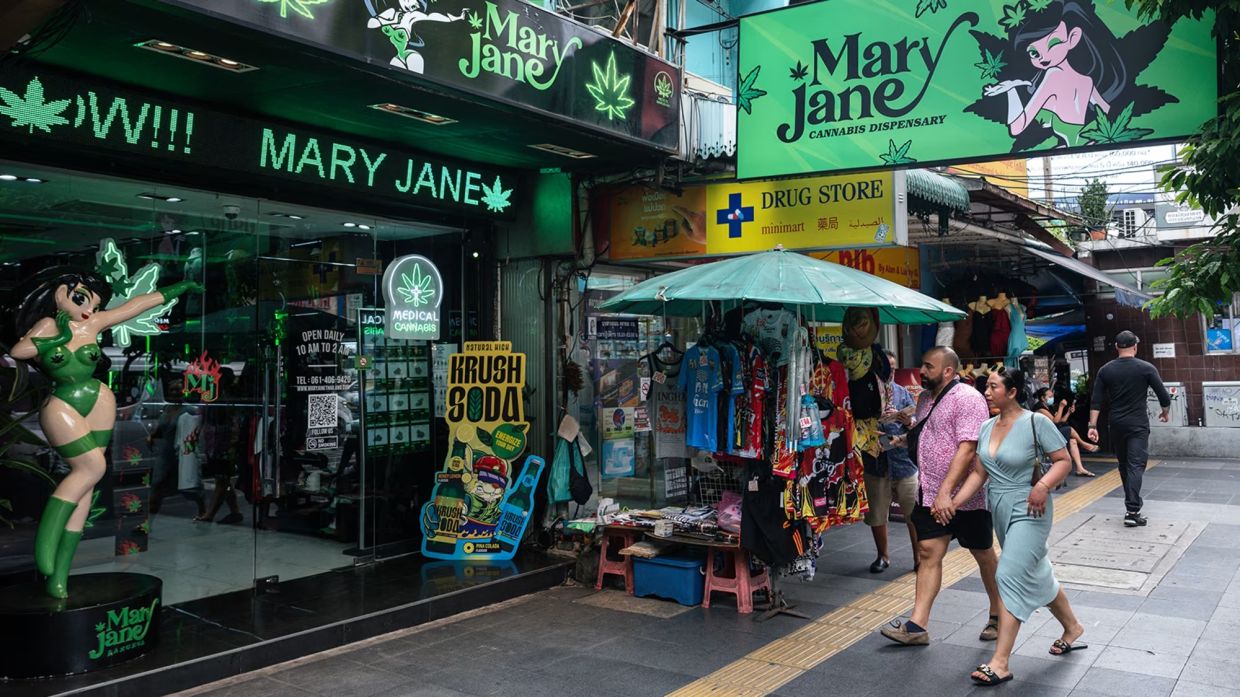
Thailand is wrestling with a fundamental policy question about cannabis regulation, as lawmakers acknowledge that the nation's approach to the plant since its partial legalisation in 2022 has created enforcement gaps and public health vulnerabilities. The House Public Health Committee convened in June to examine whether cannabis should be returned to narcotics classification, signalling growing concern among regulators and medical professionals that the current framework has failed to prevent illicit trade, unregistered cultivation, and youth access.
The tension underlying the debate reflects a broader regulatory challenge facing Southeast Asia as countries experiment with cannabis decriminalisation. Thailand's approach has differed markedly from its neighbours, moving toward liberalisation rather than maintaining strict prohibition, but this experiment has exposed the difficulty of managing a commodity that exists simultaneously in formal and informal markets. The meeting brought together an unusual coalition of stakeholders—government health officials, medical organisations, farmers, civic groups and cannabis industry representatives—whose competing interests reveal how contentious this emerging market has become.
Since June 2022, when Thailand began allowing cannabis cultivation and sales under limited conditions, the regulatory environment has remained unstable and incomplete. The Department of Thai Traditional and Alternative Medicine currently classifies cannabis as a controlled herb under a 1999 law designed for traditional medicine, not commercial agriculture. This framework proved inadequate to address the scale of demand that emerged, prompting the Public Health Ministry in June 2025 to issue three new regulations governing research, manufacturing, sales and international trade. Yet these interim measures have not translated into effective market control, according to officials presenting at the committee hearing.
Dr Tewan Thaneerat, the deputy director-general overseeing cannabis regulation, acknowledged persistent concerns since liberalisation began. His department is collaborating with the Food and Drug Administration, health service officials and the Public Health Ministry's permanent secretary on a comprehensive cannabis and hemp law intended to replace the patchwork of existing regulations. The draft legislation previously submitted to Cabinet under a preceding administration never reached Parliament before the legislature was dissolved. Under the current administration, the bill is undergoing public consultation hearings scheduled for completion by late July, after which it will return to Cabinet for consideration.
The case for reclassifying cannabis as a narcotic substance, at least temporarily, gained articulate support from lawmakers and medical professionals during the hearing. Ekkapop Sittiwantana, a deputy committee chairman from the People's Party, argued that returning cannabis to the Narcotics Code would create breathing room while permanent legislation is finalised. He identified unregistered cultivation and informal direct sales as the primary problems, characterising these as gateways enabling grey-market operators to profit while evading taxation and quality controls. Requiring plant-level registration would, he suggested, close exploitable loopholes and establish a traceable supply chain.
Associate Professor Dr Smith Srisont, speaking for a coalition of doctors and civic organisations focused on drug-related harm reduction, reinforced this view by questioning whether removing cannabis from narcotics law was premature. He noted that while cannabis extracts exceeding 0.2 percent THC remain classified as narcotics, observable public health impacts from widespread cannabis availability have already surfaced. His network advocates a sequenced approach: first return cannabis to narcotics control, then introduce a dedicated regulatory statute. He also highlighted enforcement gaps, noting that while cannabis flowers are restricted, other plant components cultivated by licensed growers remain outside criminal liability, creating opportunities for uncontrolled processing and distribution.
The Food and Drug Administration presented its oversight mechanisms to the committee, emphasising that herbal cannabis products remain subject to manufacturing standards and labelling requirements. The agency's licensing system addresses three categories: production and processing facilities, imports and retail outlets. Inspections of cannabis products have yielded generally positive compliance results regarding label accuracy and material testing. However, officials conceded that the central challenge remains sales channels operating beyond the formal regulatory system—a frank admission that enforcement capacity has not kept pace with market expansion.
The cannabis industry and its supporters presented a fundamentally different assessment of the regulatory environment. The Thai Cannabis Future Network argued that legitimate operators face unsustainable competition from black market imports, illegal cultivation and the perpetual threat of policy reversal. More provocatively, industry representatives alleged that some officials demand unofficial benefits or exert pressure linked to cannabis licensing approvals. They also criticised the medical prescription system, claiming costs are prohibitively high for farmers and suggesting that prescriptions are sometimes diverted to non-medical venues. These allegations, if substantiated, point to corruption vulnerabilities in an immature regulatory system.
The cannabis industry further contended that the plant possesses economic value and cultural significance beyond pharmaceutical use, and that restrictive frameworks risk favouring large investors over farmers and small enterprises. They called for legislation developed through genuine public participation rather than imposed from above. This position reflects tensions typical of emerging agricultural sectors in developing economies, where formalisation often disadvantages smallholders who lack political connections or capital to navigate bureaucratic requirements.
Chairman Sakoltee Phattiyakul concluded the meeting by directing officials to compile an inventory of all lawfully licensed cannabis retailers in Bangkok and FDA-certified cannabis products for subsequent review. He expressed concern that cannabis has become excessively accessible, and indicated that future legislation should mandate separation distances between cannabis shops and schools. The committee additionally requested a comprehensive survey of cannabis-related harms and vulnerable populations, signalling intent to ground policy in evidence rather than ideology.
The committee signalled openness to considering multiple legislative proposals, including parallel drafts from other public sector agencies alongside the Health Ministry's bill, in pursuit of what Sakoltee termed a balanced and effective regulatory framework. This approach acknowledges that no single model has proven clearly superior, and suggests recognition that cannabis regulation requires input from diverse stakeholder constituencies. The next phase will test whether Thailand's policymakers can simultaneously serve farmers' livelihoods, public health imperatives and economic development—a triangulation that has eluded many countries attempting cannabis reform.

%22%2F%3E%3C%2Fpattern%3E%3C%2Fdefs%3E%3Crect%20width%3D%22100%25%22%20height%3D%22100%25%22%20fill%3D%22url(%23ph2hy9vg)%22%2F%3E%3Crect%20width%3D%22100%25%22%20height%3D%22100%25%22%20fill%3D%22url(%23ph2hy9vp)%22%2F%3E%3Ctext%20x%3D%2250%25%22%20y%3D%2250%25%22%20text-anchor%3D%22middle%22%20dominant-baseline%3D%22central%22%20fill%3D%22rgba(255%2C255%2C255%2C0.95)%22%20font-family%3D%22Georgia%2C%20'Times%20New%20Roman'%2C%20serif%22%20font-weight%3D%22700%22%20font-size%3D%22272%22%20letter-spacing%3D%22-0.02em%22%3EAnwar%3C%2Ftext%3E%3C%2Fsvg%3E)