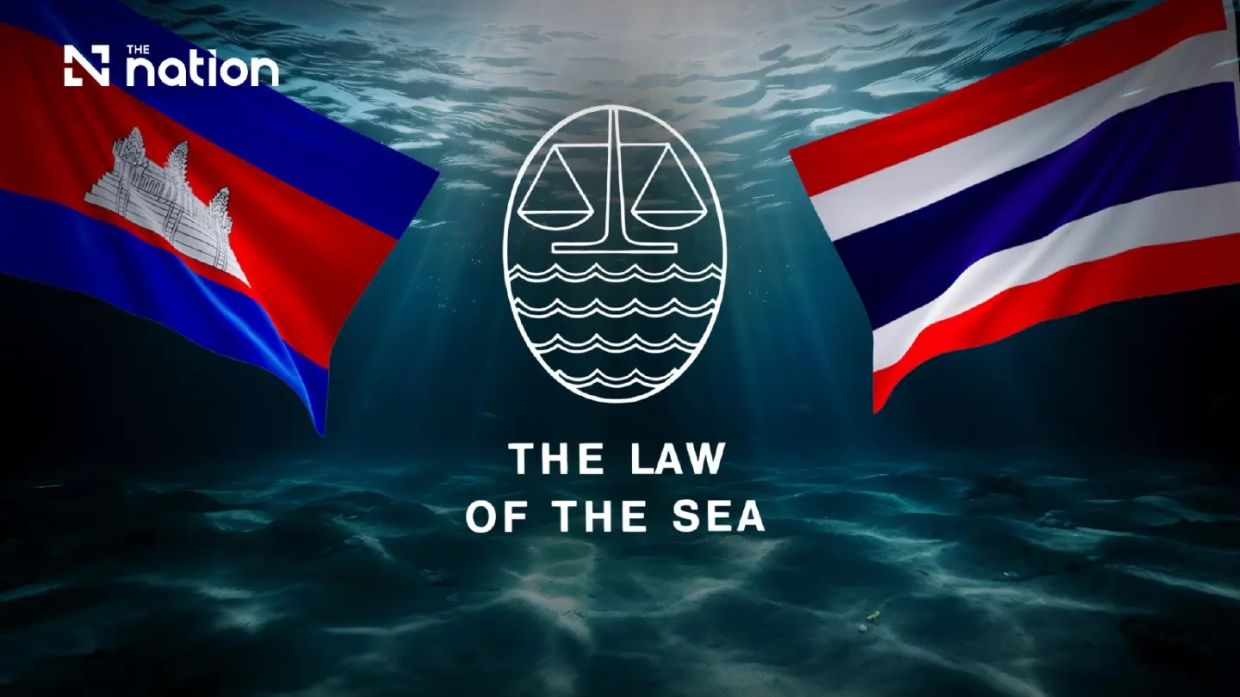
Thailand and Cambodia are progressing towards a five-member conciliation commission under the United Nations Convention on the Law of the Sea, though fundamental disagreements persist about the commission's mandate. While both nations have appointed their conciliators and extended negotiations to find a mutually acceptable chair, they remain at odds over whether the process should concentrate exclusively on maritime boundary delimitation or encompass joint development frameworks for offshore energy resources. This divergence reflects competing national priorities: Cambodia's urgent need to unlock hydrocarbon reserves and secure long-term energy supplies, set against Thailand's insistence on establishing legal boundaries before addressing resource-sharing arrangements.
The conciliation framework is taking shape following Cambodia's notification on June 2 and Thailand's formal acceptance on June 19. Each country has now selected two independent conciliators tasked with jointly appointing a fifth member to chair the commission. Thailand appointed German jurist Rüdiger Wolfrum and South African jurist Albert J. Hoffmann, both former presidents of the International Tribunal for the Law of the Sea. Cambodia selected Danish diplomat Peter Taksøe-Jensen, who previously chaired the Unclos commission resolving the Timor-Leste-Australia maritime dispute, and French international-law academic Jean-Marc Thouvenin. The original July 19 deadline for selecting the chair has been extended to August 14 to allow the four conciliators adequate time identifying an impartial candidate with expertise spanning international law, maritime law and diplomacy, alongside genuine understanding of Thai-Cambodian relations.
Unlike traditional court proceedings, Unclos conciliation produces non-binding recommendations rather than enforceable judgments. Once fully constituted, the commission will consult both governments, examine the dispute and consider possible settlement approaches under international maritime law. The process typically requires approximately twelve months, though the parties may extend the timeline if necessary. Eventually, the commission will submit recommendations designed to facilitate bilateral negotiations leading to a mutually acceptable agreement. Thailand has appointed Deputy Prime Minister and Foreign Minister Sihasak Phuangketkeow as its agent in these proceedings, with Thailand's ambassador to Kuwait, Songchai Chaipatiyut, serving as deputy agent.
The disputed maritime zone encompasses 26,000 to 27,000 square kilometres and reportedly holds between 11 trillion and 12 trillion cubic feet of natural gas alongside significant oil deposits. Conservative valuations place the potential resource worth at approximately US$300 billion, making resolution economically consequential for both nations. This resource estimate has intensified Cambodia's urgency; Minister of Mines and Energy Keo Rottanak argues that resolving boundary disputes promptly could open the door to international energy company participation in offshore exploration. However, even after a boundary agreement, he cautioned that actual development would require several additional years, adding that major international firms increasingly view the investment window as narrowing as global energy markets shift and climate pressures mount.
Cambodia's determination to advance the maritime conciliation reflects broader energy security anxieties triggered by global market disruptions and geopolitical tensions. The Iranian conflict and shipping complications around the Strait of Hormuz have sharpened Phnom Penh's focus on diversifying its energy portfolio beyond hydropower and expanding solar capacity. Officials view access to Gulf of Thailand natural gas and oil as strategically essential for supporting longer-term industrial development and reducing energy import dependency. Without progress on the maritime boundary, Cambodia cannot credibly attract the foreign capital and technical expertise necessary for commercial-scale offshore hydrocarbon development, a factor driving its push for expedited conciliation proceedings.
Thailand, conversely, takes a more cautious approach regarding the conciliation's scope. Bangkok maintains that the immediate and primary objective should remain maritime boundary and continental shelf delimitation. Thai officials argue that discussions concerning joint development zones or resource-sharing arrangements are premature before the boundary has been precisely established and any overlapping claims properly clarified. Foreign Minister Sihasak has explicitly stated that the commission should initially concentrate on maritime delimitation, with joint development considerations deferred until the legal and geographical positions become transparent. This position reflects Thailand's emphasis on preserving sovereignty, territorial integrity and national interests as paramount concerns throughout the process.
The methodological difference between the two nations mirrors broader Southeast Asian experiences with maritime boundary disputes. The Timor-Leste-Australia precedent, which the current conciliation mechanism explicitly follows, resolved boundary issues separately from resource-sharing arrangements, establishing permanent maritime delimitation through a subsequent treaty. However, the Timor-Leste case also demonstrated how protracted boundary disputes can indefinitely postpone resource development, creating economic opportunity costs. Cambodia evidently hopes to avoid repeating this pattern by incorporating energy cooperation directly into the conciliation framework, whereas Thailand prefers the tested sequential approach of resolving boundaries first and addressing resource questions only thereafter.
For Malaysia and other Southeast Asian nations monitoring these developments, the Thailand-Cambodia dispute carries significant regional implications. The Gulf of Thailand overlaps with areas of potential interest to other riparian states and reflects the broader complexity of maritime delimitation across Southeast Asia, where multiple competing claims intersect. The conciliation approach chosen here may establish precedents affecting how future boundary and resource-sharing disputes are handled elsewhere in the region. Additionally, successful resolution could accelerate regional energy cooperation, potentially influencing supply chains and investment patterns affecting the entire Southeast Asian energy sector.
The expanded August 14 deadline provides the four conciliators meaningful time to identify a chair genuinely acceptable to both parties, a critical step determining the commission's effectiveness. Beyond procedural matters, this timeline also reflects diplomatic recognition that neither country can afford prolonged obstruction without reputational costs and missed economic opportunities. Thailand's emphasis on proper boundary establishment reflects legitimate legal and sovereignty concerns, yet Cambodia's argument that energy markets reward speed carries its own compelling logic. The commission's eventual recommendations will likely attempt bridging these positions, potentially proposing boundary delimitation alongside frameworks enabling subsequent resource-sharing negotiations without prejudicing either nation's legal claims or strategic interests.

