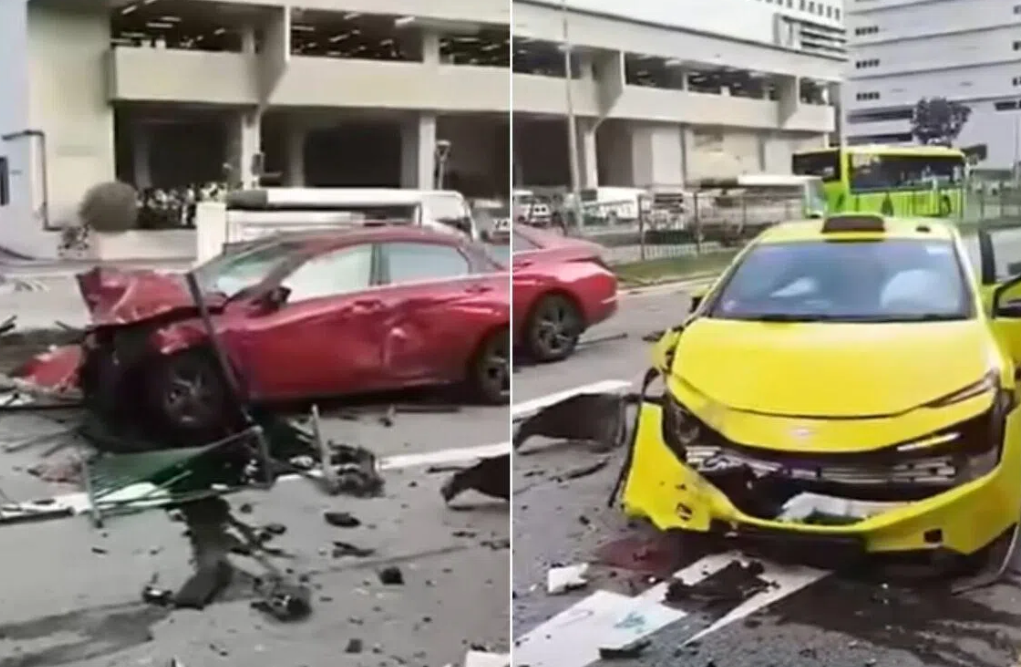
A 36-year-old Singapore man has been charged with dangerous driving and drug-related offences following a collision in Kallang that left two people injured, authorities confirmed on June 19. Mohamed Firdouz Mohamed Akram stands accused of operating a vehicle while impaired by methamphetamine, commonly known as Ice, as well as driving without the proper Class 3 licence. The incident has drawn attention to the intersection of drug misuse and road safety in the city-state, raising concerns about enforcement efforts and public protection on busy thoroughfares.
The collision occurred on the morning of June 17 along Kallang Bahru at approximately 8 o'clock. Court documents indicate that Firdouz had consumed Ice before getting behind the wheel, subsequently losing proper control of his vehicle. The car struck a taxi, resulting in injuries to both occupants. The 60-year-old taxi driver reported experiencing chest pain immediately after the impact, while his 43-year-old passenger complained of tailbone pain. Both individuals required medical attention, marking another episode in Singapore's ongoing struggle with traffic accidents caused by impaired drivers.
What distinguishes this case is the deliberate nature of Firdouz's actions following the crash. Rather than remaining at the scene or calling emergency services, he abandoned his vehicle and fled before police could arrive. This decision to leave the accident site compounds his legal jeopardy and suggests consciousness of guilt. However, his escape proved temporary. Officers established his identity swiftly, locating and apprehending him within five hours of the initial report. The rapid response demonstrates the efficiency of Singapore's law enforcement apparatus in tracking suspects, though questions remain about how long Firdouz remained free after the incident.
Police investigators recovered damning evidence from Firdouz's abandoned vehicle at the crash scene. Officers discovered suspected drugs, drug-related paraphernalia, vaporisers, and a knuckleduster inside the car. These items were seized as case exhibits, providing prosecutors with tangible proof of drug possession and weapons violations. The presence of multiple drug implements suggests habitual use rather than isolated experimentation, potentially indicating a broader pattern of substance abuse that may have culminated in the dangerous driving incident.
Further investigations uncovered additional weaponry in Firdouz's possession. Court documents reveal that authorities discovered two knives in a room at the Village Hotel Katong on Marine Parade Road at approximately 1 o'clock on June 17, the same day as the crash. The timeline suggests police tracked Firdouz to this location after establishing his identity. The presence of multiple weapons—the knuckleduster found in his car and the two knives discovered later—raises questions about whether Firdouz was engaged in criminal activity beyond the traffic incident or if these items reflected a pattern of carrying weapons routinely.
The charges Firdouz faces carry substantial potential penalties under Singapore's traffic and drug legislation. For driving while under the influence of controlled substances, offenders can receive prison sentences of up to one year, financial penalties reaching S$10,000, or both sanctions combined. Additionally, those convicted of causing bodily harm to others through dangerous driving face up to one year imprisonment and fines ranging from S$2,000 to S$10,000. The weapons charges compound his legal exposure further, though specific penalties for those offences were not detailed in available court information.
This case highlights persistent challenges facing Singapore's authorities in combating substance-impaired driving. Despite stringent laws and high penalties, individuals continue to operate vehicles under the influence of drugs, placing innocent road users at severe risk. The incident in Kallang represents one data point in a broader pattern of drug-related traffic violations that concern transport safety officials and law enforcement agencies throughout the island nation. The prevalence of methamphetamine use, in particular, has emerged as a significant public health concern with direct implications for road safety.
For Malaysian and regional observers, the case underscores the importance of robust drug testing protocols at traffic stops and accident scenes. Singapore's swift investigation and apprehension demonstrate effective investigative practices, yet also reveal gaps—Firdouz remained at large for hours despite officers establishing his identity. Southeast Asian countries grappling with similar substance abuse issues may examine Singapore's prosecutorial approach and penalties as potential models, though the question of preventive strategies remains crucial. Enhanced driver education on drug dangers and mandatory rehabilitation programs for drug offenders might reduce recidivism.
Firdouz's case also illustrates the multi-dimensional nature of his criminal conduct. Beyond the dangerous driving charge, authorities have pursued weapons possession charges separately, suggesting prosecutors are building a comprehensive case against him. This approach allows courts to address not merely the immediate traffic violation but the broader pattern of criminal behaviour. The contrast between the sophistication of Singapore's legal system and the relatively simple nature of the alleged crimes—substance use and reckless driving—serves as a reminder that dangerous behaviour often stems from individual choices rather than systemic failures.
Court proceedings will continue with a mention scheduled for July 17, when prosecutors and defence counsel will provide updates on the case's progress. The interim period allows for further investigation, potentially uncovering additional evidence or connections relevant to Firdouz's conduct. Victims' compensation discussions may also occur during subsequent hearings, ensuring the injured taxi driver and passenger receive appropriate redress. The judicial process will ultimately determine Firdouz's culpability and appropriate sentencing, while public attention remains focused on the recurring problem of drug-impaired driving endangering communities across the region.