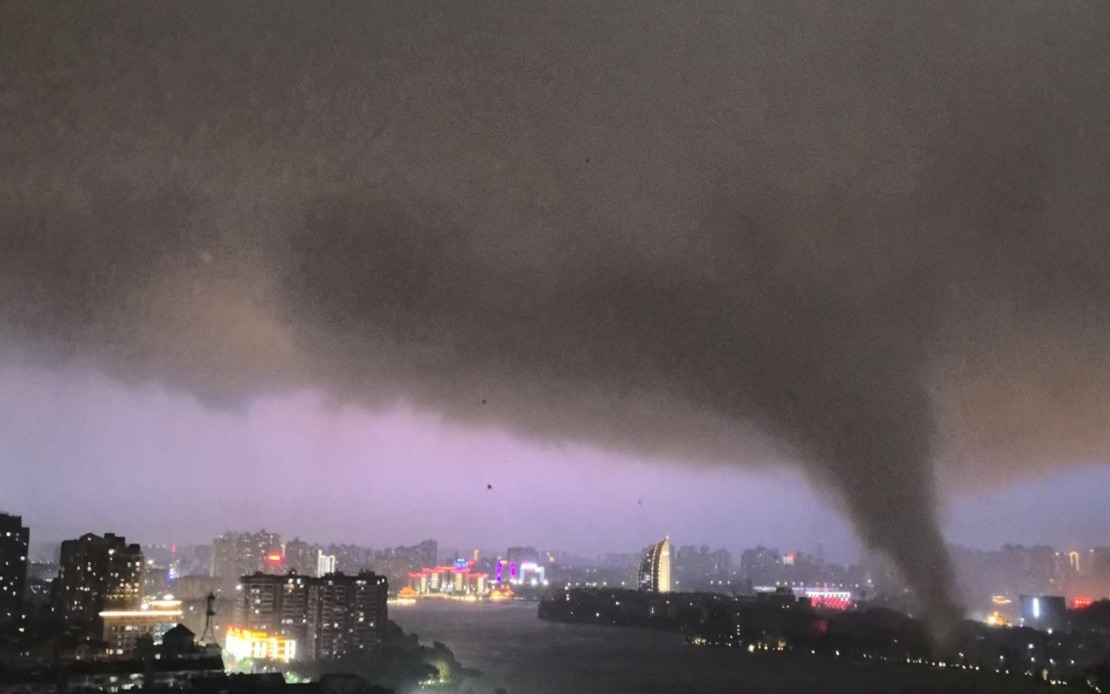
Eleven residents lost their lives and one remains unaccounted for following a powerful weather system that swept across eastern portions of Hubei Province in central China on Monday night, provincial officials confirmed. The deadly event underscores the region's vulnerability to extreme convective weather events during the summer monsoon season—a phenomenon that carries significant implications for disaster preparedness across Southeast Asia and China's densely populated central regions.
The destructive conditions emerged between 7 pm and 11 pm, targeting four major urban centres: Huangshi, Huanggang, Ezhou, and Xianning. Two townships experienced particularly violent winds classified at level 13 on the international wind scale, equivalent to hurricane-force gusts capable of causing catastrophic structural damage. This intensity reflects the severe nature of the atmospheric disturbance that produced the overnight tempest.
Within the affected zone, several areas witnessed tornado formation, a rare but devastating phenomenon in central China. These rotating columns of air, combined with straight-line winds and heavy precipitation, created a compound hazard scenario that overwhelmed local emergency response capacity. The meteorological event demonstrates how rapidly localised atmospheric instability can escalate into a multi-hazard catastrophe within a compressed timeframe.
The infrastructure toll reveals the storm's ferocity: rescue workers documented the complete destruction of 22 buildings, with an additional 4,855 structures sustaining damage ranging from moderate to severe. Such widespread destruction suggests that both residential and commercial properties fell victim, likely disrupting essential services, utilities, and community functions across the affected municipalities. The scale of property loss typically triggers secondary consequences including displacement, economic disruption, and public health challenges.
Beyond the fatalities, the storm injured 331 local residents, many likely requiring hospitalisation and medical intervention. The injury pattern in such events typically reflects impact trauma from flying debris, structural collapse, and vehicle or falling object incidents. Healthcare systems in the affected cities would have faced simultaneous surge demand that challenges capacity during the critical hours following impact.
Provincial authorities mobilised comprehensive response mechanisms upon impact assessment. The provincial government coordinated rescue operations across multiple jurisdictions, deploying specialised teams to urban search-and-rescue operations, medical response, and structural assessment. These coordinated efforts aimed both at immediate life-saving interventions and prevention of cascading secondary disasters—a critical distinction that reflects modern disaster management protocols emphasising multi-phase response strategy.
The secondary hazard prevention focus targets infrastructure failures that frequently emerge in severe storm aftermath. Downed power lines, gas leaks, contaminated water supplies, and structural collapse risks constitute ongoing threats in the hours and days following major weather events. Hubei's response approach reflects recognition that the critical period extends well beyond the immediate storm passage.
This meteorological event carries relevant lessons for Southeast Asian nations and Malaysian authorities monitoring climate patterns. Central China's Hubei Province lies within monsoon-influenced territory similar to Malaysia's geographic context. The intensity and composition of this weather system—combining thunderstorms, extreme winds, and tornadogenesis—mirrors hazards that regional meteorologists increasingly track. Malaysia's own vulnerability to severe convective weather, particularly during monsoon transitions and intermonsoon periods, makes international case studies particularly instructive for emergency preparedness refinement.
The timing during evening hours added complexity to emergency response, as darkness limited visibility for rescue operations and complicating initial hazard assessment. Night-time storms typically produce elevated casualty rates due to population sleep cycles and reduced environmental awareness. The concentrated four-hour window of peak activity meant compressed decision-making timelines for evacuation and shelter operations.
Economic recovery from such events extends across months, encompassing debris removal, rebuilding efforts, business resumption, and livelihood restoration. The documented damage to over 4,800 structures suggests Hubei authorities face substantial reconstruction obligations that will strain local government budgets and require potential provincial or national support mechanisms.
As climate systems evolve, meteorological agencies across East and Southeast Asia monitor patterns of convective weather intensification. Hubei's experience contributes to growing databases characterising severe weather behaviour in populated regions, offering empirical information that informs forecasting models and risk assessment frameworks used throughout the region. The incident reinforces why comprehensive early warning systems, building code enforcement, and community preparedness receive sustained investment in weather-vulnerable jurisdictions.

