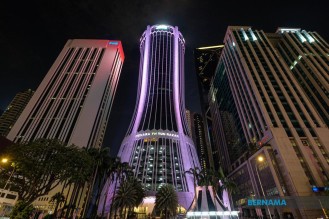
The Malaysian government's decision to place Lembaga Tabung Haji (TH) under Securities Commission Malaysia (SC) oversight represents a pivotal step toward restoring institutional integrity at the pilgrimage fund manager. Under this new arrangement announced at a special parliamentary sitting on August 11, the SC will assume direct supervisory responsibility over TH's fund management and investment decisions, a shift driven by recommendations from a comprehensive government task force examining reforms following the Royal Commission of Inquiry into TH.
Dr Mohd Faisol Ibrahim, a senior lecturer in Islamic Economics and Banking at Universiti Sains Islam Malaysia (USIM), underscores why this regulatory realignment matters significantly for TH's depositors and broader financial stability. The crux of the challenge facing TH is fundamentally complex: the institution must simultaneously achieve competitive dividend returns, safeguard accumulated capital, and maintain sufficient liquidity to fulfil its primary religious mission of facilitating hajj pilgrimages for Malaysian Muslims. These sometimes competing objectives have historically created governance tensions that contributed to TH's well-documented difficulties. By bringing in the SC's established regulatory framework, the government aims to create institutional guardrails that prevent the investment missteps of previous years, particularly during the 2014 to 2020 period examined by the Royal Commission.
The regulatory framework that will govern TH moving forward differs notably from traditional banking supervision. TH functions as a non-banking financial intermediary, meaning standard banking regulations cannot simply be transplanted to its operations. This unique status makes SC oversight particularly valuable, as the commission brings sophisticated experience in monitoring investment institutions and fund managers. The SC's existing expertise in evaluating investment risk, ensuring disclosure standards, and maintaining institutional transparency provides a template that can be adapted to TH's specific structure and mandate. Importantly, religious affairs management will remain under the Minister in the Prime Minister's Department (Religious Affairs), preserving TH's identity as a faith-based institution while separating investment governance from political influence.
Dr Mohd Faisol advocates for direct SC representation on TH's investment committee, a proposal that addresses one of the most critical vulnerabilities exposed by the Royal Commission's examination. Investment committees operating without independent regulatory presence are susceptible to conflicts of interest, inadequate risk assessment, and decisions driven by considerations other than depositor welfare. By embedding SC officials directly in the investment decision-making process, the new framework creates transparency and ensures that major investment proposals undergo rigorous scrutiny before approval. This mechanism prevents the concentration of authority that allowed problematic investments to proceed without adequate challenge in previous years.
The governance standards now being applied to TH should match those expected of other major investment institutions regulated by the SC. This means TH's investment portfolio will be subject to the same solvency requirements, reserve adequacy standards, and disclosure obligations that apply to pension funds, insurance companies, and other regulated investment vehicles. Such standardisation is essential because TH manages funds equivalent to substantial portions of national savings accumulated by millions of Malaysian workers over decades. The institution's stability directly affects the financial security of families planning to perform the hajj and retirees relying on TH dividends as part of their income. Tightening these standards addresses a core finding of the Royal Commission: previous regulatory frameworks proved inadequate to prevent accumulating losses and poor investment outcomes.
Establishing a dual-committee structure representing a significant enhancement to TH's internal controls. Under Dr Mohd Faisol's recommendation, both an investment committee and a risk committee would operate as independent checking mechanisms, creating redundancy that prevents unilateral decision-making. This arrangement would necessarily involve officials from the SC, Bank Negara Malaysia (BNM), and the Ministry of Finance (MOF), creating a distributed accountability structure where no single entity can drive investment strategy without consensus. Such arrangements are standard in well-governed sovereign wealth funds and major pension systems internationally, yet represent a departure from TH's previous more centralised structure. The involvement of BNM as TH's principal adviser would be strengthened concurrently, ensuring that strategic risk management receives continuous independent review rather than being subordinated to other considerations.
A persistent tension in TH's governance has been the conflation of government investment priorities with depositor interests. The new framework explicitly aims to separate these concerns, establishing investment policy that prioritises the genuine interests of depositors planning to perform hajj rather than incorporating broader government economic agenda into TH's portfolio decisions. This separation of purposes is critical because political considerations and commercial investment merit frequently diverge. Depositors saving for religious obligation require stable, predictable returns and capital preservation, objectives that may conflict with government objectives to support particular sectors or companies. The governance framework must be constructed to insulate TH's decisions from such pressures, a challenge that requires more than good intentions—it demands institutional structures that make political interference visible and costly.
Financial restructuring also features prominently in the reform agenda, with proposals to strengthen TH's balance sheet through mechanisms such as raising minimum savings requirements for hajj registration, adjusted for currency movements and macroeconomic conditions. Such adjustments would help replenish TH's reserve position eroded by previous investment losses. The Royal Commission's 211-page report, released on July 29 and formally presented to the Yang di-Pertuan Agong on August 30, 2022, documented the full scope of institutional weaknesses that necessitated these comprehensive reforms. Among the report's 25 recommendations was a call to exclude active politicians from TH's board of directors, a measure addressing the governance conflicts that allowed questionable decisions to proceed unchallenged.
The political economy of TH reform cannot be ignored when assessing the significance of SC oversight. One of the Royal Commission's core findings was that inadequate separation of powers between religious affairs and finance ministries contributed to institutional dysfunction. The new arrangement under which SC assumes investment supervision while religious affairs management remains separate creates clearer lines of accountability. This reconfiguration aims to prevent the situation where religious objectives are used to justify commercial decisions that would otherwise face scrutiny, or conversely, where financial considerations override the institution's foundational purpose.
For Malaysian depositors and the broader Southeast Asian financial system, these reforms carry several implications. TH's restoration to stable operation depends critically on whether the SC framework can actually be implemented as envisioned, with real independence in investment decisions and genuine consequences for poor performance. The measures announced represent best-practice governance standards, but implementation will determine whether they produce genuine institutional change or merely cosmetic compliance. Bank Negara Malaysia's continued involvement ensures that monetary policy considerations and financial stability perspectives inform TH's strategic direction, bridging religious affairs and financial regulation through a neutral technical institution.
The government's response to the RCI findings demonstrates recognition that institutions managing public savings require regulatory frameworks equivalent in rigor to those applied to conventional financial institutions. TH's crisis, while unique in its specific manifestations, reflects challenges present across developing financial systems where political influence can compromise institutional autonomy. By bringing SC oversight to bear, Malaysia is adopting an approach increasingly common among emerging markets seeking to professionalise the governance of strategic financial institutions. Whether this framework successfully prevents recurrence of TH's difficulties will serve as a test case for similar reform efforts throughout the region.

