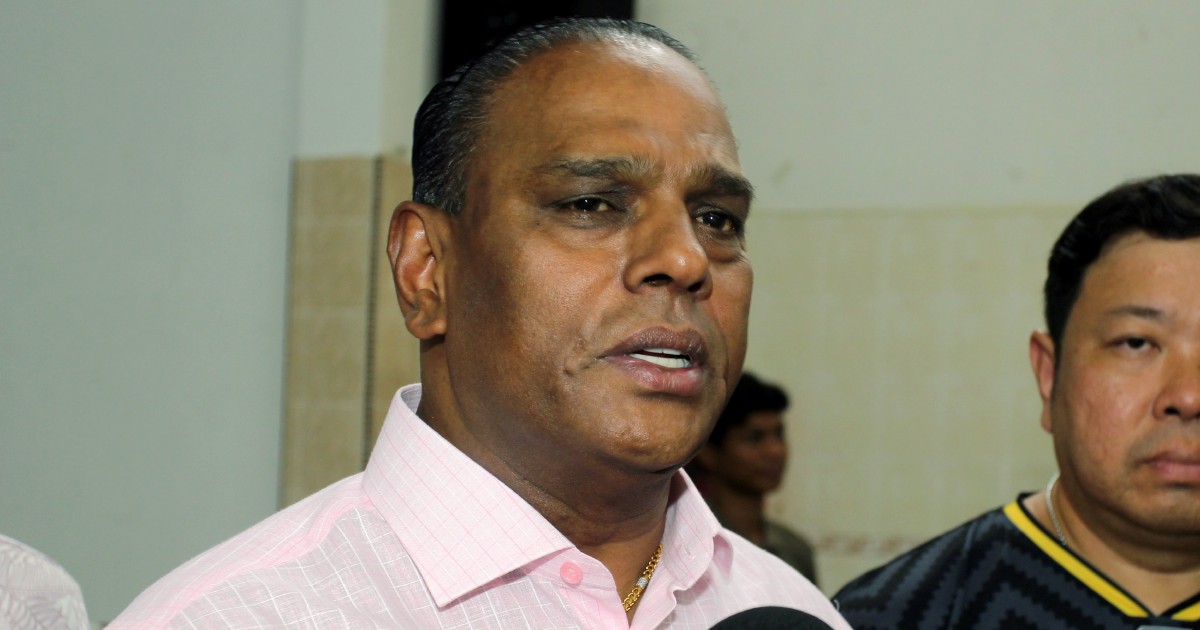
Former Human Resources Minister Datuk Seri M. Saravanan appeared before the courts in Kuala Lumpur as he prepared to answer corruption charges stemming from investigations into his conduct during his tenure overseeing the country's foreign worker recruitment framework. The proceedings mark a significant development in a high-profile graft inquiry that has drawn considerable public attention given Saravanan's prominent role in shaping Malaysia's labour immigration policies.
Outside the court complex, dozens of supporters dressed in black gathered to demonstrate their backing for the former minister. The visible show of support underscores the polarised nature of the case within political circles and among those who view Saravanan favourably. Such demonstrations at court proceedings are not uncommon in Malaysia when cases involve well-known public figures, reflecting the intense interest surrounding matters that touch on governance and ministerial accountability.
The allegations against Saravanan pertain to his handling of Malaysia's foreign worker programmes during his time as Human Resources Minister. Foreign worker recruitment has become an increasingly scrutinised domain in Malaysian governance, as the country relies heavily on migrant labour across multiple economic sectors including manufacturing, construction, agriculture, and domestic services. Irregularities or corruption in this system can have cascading effects on workplace standards, worker protection, and economic competitiveness.
Malaysia processes hundreds of thousands of foreign worker permits annually, creating substantial administrative procedures and numerous decision points where impropriety could potentially occur. The foreign worker recruitment apparatus involves coordination between government ministries, private placement agencies, and employers, with billions of ringgit flowing through related industries. Any allegations of corruption within this system warrant serious investigation given the sector's economic significance and its impact on vulnerable migrant populations.
The timing and nature of these charges reflect broader efforts by Malaysian authorities to address corruption across government institutions. In recent years, high-profile cases involving former government officials have demonstrated a willingness to pursue accountability at senior levels. Such investigations can bolster public confidence in institutional integrity, though they simultaneously create political reverberations depending on the individuals and parties involved.
Saravanan's tenure as Human Resources Minister placed him at the centre of critical decisions affecting Malaysia's labour market policy and foreign worker management. The ministry oversees employment conditions, labour relations, and the administration of foreign worker permits through established quotas and procedures. Allegations of corruption in this portfolio suggest potential abuse of discretionary power or circumvention of established protocols that govern worker recruitment.
The case carries implications extending beyond the individual defendant to consideration of systemic vulnerabilities within Malaysia's bureaucratic frameworks. If corruption did occur within foreign worker recruitment mechanisms, it raises questions about oversight mechanisms, transparency standards, and whether adequate checks and balances existed to prevent irregular conduct. Such inquiries often prompt institutional reforms aimed at tightening procedures and enhancing accountability.
For Southeast Asian observers, Malaysia's handling of this case sends signals about the region's commitment to tackling high-level corruption and maintaining institutional credibility. ASEAN nations have collectively emphasised anti-corruption efforts through various regional frameworks and bilateral cooperation arrangements. High-profile prosecutions of former officials demonstrate institutional willingness to pursue accountability, though implementation consistency varies significantly across the region.
The foreign worker recruitment sector itself remains under scrutiny across Southeast Asia due to recurring reports of exploitative conditions, trafficking risks, and inadequate worker protections. Malaysia, as a major destination country for migrant workers, faces particular responsibility in ensuring ethical recruitment standards and combating corruption that could enable abuse. Allegations against a former minister overseeing this domain thus carry weight in broader discussions about worker rights protection and ethical governance in labour migration.
The court proceedings will determine whether evidence substantiates the corruption charges against Saravanan. Malaysian courts have demonstrated capacity to handle complex corruption cases involving senior officials, with the Malaysian Anti-Corruption Commission (MACC) playing a central investigative role. The outcome of this case will likely influence public perception of institutional effectiveness in addressing ministerial accountability and institutional corruption.
Beyond the legal dimensions, the case reflects ongoing tensions within Malaysia's political landscape regarding governance standards and accountability expectations. Different stakeholders interpret investigations and prosecutions through varying lenses depending on political affiliation and personal interests. The presence of organised supporter demonstrations at court proceedings illustrates how such cases transcend purely legal matters to become politically and socially significant events.
Observers of Malaysian governance will monitor how the courts handle the evidence and arguments presented during these proceedings. The thoroughness of judicial examination and the transparency of court processes contribute to broader assessments of institutional independence and rule of law application in Malaysia. As the case progresses, it will provide insights into the country's capacity for self-correction through established legal mechanisms when allegations of high-level misconduct emerge.

