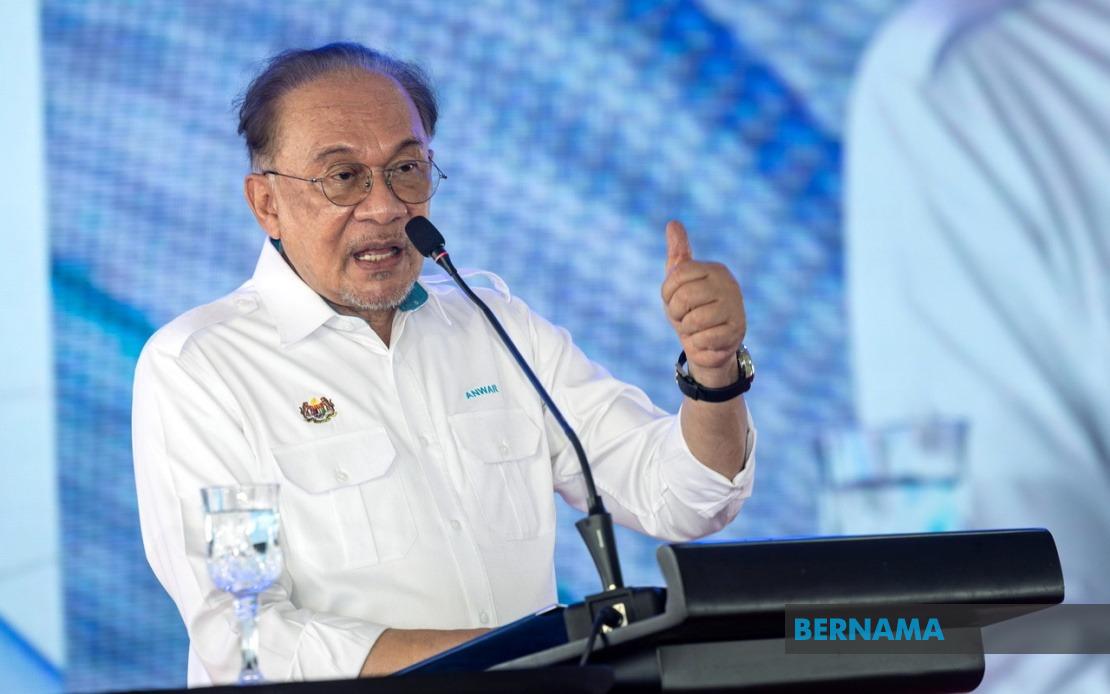
Prime Minister Datuk Seri Anwar Ibrahim has unveiled a significant energy strategy anchored on deepening ties with Russia and Turkmenistan, positioning both nations as cornerstone suppliers for Malaysia's hydrocarbon requirements extending well into the coming decades. Speaking at the Setia Fontaines Industrial Park groundbreaking ceremony in Kepala Batas, Anwar outlined how these partnerships represent a calculated geopolitical move to insulate the country from volatile global energy markets and supply chain disruptions that have historically threatened regional economies.
The centrepiece of this strategy involves a two-decade commitment from Russia to supply crude oil, natural gas, and diesel to Malaysia. According to Anwar, Russian President Vladimir Putin personally confirmed this arrangement during recent discussions in Kazan, signalling Moscow's serious intent to establish a stable, long-term commercial relationship. Such assurances from the Kremlin underscore the importance Moscow places on maintaining economic partnerships beyond Western-aligned nations, particularly as geopolitical tensions continue reshaping energy trade corridors across Eurasia and the Indo-Pacific.
The Turkmenistan dimension of this energy architecture proves equally consequential. Anwar's recent official visit to the Central Asian nation resulted in an even more substantial breakthrough: Malaysia securing unprecedented access to Turkmenistan's hydrocarbon sector, including portions of what constitutes among the world's largest proven natural gas reserves. This access fundamentally transforms Malaysia's energy calculus, transitioning the country from a vulnerable importer dependent on contested shipping lanes to a nation with diversified, geographically dispersed supply sources that can weather regional instability.
The significance of tapping Turkmenistan's reserves cannot be overstated for Southeast Asian energy security more broadly. Turkmenistan's gas deposits rival those of major Middle Eastern producers, yet the country has historically struggled to monetise these resources due to geographic isolation and limited export infrastructure. Malaysia's newfound access represents a win-win arrangement, allowing Kuala Lumpur to secure affordable gas while providing Turkmenistan with a reliable, diversified customer base extending beyond traditional buyers like China and Russia.
Anwar emphasised that these agreements emerged from sustained diplomatic engagement, building momentum from Turkmenistan President Serdar Berdimuhamedov's December 2024 visit to Malaysia. This timeline reflects the accelerating pace of Malaysian foreign policy under Anwar's leadership, with energy security emerging as an explicit foreign policy objective rather than a purely commercial concern managed by state-owned enterprises. The compression of negotiations from presidential-level discussions to formal supply agreements within months demonstrates both parties' urgency in formalising these relationships.
Beyond securing domestic consumption, the agreements unlock significant export opportunities for Malaysia. Anwar highlighted the potential to re-export or value-add Malaysian energy imports to major Asian economies experiencing structural energy deficits, particularly China, Japan, and South Korea. These markets maintain insatiable appetites for liquefied natural gas and petroleum products, creating lucrative opportunities for Malaysian trading companies and energy firms positioned to intermediate these flows. This dimension transforms energy security from a defensive measure into an offensive economic advantage.
The strategic timing of these announcements warrants examination within Malaysia's broader economic repositioning. As regional supply chains reconfigure following trade tensions and geopolitical realignments, energy independence becomes crucial leverage in bilateral negotiations with major powers. Nations that control energy destiny enjoy disproportionate influence in regional affairs, a lesson Malaysia appears to have absorbed from observing how energy relationships have shaped regional dynamics across Southeast Asia.
Anwar's framing of energy cooperation as integral to safeguarding national interests reflects a more sophisticated understanding of economic statecraft. Rather than treating energy procurement as a purely technical utility function, the Prime Minister positions energy security as foundational to job creation, industrial development, and sustained economic growth. This conceptualisation justifies the high-level diplomatic effort expended on these negotiations and situates energy partnerships within Malaysia's comprehensive development agenda.
The twenty-year horizon embedded in these agreements signals confidence in the durability of Malaysia-Russia relations despite international sanctions and geopolitical headwinds. Western-aligned nations maintain pressure on Russia through economic restrictions, yet Malaysia's willingness to formalise long-term energy relationships demonstrates the limits of secondary sanctions in constraining major powers' commercial interactions. For Malaysian policymakers, the calculus evidently favours pragmatic engagement over ideological alignment, prioritising tangible economic benefits for citizens over abstract solidarity with Western positions.
For Southeast Asia more broadly, Malaysia's energy pivot illustrates how regional powers pursue strategic autonomy through economic diversification and relationship expansion beyond traditional Western partnerships. As ASEAN nations increasingly balance competing great power interests, Malaysia's model of engaging Russia and Central Asia while maintaining commercial ties with China, Japan, and Korea offers a potential template for managed multipolarity. The energy sector, being capital-intensive and strategically significant, becomes a natural arena for testing and demonstrating such balanced approaches.
The implementation phase will prove critical in determining whether these agreements translate into sustained energy flows or remain aspirational commitments contingent on shifting political circumstances. Malaysia must develop the necessary infrastructure, including specialised LNG terminals and transport capacity, to absorb Turkmen gas and Russian petroleum products. These capital investments signal Malaysia's commitment to operationalising these partnerships, transforming them from diplomatic victories into tangible economic assets.
Finally, these energy partnerships reflect Malaysia's recognition that long-term prosperity depends on securing foundational inputs that power industrial activity and household consumption. By locking in stable, long-term supplies through high-level political agreements, Malaysia reduces exposure to price volatility that has historically disrupted emerging economies. This energy-first approach to development demonstrates that despite globalisation's theoretical elimination of geographic advantage, controlling physical resource flows remains a powerful determinant of national economic resilience and strategic autonomy in the twenty-first century.
%22%2F%3E%3C%2Fpattern%3E%3C%2Fdefs%3E%3Crect%20width%3D%22100%25%22%20height%3D%22100%25%22%20fill%3D%22url(%23ph25143g)%22%2F%3E%3Crect%20width%3D%22100%25%22%20height%3D%22100%25%22%20fill%3D%22url(%23ph25143p)%22%2F%3E%3Ctext%20x%3D%2250%25%22%20y%3D%2250%25%22%20text-anchor%3D%22middle%22%20dominant-baseline%3D%22central%22%20fill%3D%22rgba(255%2C255%2C255%2C0.95)%22%20font-family%3D%22Georgia%2C%20'Times%20New%20Roman'%2C%20serif%22%20font-weight%3D%22700%22%20font-size%3D%22320%22%20letter-spacing%3D%22-0.02em%22%3ETV3%3C%2Ftext%3E%3C%2Fsvg%3E)