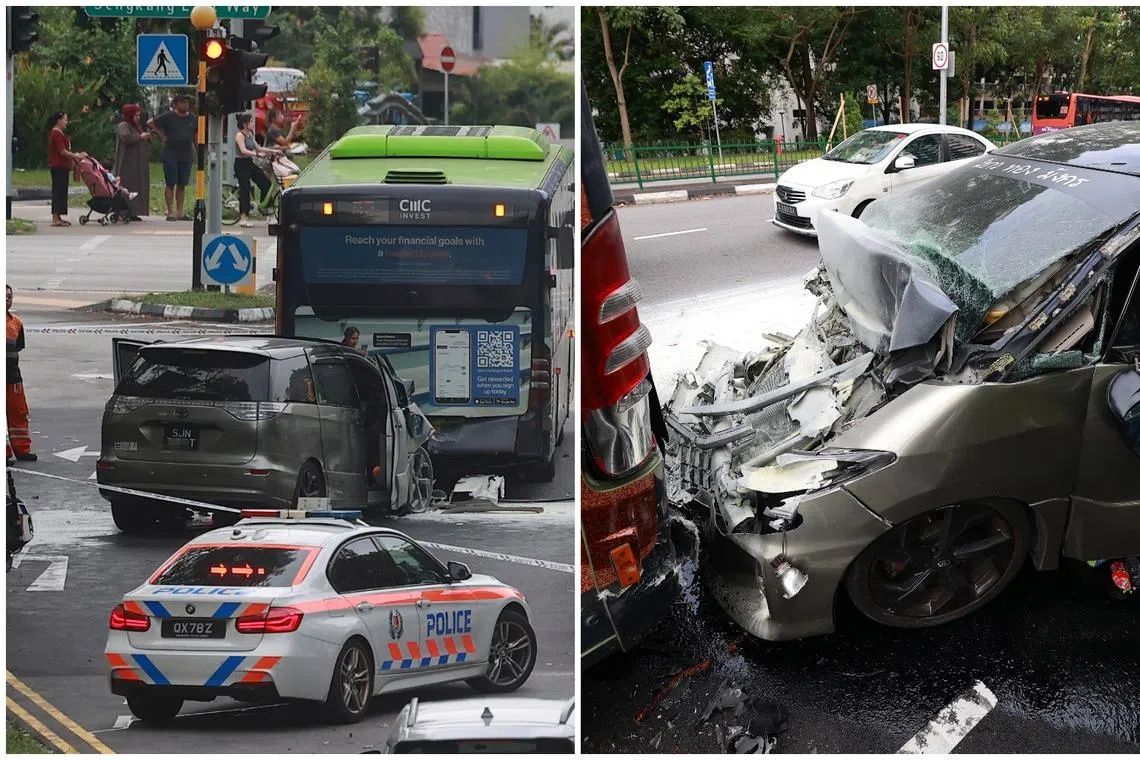
Singapore's road safety landscape has darkened considerably as medical professionals sound alarms over a troubling rise in accidents involving drug-impaired drivers. Within just 12 days in June, authorities charged three men with driving under the influence of substances ranging from methamphetamine to an unexpected pharmaceutical threat: etomidate, an anaesthetic now being misused through vaporisers known as Kpods. The convergence of recreational drug abuse and impaired driving has created a hazardous intersection that extends far beyond individual motorists, endangering passengers, pedestrians, and commuting road users across the island.
The scale of the problem came into sharp focus when Coordinating Minister for National Security K. Shanmugam disclosed sobering statistics to Parliament in February. Between 2023 and 2025, Singapore recorded 38 traffic accidents directly linked to drug and etomidate use, with nearly half—19 cases—proving fatal. What emerged from these figures was a disturbing trend acceleration: while the combined toll across the first two years remained concerning, 2025 alone accounted for 29 of those 38 accidents, suggesting the phenomenon is intensifying rather than stabilising. Among the fatal incidents, 10 involved conventional drugs whilst nine were attributed specifically to etomidate use, with a further seven accidents involving a combination of both substances.
The case that crystallised public attention occurred on May 13, 2025, in Punggol, where a collision between a car and bus claimed the life of a 28-year-old woman passenger. When police examined the vehicle, they discovered an arsenal of drug paraphernalia: 42 vapes and more than 1,200 pods, some containing etomidate. Toxicological analysis confirmed that etomidate was present in both the driver's and the deceased woman's bloodstreams, implicating the substance in her death. The discovery transformed what initially appeared as a tragic accident into a cautionary tale about the risks posed by emerging drug consumption methods that many road users and enforcement agencies are still learning to identify and address.
Jonathan Tang, a clinical toxicologist at the Emergency Medicine Department of the National University Hospital, has treated patients bearing the physical consequences of etomidate-impaired driving. His clinical observations provide crucial insight into the mechanism of danger. Etomidate operates similarly to alcohol intoxication, significantly degrading the user's capacity to operate vehicles safely. Beyond the immediate impairment, Tang explains that the drug induces delayed reaction times, undermines hazard perception, and causes loss of vehicle control—a trinity of deficits that transforms a two-tonne vehicle into an uncontrolled projectile. The danger multiplies exponentially in urban environments where reaction time and hazard awareness are paramount.
Perhaps most alarming are the psychological effects that compound the driving impairment. Tang has documented cases in which etomidate Kpod use triggers psychiatric symptoms including depressed mood, heightened aggression, and increased impulsivity, occasionally progressing to suicide attempts. These neuropsychiatric manifestations represent a second pathway through which the drug compromises road safety, one that extends beyond simple motor impairment into the realm of judgment and impulse control. A driver experiencing such symptoms is not merely slower to react but potentially unstable in their decision-making, creating unpredictable hazards for everyone sharing the road.
The recent arrests paint portraits of this intersection between drug use and dangerous driving. Mohamed Firdouz Mohamed Akram, a 36-year-old, faced multiple charges after his collision with a taxi in Kallang caused injuries to both the cab driver and a passenger. Police discovered he had consumed methamphetamine and found drugs, vaporisers, and weapons in his vehicle. Rather than remain at the accident scene, Firdouz abandoned his car and fled, an action suggesting either panic or impaired judgment. Similarly, Puah Zhe Cong, aged 34, allegedly drove under the influence of etomidate when his vehicle caused one death and two additional injuries, compounding the violation by failing to remain at the scene. On another occasion, Sivakandesh, 32, crashed his Mercedes-Benz into a rubbish chute in Yishun after consuming methamphetamine, the vehicle first colliding with concrete bollards and a parked car before finally coming to rest.
Singapore's legislative framework provides penalties designed to deter such behaviour, though questions remain about adequacy given the escalating crisis. First-time offenders convicted of driving under the influence of an intoxicating substance face imprisonment for up to one year, a fine reaching S$10,000, or both. Repeat offenders face harsher consequences: up to two years imprisonment and fines up to S$20,000. Yet these penalties have evidently not created sufficient deterrence, suggesting either that enforcement detection remains insufficient or that the substances themselves are creating psychological dependencies that override legal consequences.
Parliamentarian Valerie Lee raised the issue in February, specifically querying whether Singapore's Traffic Police incorporated vaping and drug use assessment into their standard accident investigation protocol. Shanmugam's response confirmed that in the aftermath of traffic accidents, Traffic Police do assess drivers for signs of impaired driving, with blood tests ordered when drug or etomidate use is suspected. Drivers testing positive face liability under driving-while-under-the-influence statutes. However, the rising accident figures suggest that detection and intervention may still be insufficient, either because impairment markers are not always obvious at accident scenes or because the volume of incidents is outpacing investigative capacity.
The broader context makes these drug-driving incidents more concerning. Singapore recorded 149 traffic deaths in 2025, representing a 10-year high despite decades of investment in road safety infrastructure and enforcement. This figure exceeds the 142 deaths recorded in 2024 and stands markedly above the 141 fatalities recorded in 2016, the previous baseline for comparison. Simultaneously, injured persons climbed from 9,342 in 2024 to 9,955 in 2025. The convergence of rising death tolls, climbing injury numbers, and newly documented drug-driving incidents suggests multiple risk factors are simultaneously increasing, creating a compounding crisis that requires coordinated responses across enforcement, healthcare, and prevention domains.
For Malaysian and broader Southeast Asian readers, Singapore's experience provides an early warning. Etomidate-laced vapes represent a novel threat vector that may eventually cross borders, and the psychiatric effects associated with their use deserve particular attention from public health authorities. The substances appear to appeal to a demographic not traditionally associated with driving impairment—users of pharmaceutical-grade anaesthetics rather than conventional street drugs—potentially evading conventional public awareness campaigns. Moreover, the difficulty in detecting etomidate impairment at roadside suggests that enforcement approaches optimised for alcohol and traditional narcotics may prove inadequate. Countries throughout the region should consider whether their traffic enforcement protocols can reliably identify impairment from emerging drug formulations, particularly those delivered through vaporised rather than ingested or inhaled methods.
Medical professionals like Tang are now positioned as crucial voices in this evolving public safety landscape, translating clinical observations into practical guidance for policymakers and enforcement agencies. Their documentation of specific impairment mechanisms—delayed reaction, poor hazard perception, loss of vehicle control—provides concrete evidence that can inform both public education campaigns and enforcement training. The challenge ahead lies in translating this knowledge into prevention strategies that reach potential users before they endanger themselves and others on the road. Given the rising toll, the urgency of this knowledge transfer cannot be overstated.
%22%2F%3E%3C%2Fpattern%3E%3C%2Fdefs%3E%3Crect%20width%3D%22100%25%22%20height%3D%22100%25%22%20fill%3D%22url(%23ph267lhg)%22%2F%3E%3Crect%20width%3D%22100%25%22%20height%3D%22100%25%22%20fill%3D%22url(%23ph267lhp)%22%2F%3E%3Ctext%20x%3D%2250%25%22%20y%3D%2250%25%22%20text-anchor%3D%22middle%22%20dominant-baseline%3D%22central%22%20fill%3D%22rgba(255%2C255%2C255%2C0.95)%22%20font-family%3D%22Georgia%2C%20'Times%20New%20Roman'%2C%20serif%22%20font-weight%3D%22700%22%20font-size%3D%22170%22%20letter-spacing%3D%22-0.02em%22%3EMalaysia%3C%2Ftext%3E%3C%2Fsvg%3E)
%22%2F%3E%3C%2Fpattern%3E%3C%2Fdefs%3E%3Crect%20width%3D%22100%25%22%20height%3D%22100%25%22%20fill%3D%22url(%23ph57sjag)%22%2F%3E%3Crect%20width%3D%22100%25%22%20height%3D%22100%25%22%20fill%3D%22url(%23ph57sjap)%22%2F%3E%3Ctext%20x%3D%2250%25%22%20y%3D%2250%25%22%20text-anchor%3D%22middle%22%20dominant-baseline%3D%22central%22%20fill%3D%22rgba(255%2C255%2C255%2C0.95)%22%20font-family%3D%22Georgia%2C%20'Times%20New%20Roman'%2C%20serif%22%20font-weight%3D%22700%22%20font-size%3D%22170%22%20letter-spacing%3D%22-0.02em%22%3EMalaysia%3C%2Ftext%3E%3C%2Fsvg%3E)
%22%2F%3E%3C%2Fpattern%3E%3C%2Fdefs%3E%3Crect%20width%3D%22100%25%22%20height%3D%22100%25%22%20fill%3D%22url(%23ph27skkg)%22%2F%3E%3Crect%20width%3D%22100%25%22%20height%3D%22100%25%22%20fill%3D%22url(%23ph27skkp)%22%2F%3E%3Ctext%20x%3D%2250%25%22%20y%3D%2250%25%22%20text-anchor%3D%22middle%22%20dominant-baseline%3D%22central%22%20fill%3D%22rgba(255%2C255%2C255%2C0.95)%22%20font-family%3D%22Georgia%2C%20'Times%20New%20Roman'%2C%20serif%22%20font-weight%3D%22700%22%20font-size%3D%22136%22%20letter-spacing%3D%22-0.02em%22%3EGovernment%3C%2Ftext%3E%3C%2Fsvg%3E)