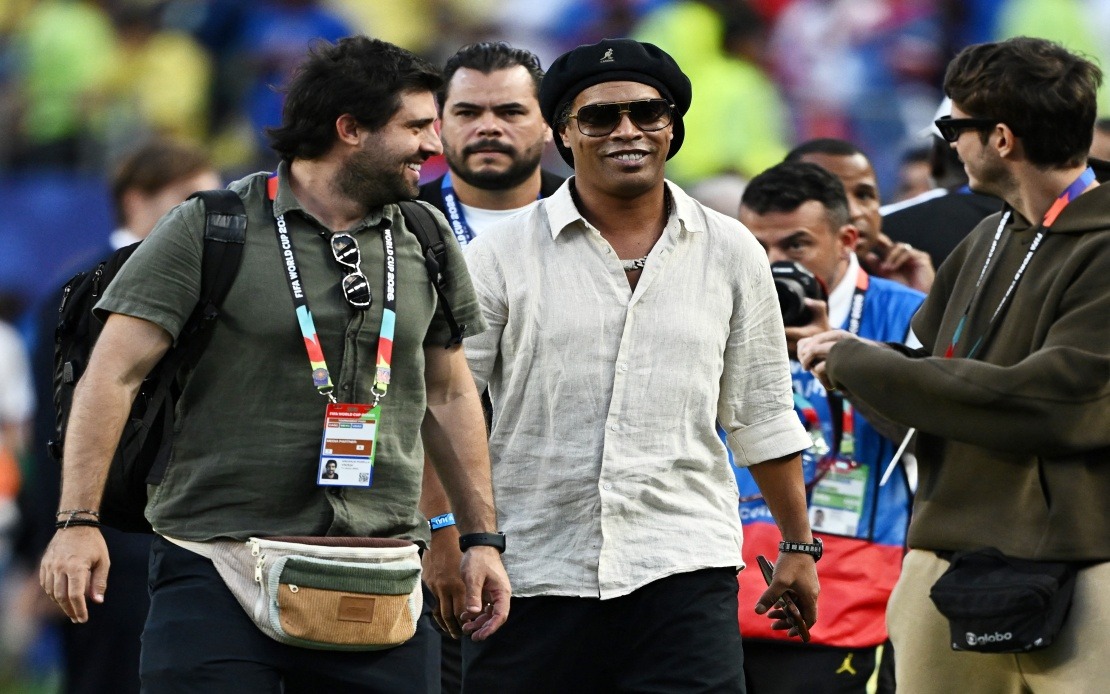
At 46 years old, Ronaldinho—arguably one of the most magically talented footballers of his generation—appears poised to defy convention once more by embarking on an unlikely comeback with Ravenna, an Italian third-division club. The reported development, first disclosed by the German Press Agency citing reports from Gazzetto dello Sport, signals that the twice World Footballer of the Year is preparing to ink a contract with the Emilia-Romagna based side, though substantial questions remain about whether the Brazilian wizard will actually take to the pitch.
The specifics surrounding this extraordinary move are expected to crystallise at a scheduled announcement in Miami on Tuesday, according to reports circulating through European sports media. Until then, the nature and scope of Ronaldinho's involvement with Ravenna—whether it constitutes a playing role, an ambassadorial position, or something more ambiguous—remains shrouded in deliberate ambiguity. This measured approach to disclosure suggests that club officials are carefully managing expectations whilst building narrative momentum around the signing.
In a statement attributed to the Brazilian legend, Ronaldinho expressed enthusiasm about the prospect of returning to competitive football. He emphasised his eagerness to engage with the ball in his signature improvisational manner and to collaborate with Ignazio Cipriani, the club's proprietor who established his fortune through hospitality ventures. The language employed—referring to writing a new chapter in his sporting life—reflects a romantic sensibility that has consistently defined Ronaldinho's public persona throughout his career.
Ariedo Braida, serving as Ravenna's vice-president, adopted a characteristically cautious stance when discussing the prospect of the Brazilian actually participating in matches. Speaking to ANSA news agency, Braida suggested that playing time remained a genuine possibility rather than a certainty, framing Ronaldinho's legendary status as justification for overlooking the chronological realities that would typically preclude such an arrangement. His comment—that the Brazilian "knows no age"—appears designed to position Ravenna as a club willing to transcend conventional football logic in pursuit of something extraordinary.
Ronaldinho's competitive career reached its zenith during an era when he fundamentally altered perceptions of how attacking football could be played. His two World Footballer of the Year accolades recognised a player whose technical mastery, creative intelligence, and infectious enthusiasm captivated audiences across multiple continents. The 2002 World Cup triumph with Brazil cemented his status as a player for his generation, whilst his time at Barcelona four years later produced performances that many analysts consider among the finest individual seasons in modern football history.
The Brazilian's palmares extends well beyond European achievements, encompassing the 2013 Copa Libertadores victory with Atletico Mineiro, South America's most prestigious club competition. These honours collectively demonstrate a footballer whose influence transcended league boundaries and cultural contexts. Yet since 2015, when he contested his final professional fixture whilst representing Fluminense in Rio de Janeiro, Ronaldinho has remained absent from competitive football.
Following that last appearance for the Rio club, Ronaldinho's subsequent engagement with professional sport centred on futsal rather than traditional football. He completed two stints in India's Premier Futsal League before officially announcing his retirement from professional competition in 2017. That decision appeared definitive—a natural conclusion to a career that had already delivered everything the sport could offer. The eight-year interval since then has permitted a complete generational shift within football, raising legitimate questions about whether any meaningful return is practically feasible.
For Malaysian and Southeast Asian football enthusiasts, Ronaldinho's career arc holds particular resonance given his status as one of the few transcendent global superstars whose brilliance was universally appreciated regardless of regional allegiance. His performances demonstrated that technical excellence and entertainment value need not conflict, a philosophy that contrasts sharply with the increasingly pragmatic and efficiency-focused approach dominating contemporary football. The prospect of witnessing any further involvement, even tangential, with the sport carries nostalgic weight for supporters who grew up watching him orchestrate tactical masterclasses.
The potential Ravenna arrangement also reflects broader patterns within football's business ecosystem. European clubs at lower tiers increasingly recognise that associating with legendary figures, even in diminished capacities, generates commercial and promotional advantages that transcend straightforward sporting calculations. Whether Ronaldinho's involvement concentrates primarily on such commercial dimensions or genuinely contemplates actual playing participation will become clearer following the Miami announcement.
Ravenna's willingness to pursue such an unconventional recruitment illustrates how ambitious Italian clubs at third-tier level pursue creative strategies to enhance their profiles and commercial prospects. The association with a figure of Ronaldinho's stature, even at his current age, represents a marketing opportunity of considerable magnitude for an institution competing at that competitive stratum. Italian football, particularly at lower divisions, has demonstrated increasing openness to embracing such initiatives.
Ronaldinho's journey from Barcelona's Camp Nou to potential appearances in Italy's third tier encapsulates the inevitable trajectory facing even the most extraordinary athletes. Age fundamentally alters physical capabilities regardless of technical prowess or competitive acumen. Yet the Brazilian's consistent refusal to conform to conventional expectations throughout his career suggests that whatever emerges from the Miami announcement will likely contain unexpected elements.
Should Ravenna's recruitment of Ronaldinho ultimately extend to genuine competitive appearances, it would represent one of football's most remarkable late-career developments. Conversely, should the arrangement prove primarily ceremonial or ambassadorial, it nonetheless constitutes an acknowledgment that certain athletes transcend ordinary categorisation even after stepping away from professional competition. Either outcome will command attention from football audiences who spent decades marvelling at his exceptional abilities.