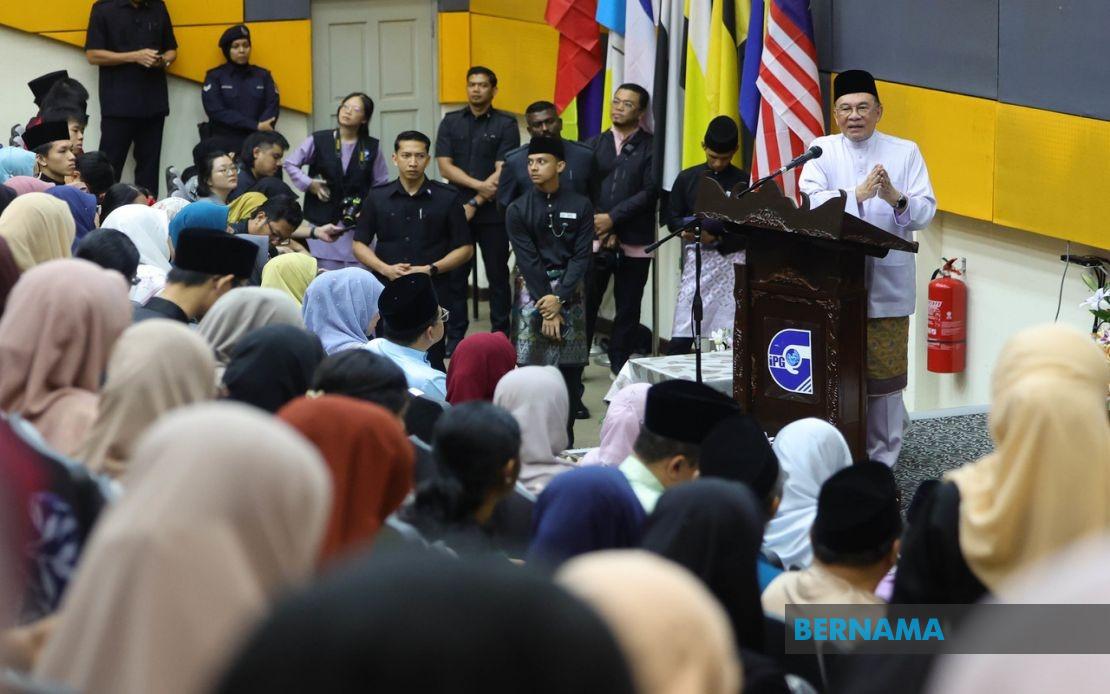
Prime Minister Datuk Seri Anwar Ibrahim has pinpointed institutional resistance and entrenched interests as the most formidable barriers to Malaysia's ongoing reform initiatives, describing them as more intractable than any shortage of technical capacity or professional expertise. Speaking during an engagement session with students and educators at the Technical Education Campus of the Institute of Teacher Education in Bandar Enstek, Anwar stressed that the real obstacle to transforming the nation's administrative landscape originates from individuals and factions unwilling to dismantle longstanding practices, particularly those who have benefited from systemic corruption and governance weaknesses.
During his more than three years directing the government, Anwar has observed a consistent pattern whereby reform efforts, particularly those targeting corruption elimination and institutional strengthening, encounter pushback from stakeholders accustomed to existing arrangements. This phenomenon reflects what scholars identify as institutional inertia—the tendency of established systems to perpetuate themselves regardless of their effectiveness or ethical standing. The resistance extends beyond formal bureaucratic structures to encompass segments of the professional and commercial elite who have constructed their influence and advantages within the current operational frameworks.
The Prime Minister articulated a fundamental tension underlying Malaysia's modernisation trajectory: the disconnect between superficial adoption of contemporary practices and genuine willingness to restructure underlying power relationships. Individuals may present themselves as progressive through their consumption patterns, professional credentials, and lifestyle choices, yet simultaneously resist substantive institutional change that threatens their accumulated privileges and established position within existing hierarchies. This paradox manifests in responses to transparency initiatives, accountability mechanisms, and anti-corruption drives that ostensibly enjoy broad rhetorical support but encounter practical obstruction when implementation threatens specific interests.
Anwar framed the reform challenge not as a technical or resource problem but fundamentally as a question of political will and cultural transformation. Malaysia possesses adequate technological infrastructure, qualified personnel, and established regulatory frameworks. What remains deficient is widespread acceptance of the necessity for systemic overhaul and genuine commitment to dismantling convenience arrangements that have normalised corrupt conduct. The normalisation of corruption represents perhaps the most insidious barrier—when irregular practices become so embedded in institutional culture that participants no longer perceive them as aberrations requiring correction.
The Prime Minister acknowledged the inherent unpopularity of genuine reform measures. Transparency requirements complicate operations previously conducted through informal channels. Accountability procedures extend decision-making timelines. Anti-corruption enforcement threatens individuals across various strata who have operated within ambiguous regulatory zones. These friction points explain why governments implementing serious reforms often face criticism not merely from those directly targeted but from constituencies who view disruption to familiar procedures as inherently destabilising, regardless of ultimate benefits.
Anwar situated systemic improvement within broader civilisational and religious frameworks, positioning reform as consonant with fundamental values of integrity, justice, and social responsibility. This rhetorical positioning serves multiple functions: it establishes moral legitimacy for reform initiatives, it appeals to constituency segments motivated by principle rather than material calculation, and it creates tension for reform opponents who must openly defend positions contrary to stated religious and cultural commitments. By framing resistance as fundamentally conservative—clinging to established arrangements rather than embracing necessary evolution—Anwar sought to shift the burden of justification onto those opposing change.
For Southeast Asian observers, Malaysia's reform trajectory illuminates challenges confronting the region's governments attempting simultaneous modernisation and institutional cleansing. The Malaysian experience demonstrates that anti-corruption initiatives face their sternest tests not from public opinion or international pressure but from domestic elites whose power derives from existing arrangements. Similar patterns emerge across Southeast Asia where reform-minded administrations encounter systematic obstruction from entrenched bureaucratic and commercial interests resistant to transparency and accountability measures.
The engagement with education sector participants carried particular significance, as Anwar sought to mobilise younger and less institutionally embedded constituencies toward accepting and advancing reform objectives. Educational institutions represent spaces where Malaysia might cultivate generations less invested in defending existing arrangements and more receptive to systematic improvement. The strategic emphasis on educator and student audiences reflected recognition that generational shifts in values and expectations constitute essential components of sustainable institutional reform.
Anwar's remarks underscore the recognition that Malaysia's governance modernisation constitutes fundamentally a political struggle rather than a technical implementation challenge. No amount of improved technology, expanded resources, or enhanced expertise automatically translates into institutional transformation when powerful constituencies benefit from current arrangements and possess capacity to obstruct change. The Prime Minister's candid acknowledgement of this reality—rather than attributing obstacles to implementation gaps or resource constraints—suggests sophisticated understanding of the political economy underlying governance reform in contemporary Malaysia.

