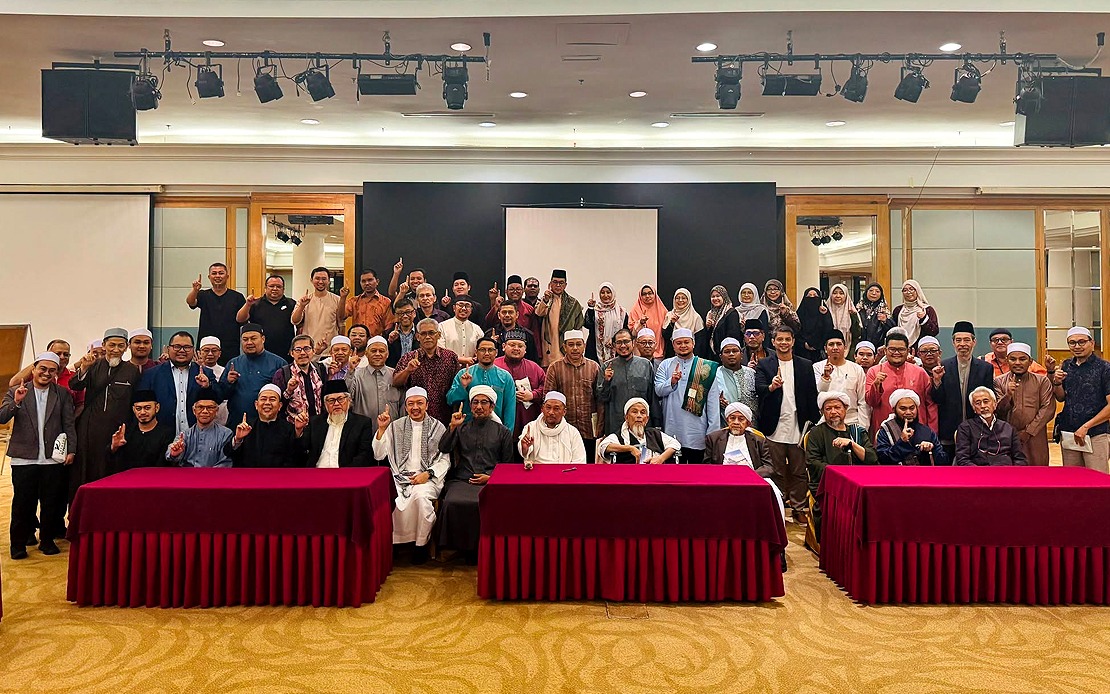
A comprehensive national initiative to communicate Royal Commission of Inquiry findings on Lembaga Tabung Haji will mobilise Islamic scholars and religious figures across the country, marking an effort to restore public confidence in the institution that manages savings for nearly 10 million Malaysian Muslims seeking to perform the haj pilgrimage.
Former Minister in the Prime Minister's Department (Religious Affairs) Datuk Seri Dr Mujahid Yusof Rawa announced the campaign would leverage established community networks including mosques, prayer halls, educational institutions and government offices to disseminate information about how the pilgrim fund handled depositors' money. The initiative stems from mounting public concern over financial mismanagement at the institution, which has become a focal point for discussions about governance and accountability in religiously-mandated financial institutions.
The announcement follows a specialised conference held at De Palma Hotel in Ampang, where more than 100 religious scholars and community leaders convened to deliberate on the RCI's conclusions and their implications for safeguarding the collective wealth of Malaysia's Muslim population. The conference, titled Hifz al-Mal—a reference to the Islamic principle of protecting and preserving wealth—was organised by the Malaysian Ulama Secretariat in partnership with Malaysian Ulama Council Spiritual Leader Abdul Rahim Abdul Rahman, underlining the religious dimension of the accountability question.
Mujahid, who serves as Amanah deputy president, articulated three core objectives driving the communication strategy: ensuring factual clarity about what transpired at Tabung Haji, maintaining public trust in Islamic institutions, and preventing future asset misuse. His framing emphasises that Tabung Haji operates as a trust held collectively by Malaysia's Muslim community, positioning the protection of deposits as a shared moral and religious responsibility rather than merely a bureaucratic or regulatory concern.
A distinctive feature of the awareness campaign lies in its multidisciplinary approach. Rather than relying solely on religious voices, the Hifz al-Mal conference assembled chartered accountants, economic analysts, legal professionals, religious educators and Islamic boarding school scholars to examine the RCI findings from multiple angles. This combination reflects recognition that understanding institutional failure requires competency across financial, legal, governance and theological domains—a sophisticated response to the complex nature of modern Islamic finance.
The campaign's geographic reach represents a significant undertaking for Malaysia's Islamic administrative apparatus. By channelling information through mosques and prayer halls, the initiative taps into existing community gathering points where Friday sermons and religious education sessions already command the attention of millions of Muslim Malaysians. Schools, colleges and universities would serve as educational anchors, reaching younger demographic cohorts who will become future depositors and stakeholders in Islamic financial institutions. Government departments provide another formal platform, while community education spaces ensure penetration into more informal organisational structures.
The theological anchoring of the campaign around Hifz al-Mal carries particular significance for Malaysian Islamic discourse. This Quranic principle—which underpins numerous rulings on financial responsibility and asset protection—transforms what might otherwise appear as a technical audit exercise into a matter of religious duty. By framing Tabung Haji's deposits within this Islamic framework, religious leaders legitimate both the RCI's investigative process and the necessity of public accountability, making reform a religious obligation rather than external imposition.
For Malaysia's broader institutional landscape, the nationwide campaign demonstrates how government and quasi-government bodies increasingly mobilise religious authorities to manage public perception and rebuild legitimacy following corporate governance failures. This represents a distinctly Malaysian approach to institutional accountability, leveraging the deep integration between Islamic authority structures and government administration rather than relying primarily on secular media campaigns or formal regulatory communications.
The initiative carries implications for how similar crises in Islamic financial institutions might be addressed across Southeast Asia. Malaysia's experience with Tabung Haji—a pioneer in Islamic savings and investment products—influences the broader region's approach to Islamic finance governance. The employment of religious scholars as institutional communicators could become a template for other Muslim-majority or Muslim-significant nations managing faith-based financial crises, particularly where regulatory frameworks remain underdeveloped or where public trust in secular governance institutions remains contested.
For the 9.7 million Tabung Haji depositors in Malaysia, the campaign represents an opportunity to move beyond media headlines and parliamentary statements to direct engagement with trusted religious figures within their communities. However, the campaign's ultimate effectiveness will depend on whether participating scholars receive comprehensive, accurate briefing materials and whether the explanations translate complex financial and legal findings into language that ordinary depositors can readily understand and act upon, particularly older or less-educated members of the Muslim community who comprise a significant portion of the institution's customer base.

