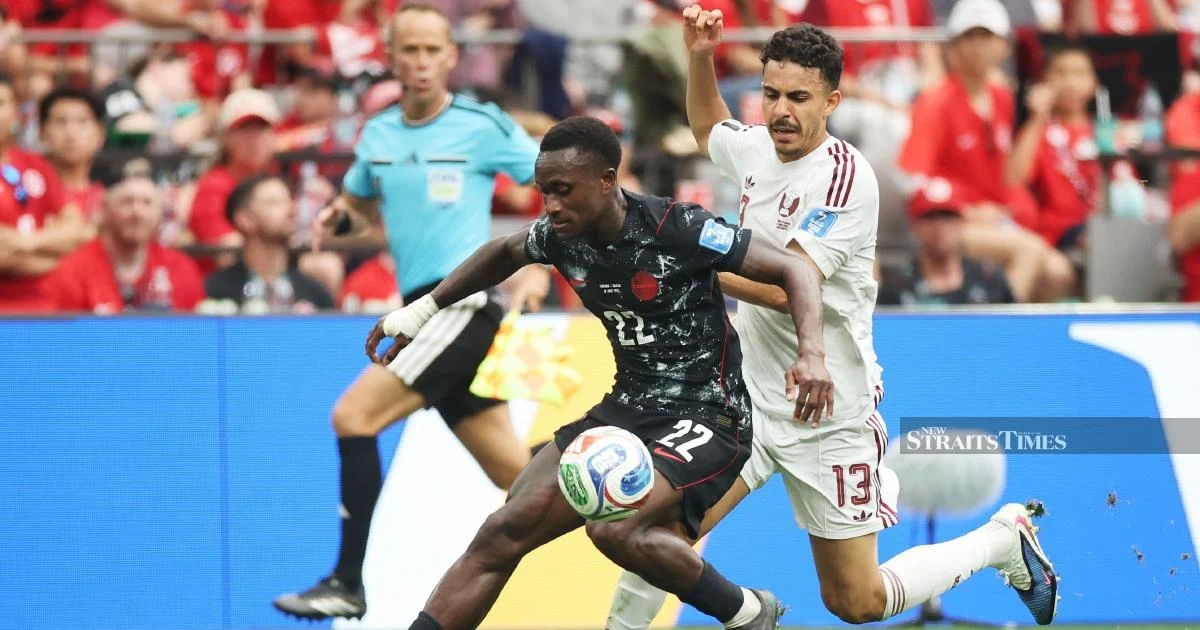
Qatar's devastating 6-0 defeat to Canada in World Cup competition has reignited a critical debate about the efficacy of throwing vast resources at football infrastructure without addressing deeper structural weaknesses. The gulf between financial ambition and on-field performance could hardly have been starker, raising uncomfortable questions about whether the gulf nation's approach to football development has fundamentally miscalculated what money can and cannot achieve in sport.
The disparity between Qatar's considerable spending and its meagre tournament results underscores a reality that remains underappreciated in discussions about modern football: capital investment, whilst necessary, operates within limits that experience, institutional knowledge, and organic player development simply cannot circumvent. Analysts point to the manner in which the nation has attempted to assemble competitive squads through recruitment and infrastructure spending, yet these mechanisms have repeatedly failed to translate into competitive performances when the stakes are highest.
For Southeast Asian football observers, Qatar's predicament carries particular relevance. The region contains several developing nations attempting to modernise their sporting infrastructure and compete at continental and global levels. The cautionary tale emerging from Qatar suggests that replicating success requires more than emulating the financial model of wealthier neighbours. Nations must instead cultivate systematic approaches to player development, youth academy structures, and coaching expertise that cannot be purchased wholesale from abroad.
The Canadian victory itself represents a contrasting approach—one built on consistent grassroots participation, technical coaching frameworks developed over decades, and a national football culture that values systematic progression. This stark juxtaposition illustrates how investment in foundational systems produces superior outcomes compared to late-stage recruitment strategies aimed at bypassing necessary developmental phases.
Qatar's World Cup campaign demonstrated technical deficiencies that financial resources alone could not remedy. The team's defensive vulnerabilities, tactical inflexibility, and lack of cohesion despite containing experienced players illustrated that squad assembly and playing competency represent fundamentally different challenges. Modern football at elite levels demands not merely talented individuals, but collections of players operating within sophisticated tactical frameworks honed through extensive preparation and mutual familiarity.
The broader implications extend beyond Qatar's immediate tournament performance. The nation invested extraordinary sums into World Cup infrastructure, domestic league development, and player recruitment leading up to the tournament. Yet these expenditures failed to produce the anticipated competitive uplift. This disconnect suggests that building football capability requires patience and a willingness to develop organic talent pipelines rather than pursuing shortcuts through financial acquisition.
For Malaysian football stakeholders observing from the regional perspective, the lesson proves instructive. While Malaysia possesses far more limited resources than Qatar, the strategic emphasis should remain on developing sustainable youth systems, improving coaching standards, and creating pathways for talented young players to develop progressively. The Qatari example demonstrates that financial advantages, without supporting structures, deliver disappointingly limited returns.
Experts also highlight timing as a crucial variable in football development that money cannot accelerate. Building a competitive national team requires establishing winning cultures, developing institutional memory within coaching staffs, and allowing player cohorts to mature and gain tournament experience. Qatar's compressed timeline—attempting to achieve global competitiveness within a relatively brief window—proved incompatible with the organic processes through which football nations traditionally develop.
The defeat raises uncomfortable questions about governance structures within football federations. Effective resource deployment requires decision-making frameworks focused on long-term sustainability rather than short-term spectacle. Qatar's approach, whilst achieving infrastructure milestones, may have neglected the governance and strategic planning dimensions that distinguish successful football nations from those whose spending yields disappointing results.
Looking forward, Qatar faces critical decisions about repositioning its football development strategy. The nation possesses advantages—including financial resources, modern facilities, and growing regional influence—that could support meaningful progress. However, realising this potential requires fundamentally recalibrating expectations and embracing developmental timelines incompatible with the urgent expectations that accompanied World Cup hosting.
The Canadian victory carries implications beyond the immediate fixture. It reinforces an enduring truth within professional sports: excellence emerges from comprehensive systematic approaches rather than isolated factors, however well-resourced. For Asian football nations observing this drama unfold, the message arrives with particular clarity: sustainable competitive improvement requires institutional patience and methodical development rather than financial shortcuts attempting to circumvent natural developmental processes.


%22%2F%3E%3C%2Fpattern%3E%3C%2Fdefs%3E%3Crect%20width%3D%22100%25%22%20height%3D%22100%25%22%20fill%3D%22url(%23ph2a6vmg)%22%2F%3E%3Crect%20width%3D%22100%25%22%20height%3D%22100%25%22%20fill%3D%22url(%23ph2a6vmp)%22%2F%3E%3Ctext%20x%3D%2250%25%22%20y%3D%2250%25%22%20text-anchor%3D%22middle%22%20dominant-baseline%3D%22central%22%20fill%3D%22rgba(255%2C255%2C255%2C0.95)%22%20font-family%3D%22Georgia%2C%20'Times%20New%20Roman'%2C%20serif%22%20font-weight%3D%22700%22%20font-size%3D%22136%22%20letter-spacing%3D%22-0.02em%22%3EPAS-Bersa%E2%80%A6%3C%2Ftext%3E%3C%2Fsvg%3E)