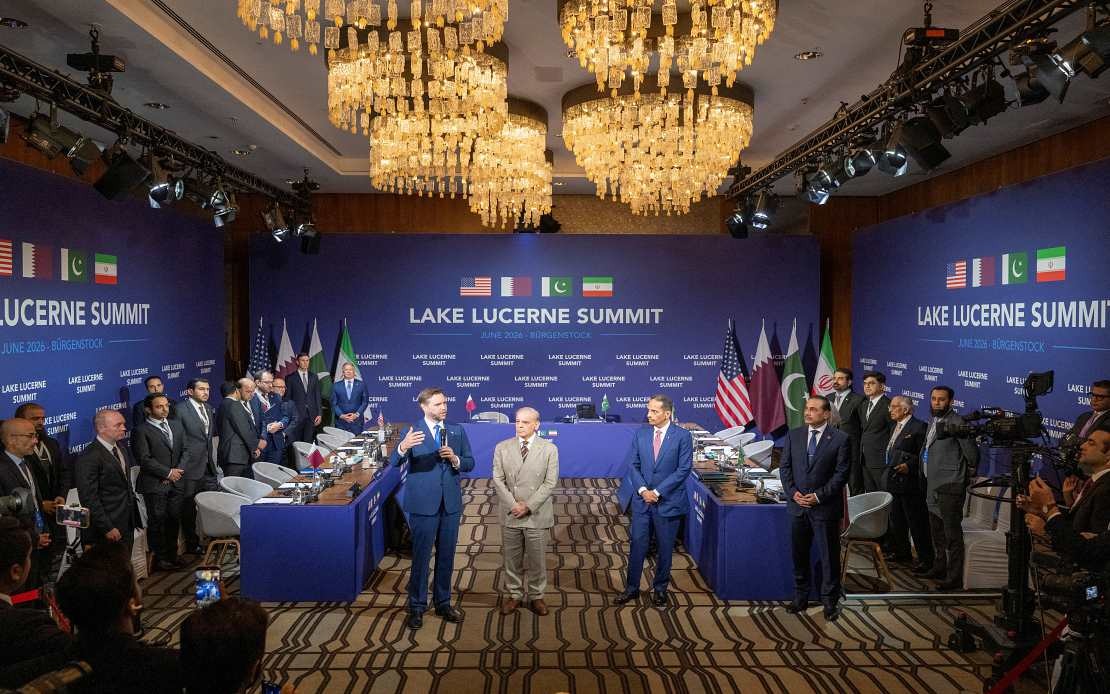
Diplomatic efforts to bridge the long-standing divide between Washington and Tehran have entered a new phase following the first high-level round of negotiations at the Lake Lucerne Summit in Switzerland, with Qatar and Pakistan announcing measurable advances in the mediation process. The two Gulf and South Asian nations, acting as intermediaries, reported that constructive discussions took place in an atmosphere conducive to progress, marking a meaningful step in efforts to resolve years of tension between the United States and Iran. The announcement comes as regional stability remains a priority for Southeast Asian nations like Malaysia, which depend heavily on uninterrupted maritime trade through critical chokepoints and benefit from a more stable Middle East.
Central to the breakthrough was the establishment of a formal mechanism designed to sustain momentum in technical discussions beyond the initial summit. Rather than allowing talks to stall after the opening round, both parties agreed to institutional structures that would maintain engagement and prevent the negotiations from reverting to diplomatic gridlock. This structured approach reflects lessons learned from previous failed attempts at reconciliation, where the absence of clear procedural frameworks had contributed to breakdowns in communication. The mechanism represents a practical recognition that resolving complex disputes between the US and Iran requires sustained, methodical dialogue rather than episodic negotiating sessions.
Equally significant was the creation of a high-level political committee tasked with overseeing the broader contours of the mediation effort. This committee will operate separately from technical working groups but maintain coordination with them, creating a dual-track structure where senior officials focus on strategic questions while specialists delve into details. The committee's role extends to receiving regular reports from lead negotiators, ensuring that political decision-makers remain informed and can provide guidance when negotiations encounter contentious issues that transcend technical matters. For observers in Southeast Asia, such institutional clarity signals that the parties are treating negotiations seriously and are prepared to invest diplomatic capital in reaching an understanding.
The roadmap established at the summit sets a 60-day timeline for reaching a final agreement, a relatively compressed schedule that reflects both the urgency of the situation and the goodwill demonstrated by both sides. Within this timeframe, specialized working groups will address three interconnected domains: the Iranian nuclear programme, sanctions imposed on Iran, and mechanisms to resolve disputes that might arise during implementation. This compartmentalization allows negotiators to make progress on discrete issues while building confidence that can carry over to more intractable problems. Malaysian policymakers and business leaders, many of whom have been affected by sanctions regimes and trade disruptions stemming from US-Iran tensions, will be watching closely to see whether this timeline holds and whether sanctions-related discussions yield concrete relief.
One of the most operationally significant outcomes concerns maritime security in the Strait of Hormuz, where roughly one-third of global seaborne petroleum trade passes annually. The agreement established a dedicated communication channel between the US and Iran specifically designed to prevent incidents and misunderstandings in these waters, alongside provisions to ensure safe passage for commercial vessels. Given that much of Malaysia's energy imports and significant portions of regional trade flow through this critical waterway, any reduction in maritime tensions carries direct economic implications for Southeast Asia. The establishment of a direct communication line between Washington and Tehran substantially reduces the risk of accidental escalation that could disrupt shipping and trigger global oil price shocks.
The joint statement references a Memorandum of Understanding signed in the preceding week, though details of this foundational agreement were not extensively elaborated. This document appears to establish the basic parameters within which subsequent negotiations will occur, setting parameters for the communication channel and defining the scope of discussions to follow. The MOU likely contains provisions addressing Iranian concerns about sanctions relief alongside American concerns about nuclear programme transparency, representing the initial compromise upon which all subsequent discussions depend. In the Malaysian context, clarity on the eventual terms of any US-Iran understanding could significantly affect regional trade patterns, investment flows, and energy pricing.
The involvement of Qatar and Pakistan as joint mediators reflects their distinct geopolitical positions and leverage. Qatar, a close ally of the United States with significant influence in the region through its financial resources and diplomatic networks, brings credibility with Washington. Pakistan, meanwhile, maintains diplomatic relations with Iran and possesses cultural and religious affinities that provide channels of communication and understanding with Tehran. Together, they occupy a middle position that neither superpower patron (in Pakistan's case, a complex relationship with the US) nor adversary, enabling them to propose compromises that neither principal might easily float independently. Their joint mediation suggests that both nations view a US-Iran settlement as beneficial to regional stability.
The establishment of working groups focused on specific technical domains represents an acknowledgement that the fundamental differences between Washington and Tehran require sustained attention from experts rather than periodic political negotiations. The nuclear programme working group will presumably address inspections, enrichment levels, and research activities, translating broad political commitments into verifiable technical standards. The sanctions working group faces perhaps the most contentious task, negotiating the sequencing and scope of relief against Iranian concerns about the reversibility of sanctions. These technical discussions, while less visible than high-level political meetings, often determine whether frameworks eventually succeed or fail.
For Southeast Asian observers and policymakers, the progress announced at Lake Lucerne carries implications extending beyond abstract geopolitical balance. A more stable relationship between the US and Iran could reduce regional tensions, lower energy costs, and create more predictable trading conditions. Conversely, any breakdown in these talks would likely trigger renewed volatility in oil markets and intensified regional proxy conflicts that could affect shipping lanes and investment climates across Southeast Asia. Malaysia's position as a maritime trading nation with significant energy imports makes it particularly sensitive to outcomes in US-Iran relations, even though it maintains formal diplomatic distance from both powers.
The 60-day timeline announced at the summit will test whether the new institutional mechanisms can sustain momentum in what remains an inherently difficult negotiation. The creation of formal oversight structures and working groups represents genuine progress by establishing expectations and procedures, yet historical experience demonstrates that such frameworks can also become stalled in procedural disputes. The coming weeks will reveal whether both sides entered the Lake Lucerne Summit with genuine intent to reach agreement or whether they merely sought to improve their diplomatic standing. Malaysian observers should note that even incremental progress in US-Iran talks could shift regional dynamics in ways that affect trade, security, and investment patterns across Southeast Asia, making sustained attention to these negotiations warranted despite their geographical distance from the region.