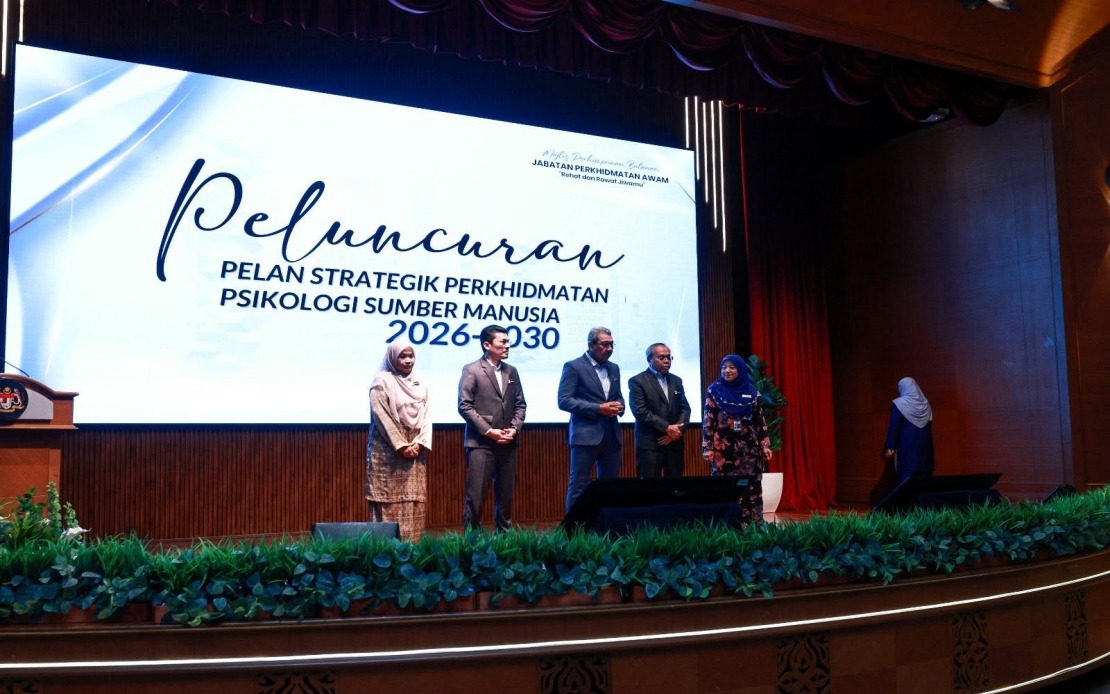
The Public Service Department has formally unveiled an ambitious five-year strategic framework designed to strengthen mental health and psychological support systems across Malaysia's civil service. Launched during the PSD's June 2026 monthly assembly in Putrajaya, the Human Resources Psychology Services Strategic Plan 2026-2030 represents a significant institutional commitment to addressing the psychological well-being of the nation's approximately 1.6 million civil servants. The initiative was officially inaugurated by Tan Sri Wan Ahmad Dahlan Abdul Aziz, the Director-General of Public Service, under the thematic banner "R&R (Rest and Treat) Your Soul," signalling a deliberate pivot toward employee wellness as a core governance priority.
The comprehensive plan encompasses 12 distinct strategies, 22 implementation programmes, and 48 key performance indicators that will enable the department to systematically measure and enhance psychological services across federal, state, and local government agencies. This granular approach underscores PSD's recognition that mental health interventions require clear metrics and coordinated execution rather than ad-hoc awareness campaigns. The emphasis on quantifiable KPIs is particularly noteworthy, as it allows the department to track progress transparently and adjust programmes where they fall short of objectives—a departure from how such initiatives have historically been managed in the Malaysian public sector.
At the heart of the strategic plan lies the concept of "Treat," which Tan Sri Wan Ahmad Dahlan articulated as a call for proactive intervention among civil servants. This framework encourages employees to shed the stigma surrounding mental health support, openly communicate workplace or personal challenges, and seek professional psychological services without fear of judgment or career repercussions. The messaging explicitly reframes mental health engagement from weakness or abnormality into responsible self-advocacy. This cultural shift is essential in the Malaysian context, where traditional attitudes toward mental health have often discouraged public discussion and professional intervention, contributing to untreated conditions and workplace stress accumulation.
The director-general's central message—"Rest when you are tired and take care of your soul before it gets worse"—encapsulates a preventive rather than purely curative philosophy. This orientation recognizes that burnout, depression, anxiety, and other psychological challenges typically escalate when left unaddressed. By encouraging early intervention and regular self-care practices, PSD is attempting to reduce crisis-level mental health incidents within the civil service and improve overall organisational health. The framing also acknowledges that government agencies are not exempt from the contemporary pressures affecting workforces globally: digitalization, restructuring, performance pressures, and evolving citizen expectations.
The strategic plan's foundation rests on the principle that organisational well-being is fundamentally dependent on the psychological health of its workforce. This insight has gained traction in corporate and public sector management internationally, yet it remains relatively novel in Malaysian government circles. By institutionalizing this connection through a formal five-year plan with dedicated resources and accountability measures, PSD is signalling that mental health is not peripheral to governance but central to it. When civil servants experience psychological distress, service delivery falters, decision-making quality declines, and workplace relations deteriorate—impacts that ultimately affect citizens relying on government services.
The "Rawat" concept introduced by PSD serves as the operational backbone of this strategy. Meaning "to care for" or "to treat" in Malay, Rawat operationalizes mental health support through systematic, proactive intervention protocols. Rather than waiting for individuals to reach crisis points, Rawat emphasizes early identification of psychological challenges, timely access to counselling and therapeutic services, and ongoing support mechanisms. This programme complements existing civil service reform initiatives, particularly the H.E.M.A.T work culture framework, which focuses on governance improvements, public empathy, progressive organisational mindsets, innovation encouragement, and administrative transparency.
The integration of Rawat with H.E.M.A.T represents a sophisticated understanding that mental health cannot be addressed in isolation from broader workplace culture. A transparent, empathetic, and innovation-friendly environment naturally supports psychological well-being, while authoritarian, opaque, or change-resistant organisational cultures actively harm it. By embedding mental health initiatives within a larger cultural transformation agenda, PSD acknowledges that psychological wellness requires systemic, not merely programmatic, change. The civil service cannot simply add counselling services to a fundamentally unhealthy workplace culture and expect meaningful improvement.
For Malaysian civil servants and the broader public sector workforce, this strategic plan carries substantial implications. Access to structured psychological support, historically limited and often stigmatized, is expanding significantly. The 22 implementation programmes will likely include enhanced counselling services, peer support networks, stress management training, and mental health awareness campaigns. Public servants struggling with workplace challenges, personal crises, or diagnosable mental health conditions now have a government-sanctioned framework encouraging them to seek help, with measurable commitments to service provision underpinning that framework.
The Southeast Asian context adds another layer of relevance. Across the region, civil services face comparable pressures: modernization demands, talent retention challenges, and growing citizen expectations amid economic uncertainty. Malaysia's formal commitment to mental health support may establish a regional precedent, potentially influencing civil service practices in neighbouring countries. Additionally, as Malaysia competes for skilled personnel in increasingly tight labour markets, demonstrating institutional commitment to employee well-being becomes a recruitment and retention advantage.
Implementation success will depend heavily on execution discipline and resource allocation. Strategic plans often languish without sustained funding, leadership attention, and accountability for results. The inclusion of 48 KPIs suggests PSD intends serious monitoring, though only subsequent annual reports will reveal whether targets are being met and programmes are actually reaching intended beneficiaries across the dispersed civil service structure. Training programmes for line managers and mental health professionals, funding for counselling services, and IT systems to track intervention efficacy will all require substantial investment.
The launch also reflects evolving global conversations around civil service modernization. Governments worldwide are recognizing that traditional hierarchical, rigid organisational cultures are incompatible with contemporary workforce expectations and mental health realities. Malaysia's PSD, through this strategic plan, is acknowledging that competing for talent and delivering effective governance requires genuine investment in employee well-being, not merely rhetorical commitment. The move signals confidence that supporting civil servant mental health is simultaneously a humanitarian priority and a practical governance necessity.
Looking forward, the success of the 2026-2030 plan will likely influence subsequent government policies beyond the civil service itself. If the programme demonstrates measurable improvements in psychological wellness, reduced absenteeism, and enhanced service quality, private sector employers and other public institutions may adopt comparable frameworks. Conversely, implementation failures or insufficient resourcing could reinforce skepticism about whether such initiatives represent genuine commitment or merely performative gestures. For now, the strategic plan represents an important institutional acknowledgment that civil servants' mental health matters and deserves systematic, measurable, sustained attention.


%22%2F%3E%3C%2Fpattern%3E%3C%2Fdefs%3E%3Crect%20width%3D%22100%25%22%20height%3D%22100%25%22%20fill%3D%22url(%23ph2hy9vg)%22%2F%3E%3Crect%20width%3D%22100%25%22%20height%3D%22100%25%22%20fill%3D%22url(%23ph2hy9vp)%22%2F%3E%3Ctext%20x%3D%2250%25%22%20y%3D%2250%25%22%20text-anchor%3D%22middle%22%20dominant-baseline%3D%22central%22%20fill%3D%22rgba(255%2C255%2C255%2C0.95)%22%20font-family%3D%22Georgia%2C%20'Times%20New%20Roman'%2C%20serif%22%20font-weight%3D%22700%22%20font-size%3D%22272%22%20letter-spacing%3D%22-0.02em%22%3EAnwar%3C%2Ftext%3E%3C%2Fsvg%3E)