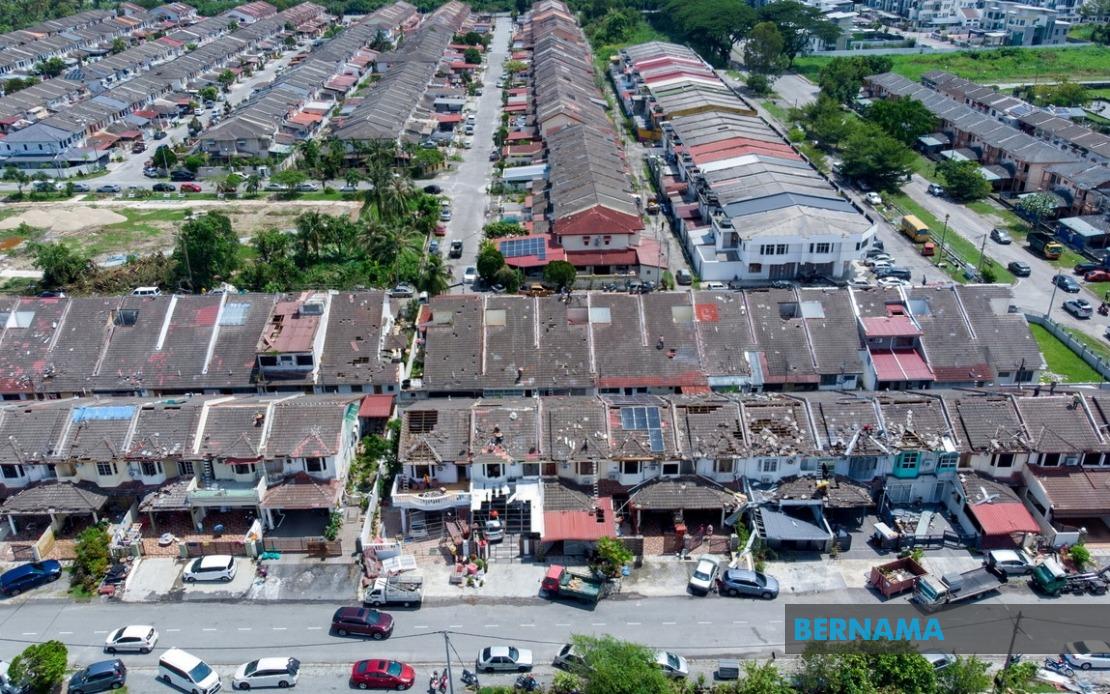
Police have established a security perimeter around five residential zones in Bercham, Ipoh, in the aftermath of a severe storm that struck the area on Friday, with authorities implementing strict controls on entry and exit to safeguard affected properties from criminal exploitation during the recovery phase.
Ipoh district police chief ACP Muhammad Najib Hamzah explained that while residents are permitted to access their homes for cleanup and recovery efforts, the force is taking a cautious approach to nighttime movement, particularly in areas still without electricity supply. The balance between permitting legitimate recovery work and preventing opportunistic crime has forced police to adopt a flexible yet vigilant stance that distinguishes between genuine residents and potential intruders using disaster conditions as cover for theft.
The darkness in affected neighbourhoods including Anjung Bercham has created particular vulnerability, as residents attempting to salvage belongings and remove debris during evening hours become indistinguishable from those with criminal intent. Police have therefore instituted verification procedures at night, cross-checking whether individuals entering sealed zones actually reside in the properties they claim to be cleaning. This preventive measure reflects growing concerns that natural disasters can attract organised looting, a pattern observed in previous Malaysian weather emergencies.
As of 8 am on the day of the announcement, police had documented 492 storm-related reports through Op Bencana, the disaster response protocol. Authorities have clarified that residents face no time constraint for lodging reports of damage or loss, allowing those dealing with immediate safety and shelter concerns to prioritise accordingly before engaging with the formal claims process. This flexibility acknowledges the chaos inherent to post-disaster conditions where affected families must first secure immediate needs.
Damage assessment across the affected localities remains preliminary, with officials stating that total losses have not yet been calculated. This incomplete picture is typical in the immediate aftermath of severe weather events, when authorities focus on securing areas and ensuring public safety rather than detailed economic surveys. The full financial impact will emerge only after systematic inspections of each damaged property are completed.
Ipoh Barat MP M. Kulasegaran characterised the storm as extraordinary and unprecedented in its severity, affecting more than 200 residential properties across multiple neighbourhoods. As Deputy Minister in the Prime Minister's Department responsible for law and institutional reform, Kulasegaran's assessment carries official weight in establishing the incident's significance within the broader context of national disaster management. His involvement signals that the event has attracted attention at federal level, potentially triggering additional support mechanisms.
Meteorological investigation into the storm's cause has tentatively identified a landspout phenomenon as the likely culprit, a type of tornado that forms over land and differs from waterspouts typically associated with maritime weather systems. Landspouts are characterised by rapid rotational winds that can produce concentrated damage along narrow paths, explaining why certain neighbourhoods sustained severe impact while adjacent areas escaped relatively unscathed. The precise meteorological classification remains important for understanding whether such phenomena represent recurring seasonal risks or rare atmospheric events.
The affected residential areas span a geographically distributed zone across greater Bercham, including Anjung Bercham Utara, Taman Mujur, Kampung Bercham, Kampung Tersusun Tasek, Taman Pusat Bercham and Taman Indah Sakti. This breadth of impact suggests the storm's destructive path covered considerable distance, affecting diverse housing types from traditional village settlements to planned residential estates, each presenting different challenges for assessment and recovery.
For Malaysian readers, this incident illustrates the vulnerability of urban and suburban areas to extreme weather events, a concern heightened by climate-related variability. The police response demonstrates the additional layer of civil disorder risk that accompanies natural disasters, requiring security resources to be diverted from routine operations toward protection of vulnerable properties. The recovery timeline for Bercham residents will likely extend well beyond immediate repair work, encompassing insurance claims, rebuilding permits, and emotional adjustment to sudden loss of homes and possessions.
The incident underscores why comprehensive disaster management protocols must address not only immediate rescue and relief but also the secondary challenge of preventing exploitation during the vulnerable recovery phase. As Southeast Asia faces increasingly variable weather patterns, communities in similar circumstances will benefit from understanding how authorities can balance resident access for recovery with security measures that prevent opportunistic crime.