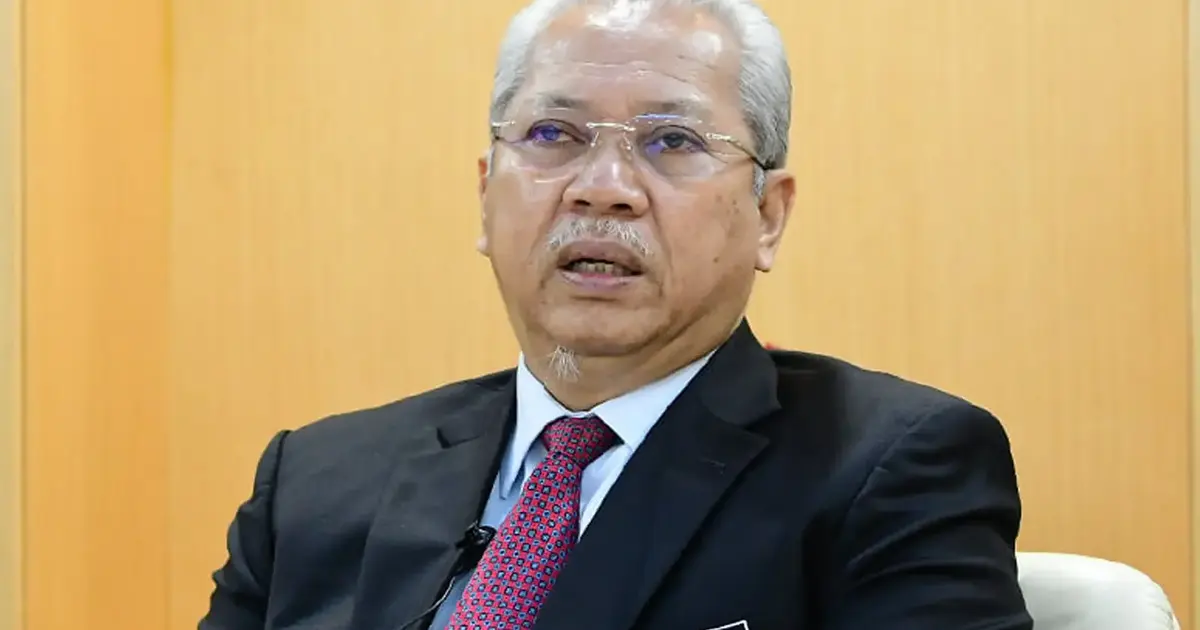
Perikatan Nasional's leadership is preparing to tackle mounting internal tensions over the use of its coalition logo and the distribution of parliamentary seats for upcoming state elections in Johor and Negeri Sembilan, with a critical supreme council meeting scheduled for Monday expected to provide clarity on Bersatu's role within the alliance.
Annuar Musa, the coalition's information chief, has indicated that the gathering represents a pivotal moment for resolving questions that have increasingly clouded the PN partnership since the beginning of the year. The concerns centre on whether Bersatu, the Malaysian United Indigenous Party led by former Prime Minister Mahathir Mohamad, will remain a committed member of the PN framework, and the mechanics of how the coalition brand will be deployed across electoral contests.
The logo dispute carries particular significance given its symbolic importance in Malaysian electoral politics. Coalition logos serve not merely as branding exercises but as visual anchors that consolidate voter loyalty across component parties and constituencies. For PN, which represents an alternative political axis to both the ruling Pakatan Harapan government and the traditional Barisan Nasional establishment, maintaining a unified visual identity is critical to presenting itself as a coherent force capable of governing.
These tensions reflect the inherent fragility of multi-party coalitions in Malaysia's polarised political landscape. Bersatu's position within PN has long been delicate, with the party attempting to balance its ideological alignment with PAS while maintaining sufficient independence to protect its distinct brand and electoral appeal. The logo question essentially encodes a deeper query about Bersatu's strategic commitment to the coalition versus its interest in preserving space for tactical flexibility.
The seat allocation disputes for Johor and Negeri Sembilan add another layer of complexity to Monday's discussions. These two states represent important battlegrounds in Malaysia's political competition, and the way PN distributes candidacies among its component parties will send significant signals about internal power dynamics. Constituencies in these states are highly contested, and PN's ability to maximise its representation through intelligent seat-sharing arrangements could prove decisive in future general elections.
From a Malaysian electoral perspective, PN's internal cohesion matters beyond the coalition's own fortunes. The alliance has positioned itself as a major challenger to existing power structures, and any visible fragmentation weakens its credibility as an alternative government-in-waiting. Voters evaluating opposition options scrutinise signals of internal stability and unity, viewing fissures as indicators of governance capacity.
For Southeast Asian observers, PN's trajectory also reflects broader regional patterns in coalition politics. Across the region, multi-ethnic and multi-party alliances frequently struggle with balancing member interests while maintaining collective purpose. How PN negotiates these tensions through mechanisms like supreme council deliberations offers lessons in institutional design and conflict resolution within democratic frameworks.
The Monday meeting's outcomes will likely be closely monitored not only by PN members but also by other political stakeholders. A decisive resolution that clarifies logo usage and seat allocations could reinforce perceptions of PN as a professionally managed alternative. Conversely, if the supreme council meeting produces ambiguous compromises or deferred decisions, it may reinforce scepticism about the coalition's capacity to maintain internal discipline.
Annuar Musa's willingness to publicly confirm that the supreme council represents the appropriate forum for these decisions suggests confidence that the body possesses sufficient authority to impose settlements on member parties. This contrasts with scenarios where critical decisions are made through informal negotiations or bilateral discussions between party leaders, which often generate subsequent disputes and reinterpretation.
The resolution of these matters carries timing implications as well. Clarity on logo deployment and seat arrangements allows campaign machinery to commence preparation with confidence in resource allocation and messaging strategies. Unresolved ambiguities create operational paralysis for party grassroots structures attempting to mobilise supporters.
Moreover, the specific outcomes regarding Bersatu's status will merit close attention. Depending on how the supreme council frames Bersatu's commitment and the conditions under which logo usage is permitted, the resolution could either strengthen PN's institutional architecture or establish precedents that complicate future coordination.
As Malaysian politics continues its fluid evolution, with coalitions and alliances constantly adjusting to electoral incentives and factional pressures, PN's ability to manage internal disputes through transparent institutional processes will partly determine whether it can transform from an opportunistic opposition coalition into a genuine alternative power structure.

%22%2F%3E%3C%2Fpattern%3E%3C%2Fdefs%3E%3Crect%20width%3D%22100%25%22%20height%3D%22100%25%22%20fill%3D%22url(%23ph2hy9vg)%22%2F%3E%3Crect%20width%3D%22100%25%22%20height%3D%22100%25%22%20fill%3D%22url(%23ph2hy9vp)%22%2F%3E%3Ctext%20x%3D%2250%25%22%20y%3D%2250%25%22%20text-anchor%3D%22middle%22%20dominant-baseline%3D%22central%22%20fill%3D%22rgba(255%2C255%2C255%2C0.95)%22%20font-family%3D%22Georgia%2C%20'Times%20New%20Roman'%2C%20serif%22%20font-weight%3D%22700%22%20font-size%3D%22272%22%20letter-spacing%3D%22-0.02em%22%3EAnwar%3C%2Ftext%3E%3C%2Fsvg%3E)