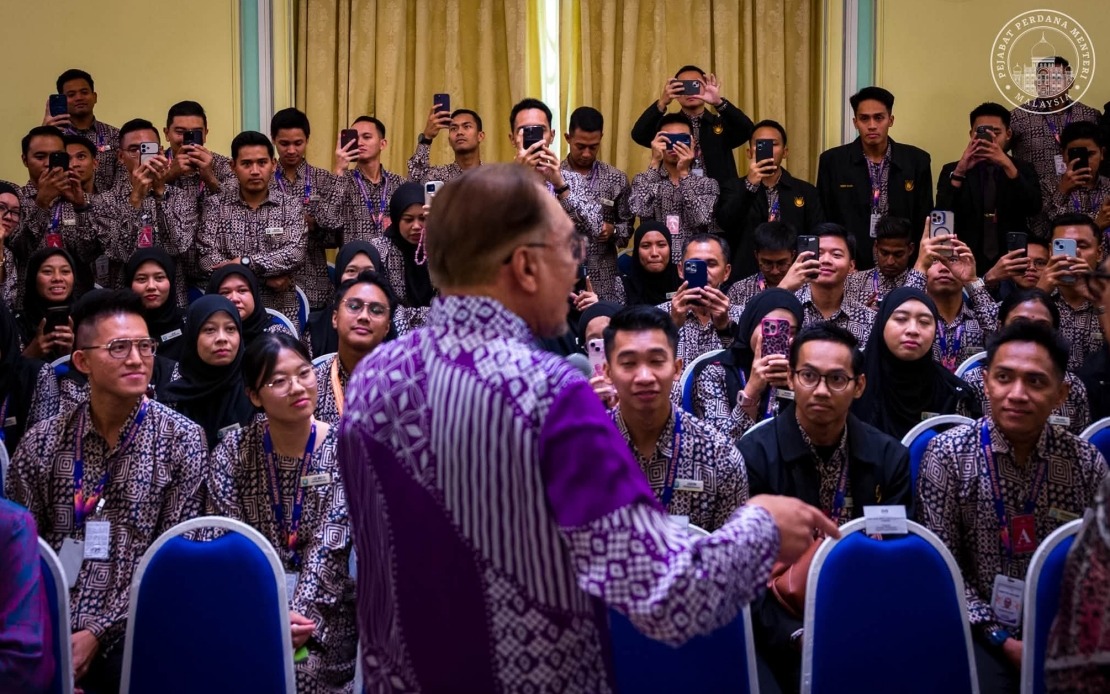
Prime Minister Datuk Seri Anwar Ibrahim has issued a fresh call for Malaysia's civil service to balance institutional reform with unwavering ethical standards, emphasising that public sector leadership must prioritise national and public interests above all other considerations. Speaking during a meeting with Administrative and Diplomatic Service (PTD) officer cadets at his Putrajaya office on July 16, Anwar outlined a vision for a modernised public administration that remains grounded in principles of good governance and moral rectitude.
The Prime Minister's address to the cohort undergoing the Postgraduate Diploma in Public Management programme signals an intensified focus on preparing the next generation of senior civil servants to navigate Malaysia's evolving political and administrative landscape. The PTD represents the apex of Malaysia's civil service hierarchy, with its members typically progressing to positions of considerable influence across federal and state government agencies. By engaging directly with this cadre at an early stage of their advanced training, Anwar sought to instil a particular philosophy regarding the relationship between modernisation and principled governance.
Anwar's message articulated three interconnected imperatives for contemporary public administration: the capacity to implement substantive organisational and procedural change, the maintenance of rigorous ethical standards, and the cultivation of institutional efficiency. In the Malaysian context, this emphasis on change reflects ongoing pressures to reduce bureaucratic delays, enhance service delivery, and align government operations with international best practices—challenges that have long characterised public sector reform discussions.
The integrity dimension of Anwar's remarks carries particular weight given Malaysia's recent political history. The country has undertaken significant anti-corruption efforts in recent years, and civil service reform has been positioned as integral to rebuilding public confidence in institutions. By directing this message specifically to senior administrative cadets, the Prime Minister underscored the expectation that those entering the highest echelons of the civil service must embody incorruptible standards and model ethical conduct for subordinate ranks.
Anwar further contended that the capacity to embrace change represents an essential qualification for effective modern governance. This framing acknowledges that static institutions struggle to respond to evolving citizen expectations, technological disruption, and shifting socioeconomic circumstances. The civil service must therefore cultivate internal cultures capable of accommodating innovation whilst preserving institutional stability—a delicate equilibrium that demands leadership sophistication.
The broader strategic context suggests that Anwar's comments reflect his administration's intention to position civil service reform as a cornerstone of the government's development agenda. Regional peers including Singapore and Vietnam have achieved competitive advantages partly through civil service excellence, and Malaysia's modernisation aspirations necessarily encompass administrative capacity building. For Southeast Asia more broadly, the challenge of updating bureaucratic systems whilst maintaining institutional integrity constitutes a shared concern across developing and middle-income democracies.
The Prime Minister's insistence that public servants place collective interests above particularistic concerns carries implications for inter-agency coordination and resource allocation. Institutionalising this principle requires systemic incentives, transparent promotion mechanisms, and accountability frameworks that discourage rent-seeking behaviour. By articulating this expectation at the outset of senior officers' careers, Anwar attempted to establish normative foundations for their subsequent decision-making.
Anwar's assessment that national development depends fundamentally on capable, principled leadership within the public sector reflects a particular diagnosis of governance challenges. This perspective prioritises human capital and institutional culture as determinative factors in policy implementation and national progress. It implies that legislative reform and strategic planning, whilst necessary, prove insufficient without corresponding improvements in administrative execution and ethical orientation amongst those tasked with implementing policy.
For Malaysia's emerging administrative class, this address constitutes clear signalling regarding the values and expectations that characterise the current administration's conception of proper public service. The PTD programme itself serves as a crucial juncture for transmitting institutional culture and professional norms. By engaging with trainees during their advanced preparation, senior political leadership ensures that principles of reform, integrity and public-centredness become embedded within the professional identities of future civil service leaders.
The practical implications of Anwar's message extend across numerous policy domains. Whether addressing healthcare delivery, educational provision, infrastructure development or licensing procedures, civil servants informed by these principles should theoretically demonstrate enhanced responsiveness to citizen needs, reduced tolerance for corruption, and greater willingness to pilot innovative administrative approaches. The cumulative effect of such orientations across the civil service hierarchy could materially enhance Malaysia's competitive positioning and citizen satisfaction.
Regional observers will note the resonance between Anwar's emphasis on administrative excellence and broader Southeast Asian development narratives. Across the region, governments increasingly recognise that sustained economic progress and social stability depend substantially on institutional quality. Malaysia's own Vision 2050 framework necessarily presupposes a civil service capable of executing complex, long-term development strategies whilst adapting to unforeseen circumstances. Anwar's engagement with the PTD cadets represents an investment in institutional resilience and adaptive capacity.
Moving forward, the test of these principles lies in their translation into concrete policies, promotion criteria, and accountability mechanisms within government agencies. Civil service reform rhetoric, whilst important for establishing normative frameworks, requires systematic institutionalisation through personnel management practices, budget allocation procedures, and oversight mechanisms. The extent to which Malaysia's government successfully embeds these values across its bureaucratic apparatus will substantially shape both the effectiveness of policy implementation and public confidence in state institutions.

