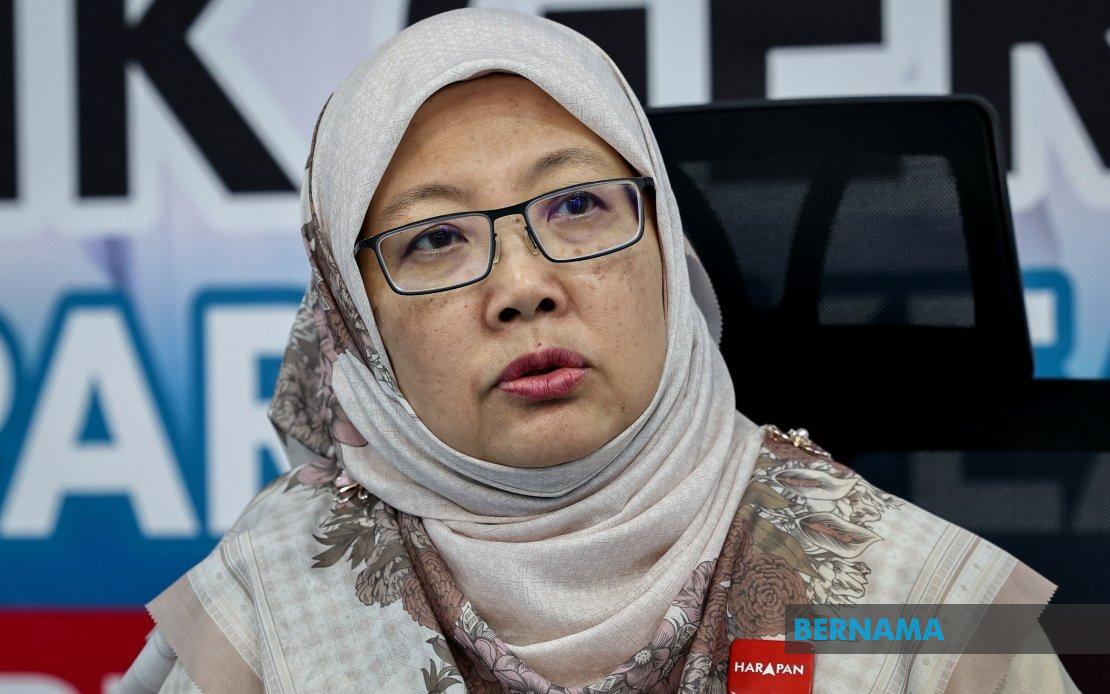
Pakatan Harapan has moved to defuse tension over the Menteri Besar selection process in the upcoming Johor state election by pledging unwavering respect for the Sultan of Johor's constitutional prerogative to appoint the chief minister. The coalition's position, articulated by Johor PKR chairman Datuk Seri Dr Zaliha Mustafa, signals a deliberate effort to ground the campaign in substantive governance rather than allow the contest to revolve around leadership succession issues that could overshadow policy discussion.
Dr Zaliha's statement represents a calculated response to recent remarks by incumbent Menteri Besar Datuk Onn Hafiz Ghazi, who had publicly called upon PH to name its preferred candidate for the top state post should voters grant the coalition a governing mandate. The challenge, whether intended as political messaging or genuine inquiry, placed PH in a position where any response carried implications for how the coalition would engage with the Johor palace—a relationship historically central to state politics and constitutional governance.
The Johor State Constitution 1895 vests formal authority for appointing the Menteri Besar with the Sultan, a provision that has shaped political dynamics in the state for generations. By explicitly committing to honour this constitutional arrangement, PH is signalling that should it assume office, the coalition would respect established protocols and the discretionary powers embedded in the state's founding document. This stance carries particular weight in Johor, where the royal institution commands considerable reverence and where deviations from constitutional norms have historically triggered institutional friction.
PH's refusal to name a candidate before the election reflects a strategic calculation that differs markedly from conventional electioneering in some other Malaysian states. Rather than building campaign momentum around a charismatic leader or putative chief minister, the coalition is attempting to pivot discussion toward policy platforms—economic development, employment generation, and improvement of living standards. Dr Zaliha emphasised that PH possessed multiple qualified leaders capable of administering the state competently, a statement intended both to project confidence and to underscore that the coalition's appeal rested on institutional capacity rather than individual personality.
The distinction matters for regional politics. In an era where Malaysian voters increasingly scrutinize governance records and policy substance, PH's emphasis on solutions for cost-of-living pressures, job creation, and economic dynamism potentially appeals to working-class and middle-class constituencies concerned with tangible outcomes rather than insider political machinations. Johor, as Malaysia's second-largest state by population and a significant economic hub, represents territory where such messaging could resonate across different demographic segments.
Yet the coalition's approach also reflects institutional prudence. The Johor palace maintains considerable political influence, and any PH administration would require collaborative relationships with the institution to govern effectively. By declining to pre-select a Menteri Besar and instead framing selection as a matter for post-election negotiation and royal discretion, PH positions itself as respectful of constitutional hierarchy. This stance contrasts with scenarios in other states where coalitions have attempted to dictate leadership outcomes, occasionally generating palace resistance that complicated subsequent governance.
The broader context encompasses Johor's political trajectory over recent years. The state has experienced coalition shifts, factional realignments within parties, and periodic tensions between different power centres. For an electorate potentially weary of instability or perceived power plays, PH's emphasis on stability, constitutional respect, and policy focus offers a counter-narrative—one centred on competent administration rather than elite succession games.
Dr Zaliha's statement also addresses a potential weakness in PH's campaign positioning. By asserting that the coalition possessed many qualified leaders, she sought to deflect any suggestion that PH's electoral appeal depended on a single personality or specific candidate. This argument could prove valuable in a state where voters have experience with different administrations and where questions about leadership quality and diversity might surface during campaigning. The emphasis on listening to public concerns and designing responses reflects a consultative governance model that some voters may find appealing compared to perceived top-down approaches.
The dynamic between PH's constitutional respect for the Sultan's appointment powers and its policy-forward campaign messaging establishes a framework within which Johor's election debate might unfold. Should PH gain sufficient seats to claim the mandate to form government, the coalition's pre-stated commitment to honouring the Sultan's discretion would shape how any subsequent Menteri Besar selection process occurred—likely involving consultation rather than confrontation.
For Malaysian politics more broadly, the Johor contest serves as a significant indicator of PH's standing and approach to governance in a major state. The coalition's willingness to respect constitutional provisions and defer to established institutional arrangements, even when doing so requires restraint on campaign messaging, may signal maturation in how PH conceptualizes its role within Malaysia's constitutional framework. Conversely, the depth to which voters respond to policy substance over personality-driven campaigns could influence how future Malaysian elections, at state and federal levels, come to be contested and decided.
The coming weeks will reveal whether PH's calculated emphasis on constitutional respect, multi-leader capacity, and substantive policy offers sufficient gravitational pull with Johor voters, or whether the coalition's refusal to name a Menteri Besar candidate creates opening for opponents to challenge PH's readiness to govern decisively.
%22%2F%3E%3C%2Fpattern%3E%3C%2Fdefs%3E%3Crect%20width%3D%22100%25%22%20height%3D%22100%25%22%20fill%3D%22url(%23ph3n7zyg)%22%2F%3E%3Crect%20width%3D%22100%25%22%20height%3D%22100%25%22%20fill%3D%22url(%23ph3n7zyp)%22%2F%3E%3Ctext%20x%3D%2250%25%22%20y%3D%2250%25%22%20text-anchor%3D%22middle%22%20dominant-baseline%3D%22central%22%20fill%3D%22rgba(255%2C255%2C255%2C0.95)%22%20font-family%3D%22Georgia%2C%20'Times%20New%20Roman'%2C%20serif%22%20font-weight%3D%22700%22%20font-size%3D%22320%22%20letter-spacing%3D%22-0.02em%22%3EKTMB%3C%2Ftext%3E%3C%2Fsvg%3E)