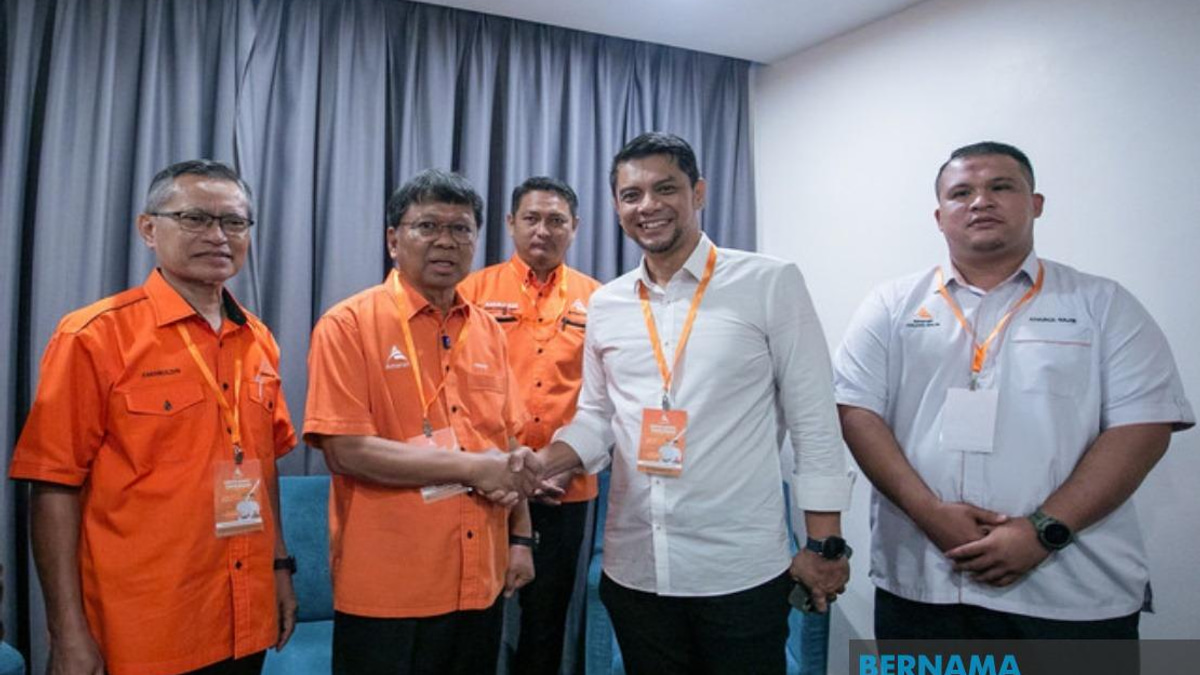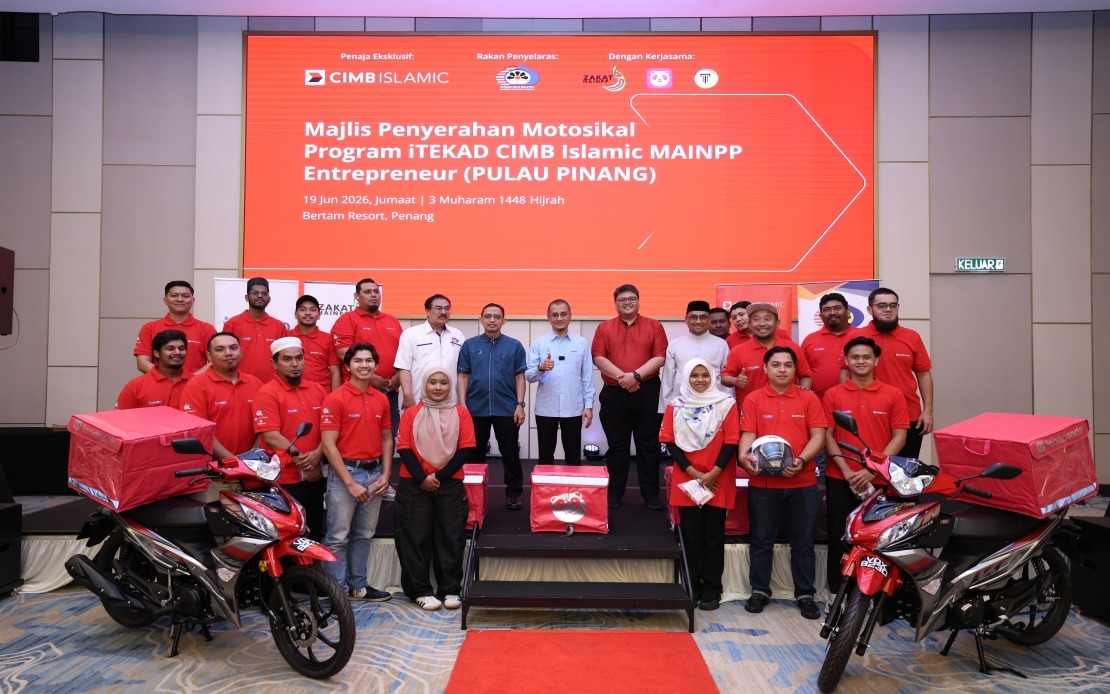
A collaboration between CIMB Islamic Bank and the Penang Islamic Religious Council has distributed motorcycles and delivery equipment to twenty participants selected from a competitive pool of applicants, marking a significant step in efforts to combat poverty and create sustainable livelihoods within the asnaf community in Penang. The handover ceremony took place at Bertam Resort in Kepala Batas, where selected beneficiaries received their vehicles alongside comprehensive training and business guidance intended to facilitate their transition into income-generating activities.
The initiative, known as iTEKAD CIMB Islamic-MAINPP Entrepreneur programme, operates as a multi-stakeholder partnership that extends beyond simple asset distribution. Penang Deputy Chief Minister I Datuk Dr Mohamad Abdul Hamid, who also serves as MAINPP president, underscored during the ceremony that addressing poverty among vulnerable populations demands coordinated effort across financial institutions, religious bodies, and community development organizations. The partnership architecture includes the Malaysian Youth Foundation, Taylor's Community, and foodpanda Malaysia, each contributing specialised expertise to ensure participants receive holistic support throughout their entrepreneurial journey.
The financial backbone supporting this initiative comprises RM400,000 in seed funding structured as a matching grant. CIMB Islamic Bank Berhad has contributed RM200,000 from its Wakalah Zakat fund, while Bank Negara Malaysia has provided an equivalent RM200,000 commitment. This dual-source funding model reflects recognition at both the institutional and regulatory level that sustainable poverty reduction requires meaningful capital injection paired with institutional accountability. The matching grant structure also signals confidence in the programme's design and implementation capacity.
Selection of the twenty beneficiaries involved a rigorous evaluation process that began with 151 initial applications submitted to Zakat MAINPP. Rather than adopting a lottery approach or simple first-come-first-served allocation, programme administrators implemented a screening mechanism that included formal interviews and a residential Entrepreneurship Camp conducted from May 31 to June 3, 2026. This intensive bootcamp experience allowed evaluators to assess not only business acumen but also motivation, work ethic, and capacity to benefit from the assistance being offered. The multi-stage selection process reflects a deliberate strategy to maximize the likelihood of programme success and ensure resources reach those most likely to sustain and grow their enterprises.
Beyond motorcycles themselves, selected participants have access to delivery equipment necessary for engaging in courier or food delivery services. More critically, the programme embeds training components addressing foundational business competencies often lacking among individuals emerging from poverty. Participants receive instruction in basic financial management, work discipline, and entrepreneurial principles designed to enable them to generate income systematically rather than through ad-hoc or informal arrangements. This combination of physical assets, equipment, and human capital development distinguishes the iTEKAD approach from simpler asset-transfer models that sometimes fail when beneficiaries lack operational knowledge or business discipline.
The programme aligns strategically with the Penang Islamic Religious Development Agenda 2030, a longer-term blueprint emphasizing integrated ummah development across education, economic participation, family stability, and youth engagement. By positioning the iTEKAD initiative within this broader framework, state authorities signal that poverty reduction among the asnaf constitutes a priority area within religious and developmental objectives. This integration suggests the programme represents not an isolated charitable intervention but rather a component of sustained institutional commitment to transforming economic conditions within vulnerable populations.
Datak Dr Mohamad emphasized that the motorcycle handovers carry symbolic significance beyond their material value. Distribution of vehicles and foodpanda branding represents institutional confidence in participants' potential for success and their ability to transform their circumstances. For recipients drawn from backgrounds characterized by limited economic opportunity, the public recognition inherent in a formal ceremony potentially contributes to psychological empowerment and social reintegration. The visible support from state leadership and financial institutions may enhance social standing within their communities and strengthen social capital networks that facilitate business growth.
The targeting of delivery services as the initial income generation pathway reflects practical assessment of market opportunities available to individuals with limited formal education or business experience. Food delivery represents a relatively accessible sector with low barriers to entry, established infrastructure through platforms like foodpanda, and consistent demand in urban and semi-urban environments across Malaysia. By leveraging existing platform partnerships, the programme connects participants to established customer bases rather than requiring them to build client networks from zero. This reduces the entrepreneurial risk profile compared to entirely independent ventures.
For Malaysia's broader policy context, the iTEKAD model offers insights into effective poverty alleviation design. Rather than centralizing implementation within government structures, the programme distributes responsibilities across entities possessing distinct comparative advantages: CIMB Islamic brings financial expertise and zakat administration capacity, MAINPP provides community connection and religious legitimacy, YBM contributes youth development experience, and foodpanda supplies platform integration. This modular approach potentially offers greater adaptability than monolithic government programmes while distributing risk and leveraging specialized capabilities.
The initiative's emphasis on zakat funding deserves particular attention within Malaysian Islamic finance contexts. By channelling zakat resources toward productive assets and business development rather than solely consumptive assistance, the programme reflects evolving approaches to Islamic finance that prioritize sustainable poverty reduction. This positioning aligns with Islamic principles emphasizing human dignity, self-sufficiency, and economic agency while ensuring zakat funds generate long-term community benefit rather than temporary relief.
Successful implementation of the iTEKAD programme could establish replicable models for other states seeking to combine Islamic finance mechanisms, inter-institutional collaboration, and targeted asset distribution in addressing poverty among the asnaf. The RM400,000 seed fund distributed to twenty participants represents substantial per-capita investment, raising questions about scalability and whether similar programmes can expand to accommodate larger beneficiary populations while maintaining rigorous selection and support standards.
The programme's emphasis on continuous support distinguishes it from transaction-based approaches. Participants do not simply receive motorcycles and disappear from the system; rather, they remain embedded within a framework providing ongoing mentorship, training, and encouragement. This commitment to sustained engagement recognizes that asset provision alone, however generously conceived, cannot overcome all obstacles to successful enterprise development. Ongoing support systems address unexpected challenges, market disruptions, and personal difficulties that inevitably confront new entrepreneurs from disadvantaged backgrounds.
As Penang and other Malaysian states increasingly pursue poverty reduction within asnaf populations, the iTEKAD initiative demonstrates how religious institutions, financial organizations, and government bodies can cooperate effectively toward shared development objectives. Whether twenty motorcycles and associated support can meaningfully transform circumstances for selected recipients, and whether lessons from this cohort can scale across broader populations, will provide valuable evidence regarding effective models for sustainable livelihood creation in Malaysia's ongoing efforts to ensure inclusive economic participation.