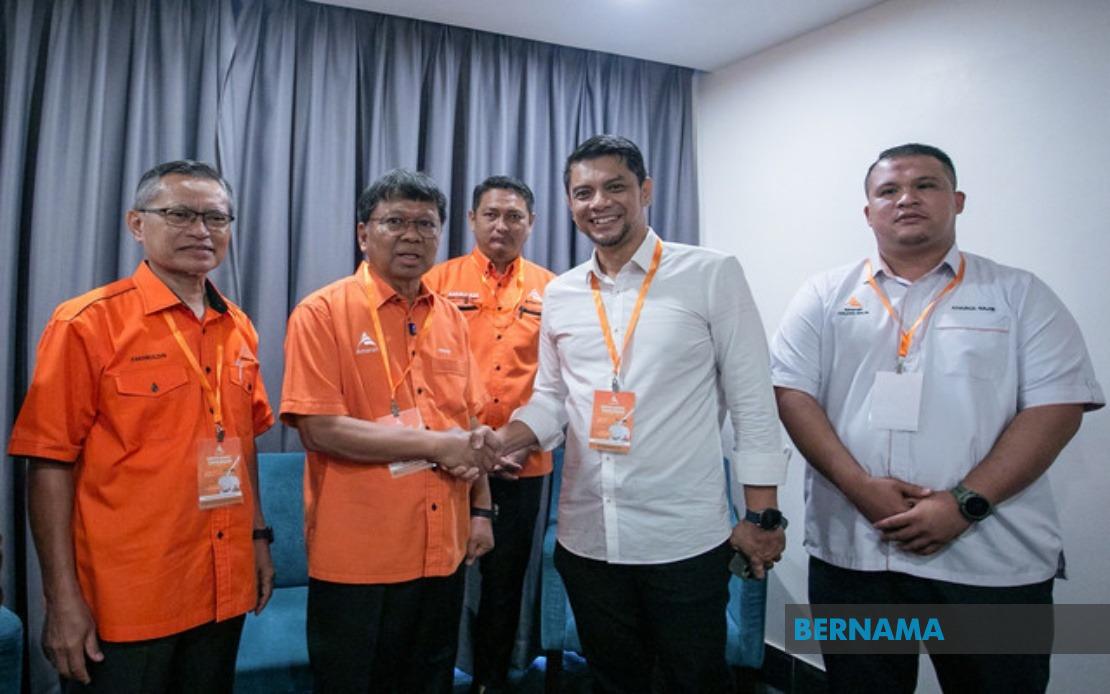
In a significant development for Perak's political landscape, Hasnul Zulkarnain Abd Munaim, the former Titi Serong state assemblyman, has formally rejoined Parti Amanah Negara nearly six years after his departure, marking a notable gesture of reconciliation within the reform-oriented party. The readmission was endorsed during Amanah's National Management Meeting and National Leadership Meeting held on June 18, according to Perak Amanah chairman Datuk Asmuni Awi.
Hasnul Zulkarnain's political journey over the past six years reflects the volatile nature of Malaysian state politics, particularly in Perak where coalitions have shifted dramatically. In March 2020, he exited the political mainstream entirely, resigning from his position as Titi Serong assemblyman alongside two DAP representatives to sit as an independent. This defection occurred during the tumultuous period that saw the formation of the Perikatan Nasional government in Perak, a watershed moment that destabilised the previous ruling configuration. Just four months later, in July 2020, Hasnul Zulkarnain aligned himself with Bersatu, indicating his attempt to navigate the complex post-Sheraton Move political realignment that had fractured the Pakatan Harapan coalition.
The timing of his readmission into Amanah reveals a deliberate strategic calculation by party leadership. Asmuni explained that while Hasnul Zulkarnain had persistently sought to return to his former political home, previous circumstances did not permit serious consideration of such applications. The chairman's remarks suggest that Amanah's leadership had previously maintained a firmer stance against welcoming back members who had departed, a position that has evidently softened. This change reflects a pragmatic recognition that former members who exit often retain emotional and ideological attachment to their original parties, even after their departure.
The decision also signals Amanah's confidence in its current trajectory and stability. By reopening its doors to returning members, the party demonstrates that it no longer views defectors as irredeemable liabilities or threats to institutional cohesion. Rather, Asmuni's characterisation of the move as aligned with approaches adopted by other political parties suggests Amanah is benchmarking itself against competitors and adopting more flexible membership policies. This represents a calculated softening of internal party discipline in favour of numerical strength and organisational reach.
For Perak specifically, the development carries implications for Amanah's standing in a state where the party has struggled to maintain electoral relevance amid the dominance of larger coalitions. Asmuni framed Hasnul Zulkarnain's return as bolstering party capacity, particularly given the pool of former members who departed but retained ideological sympathy with Amanah's reform agenda. The chairman's emphasis on shared loyalty and belief in the party's struggle underscores that many departures were driven by circumstantial political pressures rather than fundamental ideological ruptures. This distinction matters considerably, as it suggests returning members do not require extensive ideological recalibration.
Hasnul Zulkarnain's express gratitude toward party leadership and his characterisation of readmission as a vote of confidence indicates he enters the party reinstated, rather than merely tolerated. This framing is important for his personal standing within Amanah structures and his capacity to assume meaningful roles in party operations. His former position as Amanah Youth chief suggests he previously held substantial internal stature, and his reactivation signals that such credentials carry weight within current party calculations.
The broader context of Malaysian political defections makes this reunion noteworthy. Party-switching has become endemic in Malaysian politics, with members frequently departing based on coalition changes, patronage considerations, or perceived career trajectories. Amanah's decision to systematically reconsider applications from former members represents a departure from the vindictive approach some parties adopt toward those who leave. This approach may attract additional inquiries from other former Amanah members weighing potential returns, particularly as political configurations continue evolving.
Hasnul Zulkarnain's trajectory through Bersatu provides insight into the complex calculations facing politicians in post-2020 Malaysia. His decision to join Bersatu rather than simply returning to Amanah then suggests he made deliberate choices aligned with prevailing political forces. His current return indicates either changing circumstances making Bersatu affiliation less advantageous or genuine desire to reconnect with his original political home. Given that Amanah initiated the readmission process rather than Hasnul Zulkarnain formally petitioning, party leadership evidently identified value in his return.
For Malaysian observers, the episode illustrates how political parties are adapting to the fluid post-Sheraton Move environment. Rather than maintaining rigid stances against returning members, organisations like Amanah are recognising that flexibility in membership policies may strengthen rather than weaken institutional integrity. This approach assumes that former members departing due to circumstance rather than principle can successfully reintegrate, an assumption that carries both advantages and risks for party unity.
The implications for Amanah's strategic positioning in Perak and nationally remain to be seen. Welcoming back experienced figures with previous electoral experience and internal networks could enhance the party's machinery ahead of future electoral contests. However, the decision also requires careful management to ensure returning members do not trigger resentment among those who remained loyal during the party's lean years. Asmuni's framing of the move as reflecting contemporary political norms suggests Amanah leadership has calculated that readmission costs are outweighed by membership gains and symbolic repositioning as a party capable of unity and reconciliation.