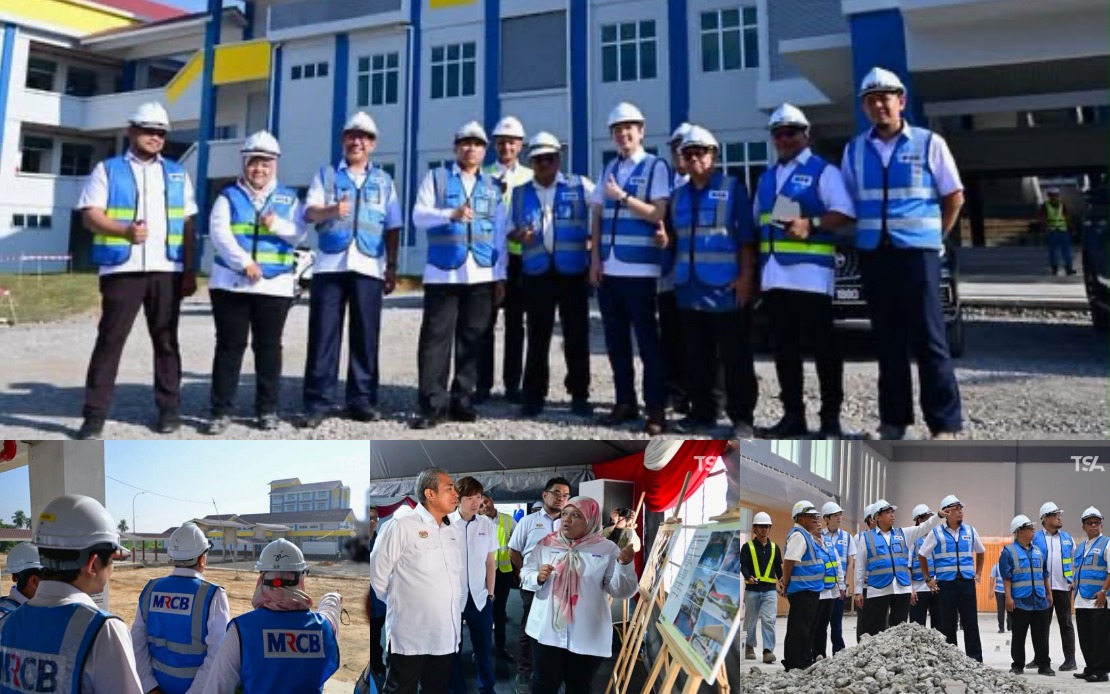
The Perlis Malaysia Sports School, a facility that has languished in a state of abandonment for more than a decade in Bukit Chabang, Padang Besar, appears finally poised to welcome its first students. Chief Secretary to the Government Tan Sri Shamsul Azri Abu Bakar announced that construction is expected to reach completion by January 2027, marking a significant milestone for a project that has become emblematic of Malaysia's long-standing infrastructure challenges.
The journey of this sports school has been marked by false starts and bureaucratic bottlenecks. When the project was originally conceived, it represented an ambitious investment in athletic talent development at the state level. However, after ground was broken and work commenced, the facility fell into neglect, becoming a symbol of incomplete government commitment and resource mismanagement. For fourteen years, the site remained largely dormant, with construction equipment abandoned and structures left to weather Malaysia's tropical climate.
Shamsul Azri's confidence in the current trajectory stems from recent direct oversight of the project. During a site visit preceding his remarks at the Iltizam 2026 Convention at Universiti Utara Malaysia in Sintok, the Chief Secretary observed that first-phase construction had reached between 85 and 90 percent completion. More significantly, he identified what had previously crippled the project: persistent labour shortages and contractor disputes that had repeatedly stalled progress. According to his assessment, these fundamental obstacles have now been substantially resolved through renewed management attention.
The turning point came in April of the previous year, when Prime Minister Datuk Seri Anwar Ibrahim issued a direct order to transfer the project to a government-linked entity deemed capable of executing the work without further delays. This decision reflected broader frustration within the administration over incomplete infrastructure projects and represented a deliberate pivot away from the private sector arrangements that had failed to deliver results. By consolidating responsibility within a single government-owned company, Malaysia's leadership attempted to eliminate the finger-pointing and coordination failures that had plagued earlier attempts.
The completion of the Perlis Malaysia Sports School carries implications extending far beyond Perlis itself. For northern Malaysia, the facility promises to serve as a regional hub for developing athletic talent, potentially channelling young sporting prospects toward higher competitive levels and eventually elite representation. The infrastructure gap between Malaysia's central regions and states like Perlis has long constrained opportunity for aspiring athletes in less densely populated areas. Once operational, the school could begin to address this disparity and provide structured pathways for athletic development outside the Klang Valley and Selangor corridors where most sports academies concentrate.
Shamsul Azri used the occasion to articulate broader government reform priorities that contextualise the sports school's revival. He highlighted the recently enacted Government Service Efficiency Commitment Act 2025, which took full legal effect on December 1 of that year. Unlike previous administrative directives that carried minimal enforcement mechanisms, this legislation creates binding obligations on government departments to streamline operations and eliminate unnecessary procedures. The Act represents the government's attempt to institutionalise efficiency improvements rather than relying on voluntary compliance or executive exhortation.
The bureaucratic reform agenda underpinning such legislation reflects accumulated frustration with Malaysia's government delivery systems. Since 2024, the Bureaucratic Red-Tape Reform initiative under the Public Service Reform Agenda has concluded 439 separate reform projects, generating an estimated RM2.95 billion in compliance cost savings for both the public and private sectors. These figures suggest that the bloated administrative procedures inherited from Malaysia's post-colonial governance structures continue to impose substantial drag on economic activity and service provision. For businesses navigating regulatory approvals and for citizens seeking government assistance, reducing these procedural burdens directly improves their operating environment.
The connection between administrative reform and a delayed sports school project illustrates a fundamental challenge facing Malaysia's government apparatus. Infrastructure projects require not merely allocated funds but coordinated execution across multiple agencies, reliable contractor performance, and sustained political commitment over election cycles. When these elements fracture—as occurred with the Perlis school—projects metastasise into monuments to inefficiency. The government's recent emphasis on streamlined processes and single-point accountability suggests leadership recognition that the nation cannot afford further infrastructure slippage.
Shamsul Azri also addressed a sensitive dimension of government operations: the question of civil service involvement in political activity. With national and state elections periodically reshaping Malaysia's political landscape, maintaining a neutral, professionally-focused civil service remains institutionally critical. The Chief Secretary stressed that existing regulations prohibit such engagement and reported no complaints to date, though the absence of formal complaints may not indicate universal compliance. This issue gains salience precisely when infrastructure projects or public appointments appear vulnerable to political manipulation during campaign periods.
The Perlis Malaysia Sports School represents more than a single facility—it embodies Malaysia's capacity to complete ambitious projects and deliver on promises to citizens across all states. The long delay inflicted reputational damage and deprived young athletes of opportunities for systematic training and development. Assuming the January 2027 target holds firm, the opening of this school could signal that government lessons have been learned from previous missteps. However, Malaysia's track record of infrastructure delays counsels caution. The intervening months will require sustained management focus, continued contractor performance, and protection from the political disruptions that sometimes derail government projects.
For Malaysian readers following this development, the implications extend to how they evaluate government competence more broadly. When significant projects languish for years, public confidence in institutional capacity erodes. Conversely, successfully completing delayed infrastructure sends a powerful signal about renewed administrative effectiveness. The Perlis school occupies this symbolic territory. Its completion would validate the efficiency reform agenda that Shamsul Azri articulated and suggest that structural changes to government operations are producing tangible results. Until the facility admits its first cohort of student-athletes, however, scepticism remains warranted. Malaysia has promised completion of delayed projects before only to see timelines slip again.

